Dnipropetrovsk Investment Agency (DIA) has prepared an overview of the international cooperation of Ukraine and Dnipropetrovsk region amid the aggression of the russian federation. The material focuses on the support of the Kingdom of Sweden and foreign trade indicators based on DIABASE data.
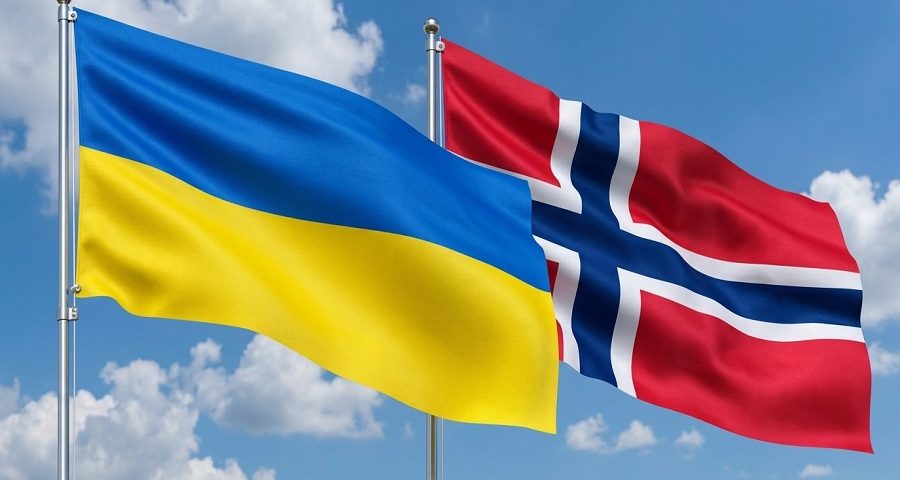
Over the years of full-scale war, the Kingdom of Norway has become one of Ukraine’s largest supporters per capita and one of the key European partners in the field of defense, financial, humanitarian, and energy support. The main mechanism of assistance remains the Nansen Support Programme for Ukraine — the largest international aid program in Norway’s history. The total volume of its funding for 2023–2030 was increased to $28–30 billion, which covers military, civilian, and humanitarian support for Ukraine.
In 2025, the government of Norway significantly increased the volume of aid to Ukraine. The total volume of support amounted to about $8 billion, making Norway one of Ukraine’s largest European supporters. In 2026, funding within the framework of the Nansen Programme was increased to about $9 billion. This large-scale package covers both military and civilian support, as well as the funding of critically important sectors, including energy, humanitarian response, and reconstruction.
A significant part of Norwegian aid is aimed at strengthening Ukraine’s defense capabilities. Norway funds the procurement of modern air defense systems, missiles, ammunition, and military equipment, and also participates in international coalitions to provide Ukraine with the necessary weaponry.
In May 2026, Norway announced the allocation of over $300 million in military aid to Ukraine. The funds are directed at strengthening air defense and developing Ukrainian drone production through the PURL (Prioritised Ukraine Requirements List) mechanism. This NATO tool allows for the prompt procurement and supply of modern equipment to the Ukrainian army. The total volume of Norwegian aid through this platform has already exceeded $1.1 billion.
Special attention is paid to strengthening Ukraine’s air defense system. Norway has joined international initiatives to fund additional Patriot systems and other means of protecting Ukrainian skies from Russian missile and drone attacks. In addition, the country continues its participation in the training of Ukrainian military personnel and supports the F-16 fighter jet coalition, providing training for pilots and technical personnel.
At the beginning of 2026, Norway started a new stage of cooperation with Ukraine in the field of defense technologies. In particular, support for the production of Ukrainian unmanned systems and the implementation of joint defense projects was announced. This indicates a gradual transition from a traditional aid format to a strategic partnership in the field of security and the development of the defense-industrial complex.
One of the key areas of cooperation remains energy, which systematically suffers from Russian attacks. In 2025, Norway funded the repair of power grids, substations, heating systems, and other critical infrastructure, as well as the procurement of necessary equipment for the stable passage of the heating season.
During the Ukraine Recovery Conference (URC 2025) in Rome, Norway, together with the UNDP, announced the launch of a new $200 million program for the modernization and restoration of Ukrainian energy. The project involves the installation of cogeneration units, the development of decentralized generation, solar energy, and increasing the energy resilience of communities. Additionally, in July 2025, Norway contributed another $50 million to the Ukraine Energy Support Fund for the procurement of equipment, emergency repairs, and modernization of damaged energy facilities.
A significant component of Norwegian support is financial aid to Ukraine. In 2026, about $200 million was directed to support the state budget to ensure the uninterrupted operation of government authorities, healthcare systems, education, and social protection of the population. This contributes to maintaining the macroeconomic stability of the state under war conditions.
In 2025–2026, Norway directed over $370 million to humanitarian programs through UN structures, international humanitarian organizations, and specialized funds. The aid covered support for internally displaced persons, food security, healthcare, child protection, restoration of water supply, humanitarian demining, and emergency response in frontline regions.
Norway pays special attention to supporting the agricultural sector. At the end of 2025, the allocation of about $4 million through the Food and Agriculture Organization of the United Nations (FAO) was announced to restore agricultural production in the regions most affected by Russian aggression. The program primarily covers frontline and de-occupied territories, in particular Mykolaiv, Dnipropetrovsk, and Chernihiv regions. Funding is directed at the survey and clearing of land from mines and explosive objects, support for farms, provision of seeds, development of irrigation systems, greenhouse management, and water supply.
An important component of Norwegian support is also the financing of reconstruction and development projects in Ukraine. In 2025–2026, Norway invested over $280 million in the restoration of energy infrastructure, modernization of schools and public buildings, reconstruction of water supply systems, and implementation of green reconstruction projects. In addition, through the mechanisms of the World Bank, Norway financed the repair of roads, railway infrastructure, hospitals, power grids, and support for Ukrainian communities affected by Russian aggression.
The development of mutually beneficial trade and economic cooperation also remains an important priority for both countries. The analysis of export and import operations of the Dnipropetrovsk region with Norway demonstrates a high level of partnership relations, as the specified state is an important trade partner of the region.
According to the results of 9 months of 2025, the volume of export of goods from the Dnipropetrovsk region amounted to $978.3 thousand and decreased by almost 50% compared to the corresponding period of last year. Among the goods that are in demand among Norwegian consumers are parts for railway locomotives, articles of iron or steel, dairy products, vessels and others.
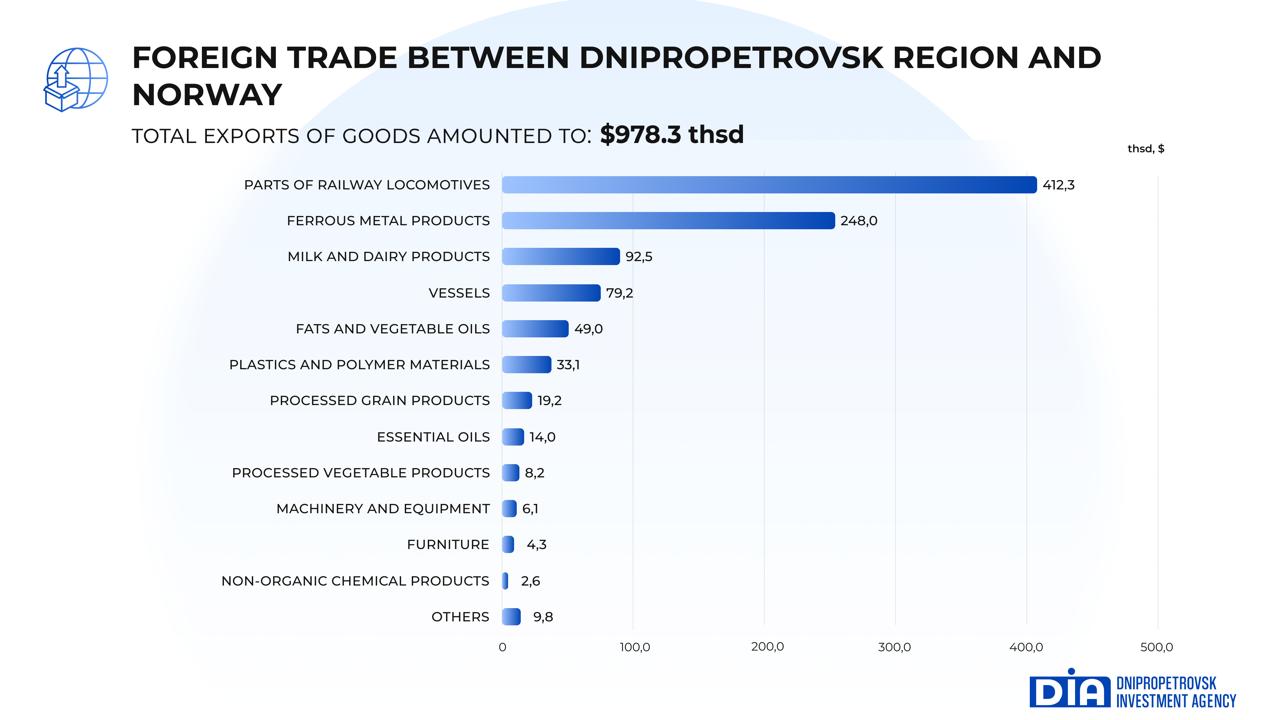
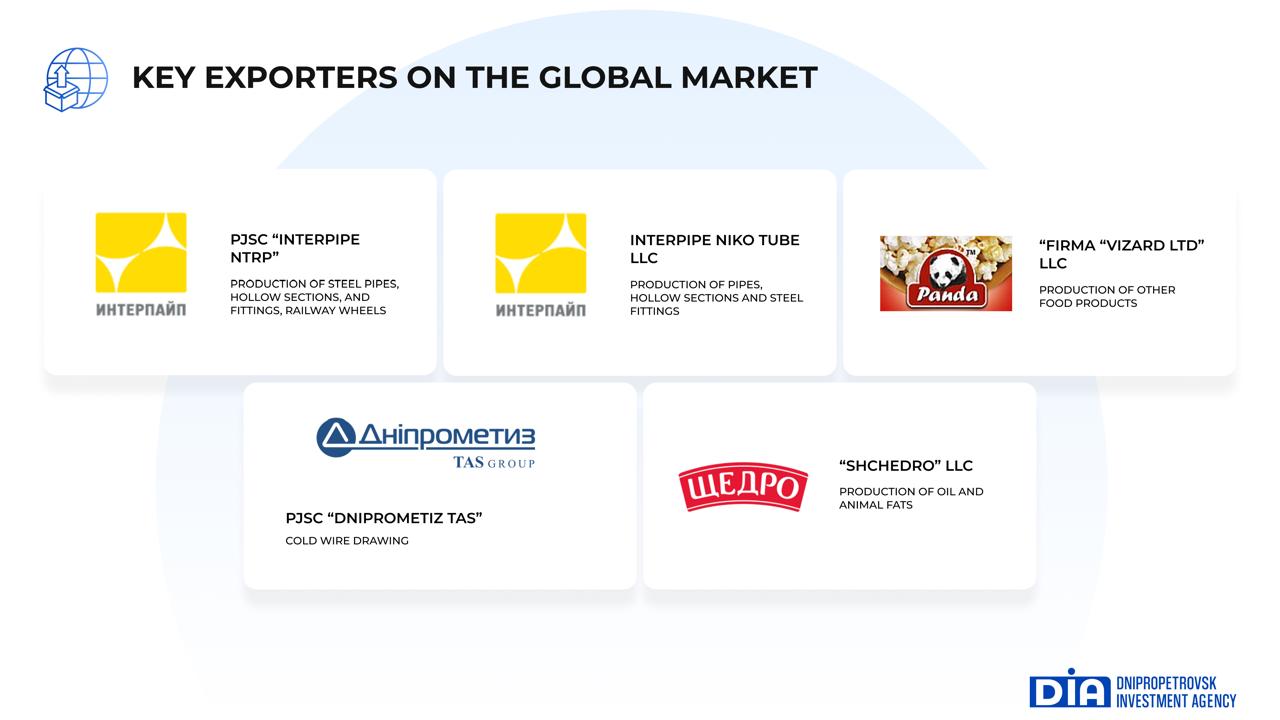
Export operations were carried out by more than 10 enterprises from the Dnipropetrovsk region. The main exporting companies are enterprises of the metallurgical complex, machine-building, processing, and agricultural enterprises.
TOP-5 exporting enterprises (ranking by the volume of export products):
Import of goods from Norway to the Dnipropetrovsk region amounted to $98.7 million and increased 3.5 times compared to the corresponding period of 2024. Dnipropetrovsk region traditionally bought: electrical machinery, fish and crustaceans, iron or steel and articles thereof, machinery and equipment, products from fish and meat, fertilizers, and others.
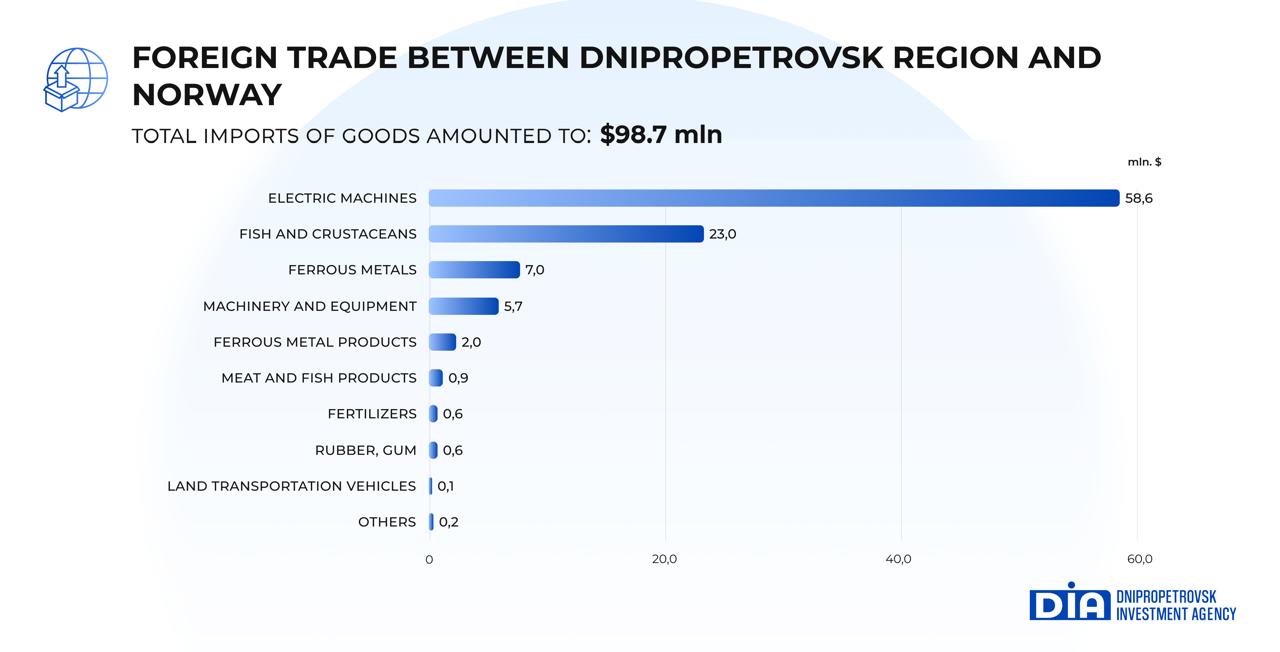
Import operations were carried out by more than 50 importing enterprises.
TOP-5 importing enterprises (ranking by the volume of import products):
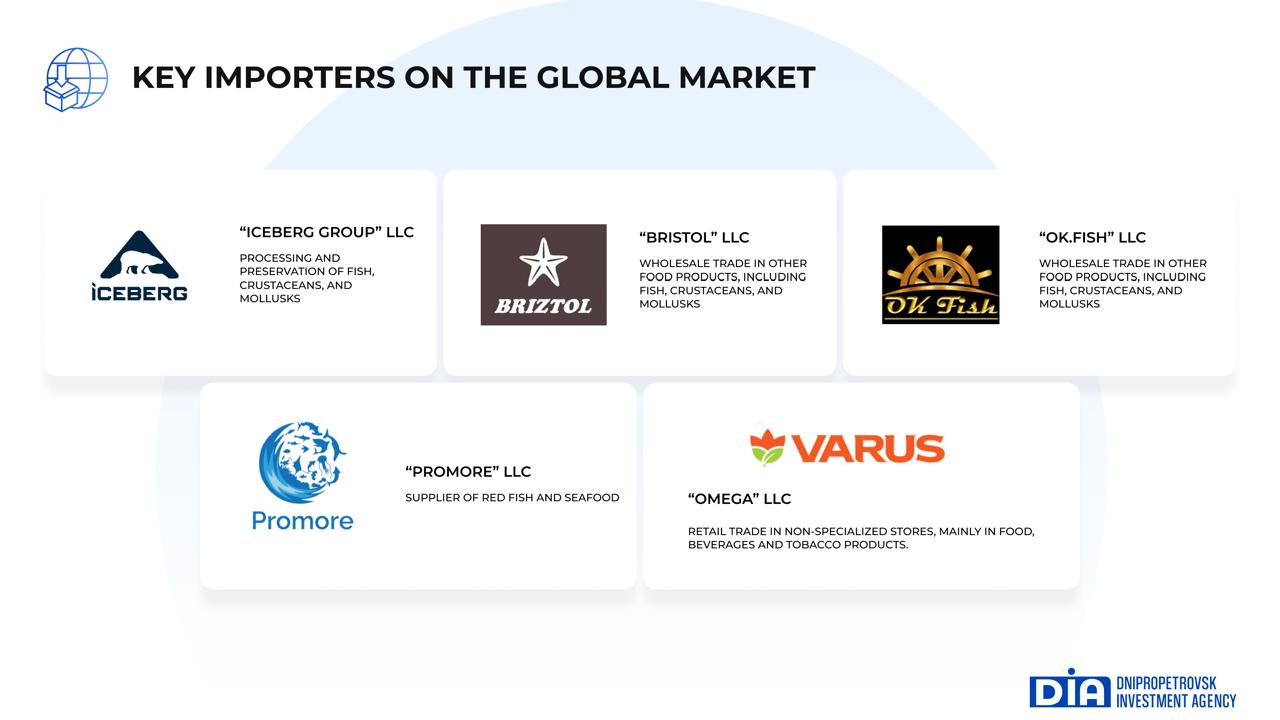
Import operations were mainly carried out by trade, processing, and agricultural enterprises.
Source: information for this article was compiled from publicly available sources.