Ukraine is working to expand export opportunities in the bioenergy sector, from integrating Ukrainian biomethane into the European traceability system to using degraded land for growing energy crops.
Further steps for the development of the sector were discussed at a meeting of the Coordination Council for the Development of the Bioenergy Potential of Agriculture, chaired by the Minister of Agrarian Policy and Food of Ukraine Taras Vysotskyi.
Biomethane: Ukraine is working on integration into the EU system
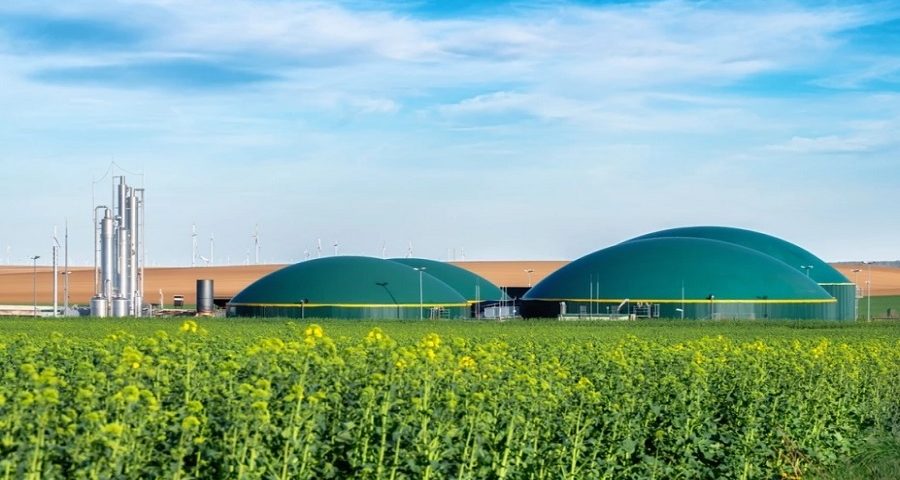
One of the key issues remains the expansion of Ukrainian biomethane exports to the European Union.
Ukraine continues its dialogue with the European Commission and partners from Germany on the integration of Ukrainian producers into the Union Database (UDB) and on ensuring proper verification of the sustainability and origin of Ukrainian biomethane.
The Union Database is a pan-European traceability system for renewable and low-carbon fuels. It covers, in particular, biomethane and makes it possible to trace the origin of feedstock, production and the subsequent movement of fuel up to the moment it is placed on the EU market.
The integration of Ukrainian producers into this system is an important condition for fully operating on the European market and for confirming the compliance of products with EU sustainability criteria.
Up to 2.5 million hectares of land could become a resource for bioenergy
A separate area is the use of severely degraded land for growing energy crops.
According to estimates, Ukraine potentially has up to 2.5 million hectares of depleted, salinised or eroded land that is poorly suited for traditional food crop production.
Using it for energy crops could make it possible to expand the bioenergy feedstock base without direct competition with food production.
European renewable energy legislation provides for special rules for biofuels from feedstock grown on severely degraded land. Under the European Renewable Energy Directives (RED II and RED III), such biofuel is classified as environmentally friendly and receives a higher market premium (additional financial support and a higher price on the EU market due to its high environmental value and the absence of conflict with the food chain).
Necessary legislative changes
For the practical launch of this area, it is proposed to legislatively define the concepts of “severely degraded land” and “energy crops”, as well as to establish mechanisms for confirming the compliance of such land with European criteria.
European rules require documentary evidence of the characteristics of severely degraded land, in particular the level of salinisation, organic matter content or degree of erosion.
The relevant legislative proposals are planned to be finalised together with business representatives and the relevant committees of the Verkhovna Rada.
Source: https://business.diia.gov.ua