Dnipropetrovsk Investment Agency (DIA) presents an overview of cooperation between Ukraine, Dnipropetrovsk region and other countries in the context of russia’s unprovoked military aggression against Ukraine. This publication examines Romania’s support and foreign trade relations, with trade data drawn from DIABASE.
Throughout 2025–2026, Romania continued to support Ukraine in resisting Russian aggression. It combined military assistance with training for Ukrainian military personnel, provided transport routes for Ukrainian exports and imports, and contributed to energy resilience. In March 2026, bilateral relations reached a new level: Ukraine and Romania signed a declaration on strategic partnership, as well as separate documents on energy cooperation and the joint production of weapons.
In late December 2025, Romania joined PURL (Prioritised Ukraine Requirements List), a NATO mechanism through which Allies finance the procurement of US weapons required by Ukraine, and made an initial contribution of EUR 50 million. During talks in Bucharest in March 2026, the Ukrainian side acknowledged Romania’s contribution to PURL and cooperation in strengthening Ukraine’s air defence.
Cooperation has recently been shifting gradually from the provision of military assistance to joint defence production. In July 2025, the defence ministers of the two countries agreed to intensify joint production projects, including through the European SAFE instrument.
In 2026, energy became one of the central areas of bilateral cooperation. Framework arrangements for cooperation in the energy sector have been signed, providing for specific infrastructure projects, including the construction of new power transmission lines. These are intended to increase cross-border transmission capacity and expand Ukraine’s electricity import and export capabilities within the European power system. The arrangements also allow Romania to use Ukraine’s underground gas storage facilities.
The parties are also considering supplies of US liquefied natural gas to Ukraine through Romanian territory, as well as joint projects in the oil and gas sector and on the Black Sea continental shelf.
Romania provides Ukraine with alternative access to global markets through the Danube, the port of Constanța, and road and rail routes. Following the start of the full-scale war, these routes became particularly important for Ukrainian grain, ore, metal products and other cargo.
In 2026, Romania, Ukraine, Moldova and the European Commission continued to implement Danube Action Plan 2.0 under the EU Solidarity Lanes initiative. The plan provides for improvements to navigation on the Danube, coordination among ports in the three countries, the exchange of transport information, and rapid responses to disruptions on Black Sea and Danube routes.
In July 2026, in response to intensified Russian attacks on civilian shipping and port infrastructure, the parties agreed to further develop alternative routes. Since their launch, the EU Solidarity Lanes have enabled Ukraine to export approximately 230 million tonnes of goods and import approximately 111 million tonnes of fuel, vehicles, fertilisers, military assistance and humanitarian aid. These figures cover the entire Solidarity Lanes network, rather than the Romanian route alone.
Romania is also contributing to preparations for Ukraine’s recovery. The bilateral security agreement in force provides for the use of Romanian transport and logistics infrastructure for reconstruction projects, private sector involvement, entrepreneurship development, investment in green technologies and digital transformation, and support for small and medium-sized enterprises.
The development of mutually beneficial trade and economic cooperation remains an important priority for both countries. Romania is a significant trading partner for Dnipropetrovsk region. In the first nine months of 2025, the region’s goods exports to Romania totalled USD 198.4 million, an increase of 2.3% compared with the corresponding period of 2024. The region accounted for 18.7% of Ukraine’s total exports to Romania. Romanian companies primarily purchased iron and steel and articles thereof, vegetable fats and oils, railway equipment and other goods.
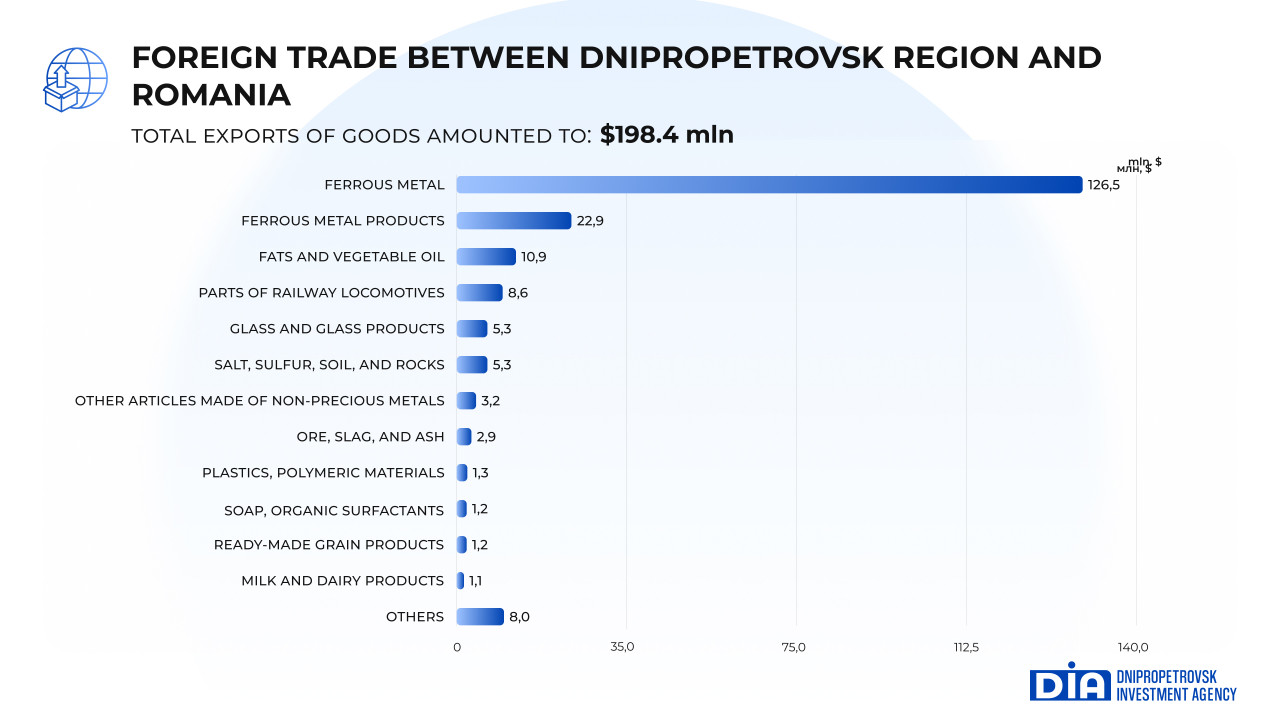
More than 160 enterprises in Dnipropetrovsk region exported their products to the Romanian market, including mining and metallurgical enterprises, manufacturing enterprises and agricultural enterprises.
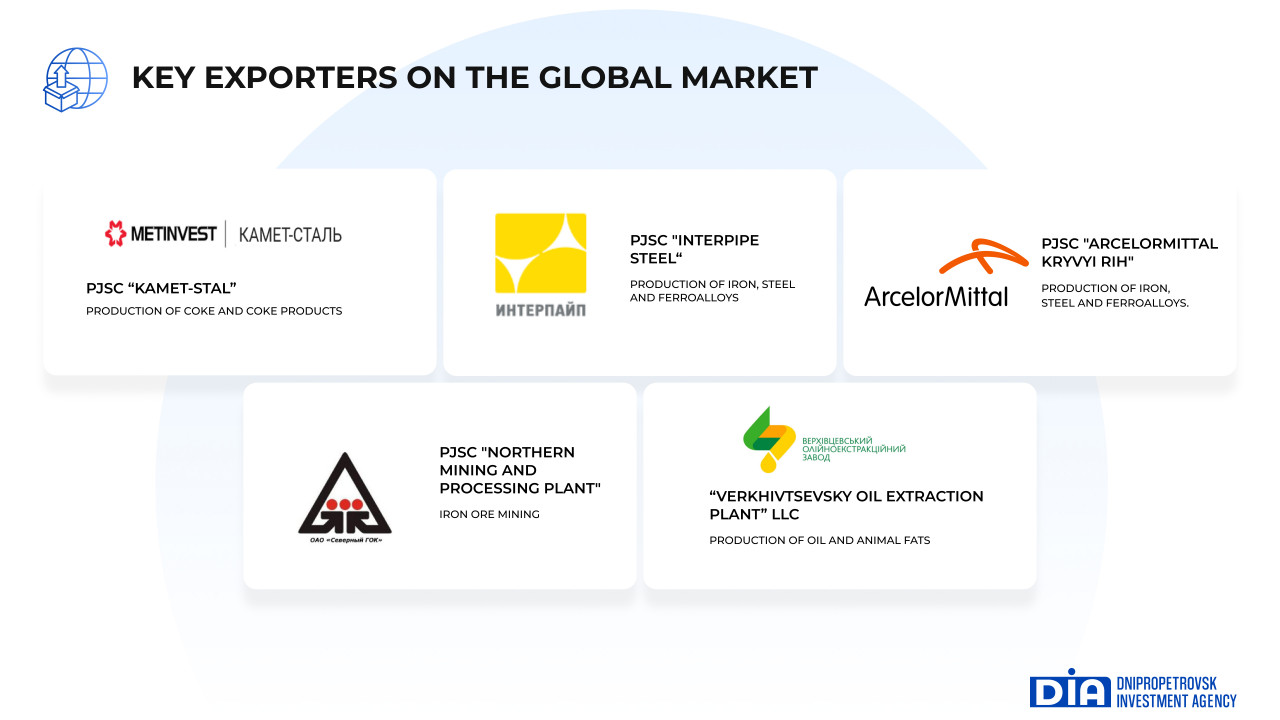
The following companies ranked among theTOP-5 exporters by export value:
Goods imports from Romania to Dnipropetrovsk region increased by 4.8% compared with the corresponding period of 2024 and totalled USD 37.96 million.
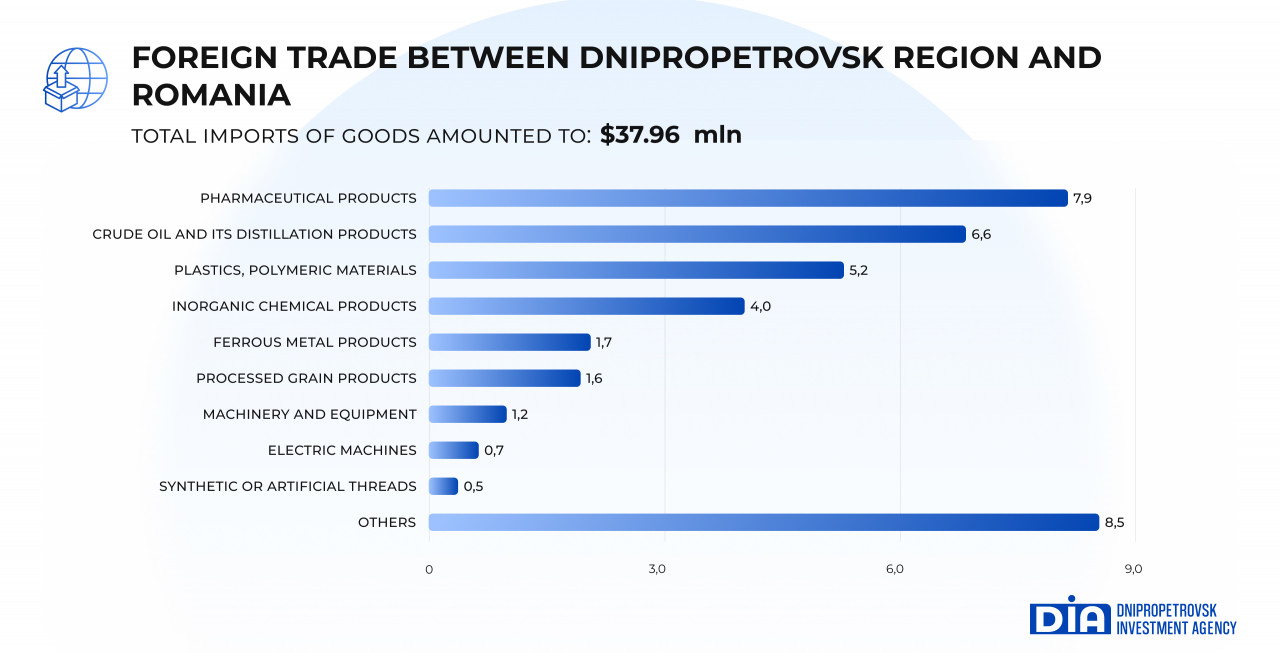
The region’s 150 importing enterprises primarily purchased Romanian pharmaceutical products, mineral fuels, plastics and polymer materials, inorganic chemical products and other goods.
The following companies ranked among the TOP-5 importers by import value:
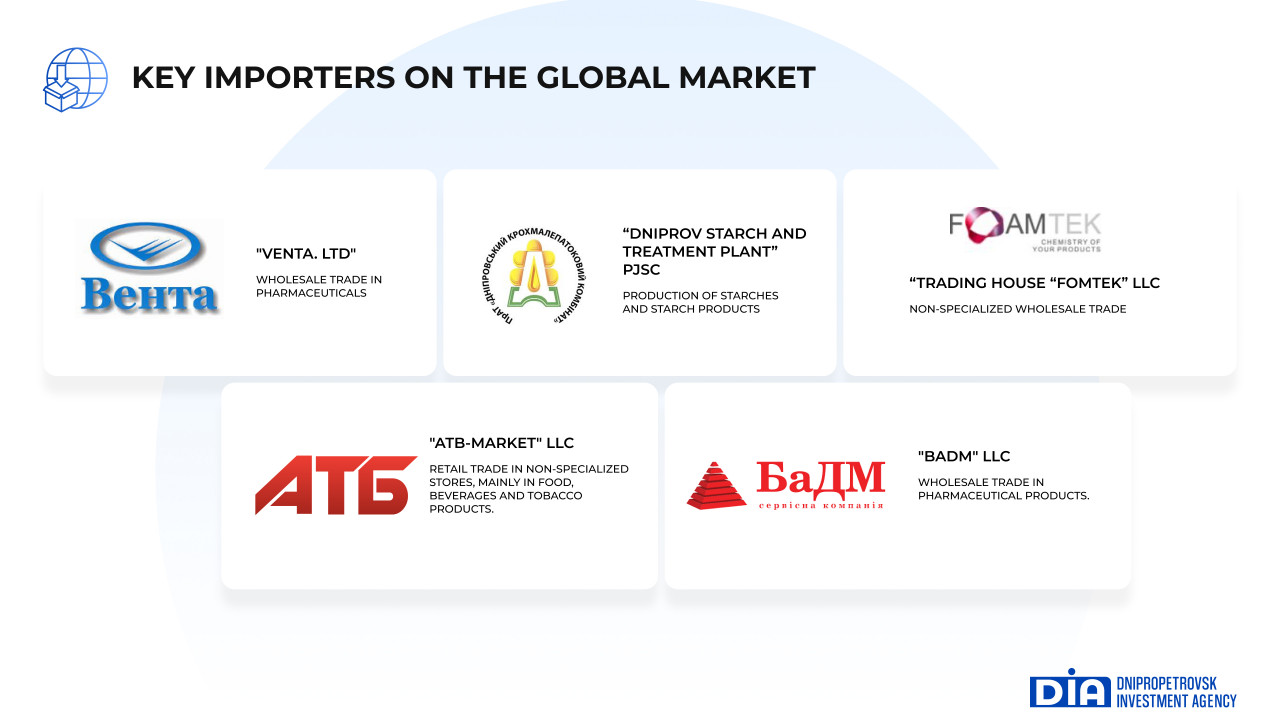
Import operations were primarily carried out by pharmaceutical, trading, food processing and manufacturing enterprises.
Source: The article was prepared using information from publicly available online sources.