The Dnipropetrovsk Investment Agency DIA offers an overview of the level of interaction between Ukraine and Dnipropetrovsk region with other countries amid the unprovoked military aggression of the russian federation against our state. In this publication, we offer informational material on the support provided by Bulgaria and the level of foreign trade, formed on the basis of DIABASE data.
Military and technical support has been one of the main areas of cooperation. Since 2022, Bulgaria has approved 13 military aid packages for Ukraine; the Bulgarian Government approved the most recent of these on 12 February 2026.
On 30 March 2026, the President of Ukraine and the Prime Minister of Bulgaria signed the Agreement on Security Cooperation in Kyiv. The document provides for the continuation of Bulgarian military assistance, joint exercises, intelligence cooperation, countering hybrid threats and disinformation, and strengthening security in the Black Sea region. On the same day, the parties signed a protocol on the Bolhrad G. S. Rakovsky Gymnasium, which guarantees members of the Bulgarian community the opportunity to study in their native language.
Ukraine and Bulgaria have agreed to develop industrial cooperation, in particular in the production of drones and ammunition, using the capabilities of the European SAFE instrument. This includes the prospect of establishing joint production facilities in both Bulgaria and Ukraine.
At the same time, Bulgaria announced that it was joining PURL (Prioritised Ukraine Requirements List), a mechanism through which NATO Allies finance the procurement of American weapons for Ukraine in line with its priority needs. The Ukrainian side linked Bulgaria’s participation, in particular, to strengthening air defence ahead of the next heating season.
However, following the victory of the Progressive Bulgaria coalition in the 2026 parliamentary elections in Bulgaria, Sofia’s official foreign policy course underwent a transformation. In June 2026, the new government announced the cessation of arms transfers to Ukraine from its stockpiles and withdrew the country from the Coalition of the Willing. In July 2026, Prime Minister of Bulgaria Rumen Radev stated that the country had exhausted its capacity to provide military assistance and could offer only military-technical assistance in the form of repair and maintenance of weapons; in addition, Bulgarian companies retained the ability to export weapons to Ukraine. Regarding financial assistance through NATO, he stated that Bulgaria would participate in accordance with its capabilities. Sofia continues to officially recognise the sovereignty and territorial integrity of Ukraine and supports its European integration.
Bulgaria is actively involved in the development of the Vertical Gas Corridor, which connects the gas transmission systems of Greece, Bulgaria, Romania, Hungary, Slovakia, Moldova and Ukraine. This route expands the possibilities for natural gas supplies to Ukraine and other countries of Central and Eastern Europe, provides alternative import routes and reduces dependence on russian energy resources. In 2025–2026, the development of the corridor became an important component of Ukrainian-Bulgarian energy cooperation.
During the meeting of the leaders of the two countries in March 2026, it was noted that once the route is fully developed, its potential capacity towards Ukraine could reach approximately 10 bcm of gas per year.
In 2026, the Ministry of Foreign Affairs of Bulgaria extended a separate grant support programme for organisations of the Bulgarian community in Ukraine. Projects may relate to education, Bulgarian language learning, culture and the preservation of historical and cultural heritage; the maximum funding per project is €5 thousand.
At the Ukraine Recovery Conference (URC 2025) in Rome in July 2025, the Prime Minister of Bulgaria named energy and transport infrastructure, water supply, ports, shipping and Black Sea logistics among the promising areas of reconstruction. The Bulgarian Government specifically emphasised the possibility of involving national construction and infrastructure companies in Ukrainian projects.
Bulgaria is increasingly positioning itself as a potential participant in the reconstruction of Ukraine. In June 2026, at the Ukraine Recovery Conference in Gdańsk, Prime Minister of Bulgaria Rumen Radev identified three areas in which Bulgaria sees its role: diversification of energy supply, transport connectivity of the Black Sea region and security cooperation. In particular, he highlighted the joint initiative with Romania to establish a Maritime Security Centre in the Black Sea, which will directly contribute to the future recovery of the Ukrainian economy by ensuring freedom of civilian navigation, protection of critical infrastructure, demining and intelligence sharing.
The development of mutually beneficial trade and economic cooperation also remains an important priority for both countries. The current level of economic relations between Dnipropetrovsk region and Bulgaria indicates significant potential for growth in investment activity. Five Bulgarian companies operate in the region, having invested $459 thousand in the region’s economy.
The country remains an important trading partner of Dnipropetrovsk region and is one of the region’s main foreign trade partners, ranking 5th among export destination countries worldwide.
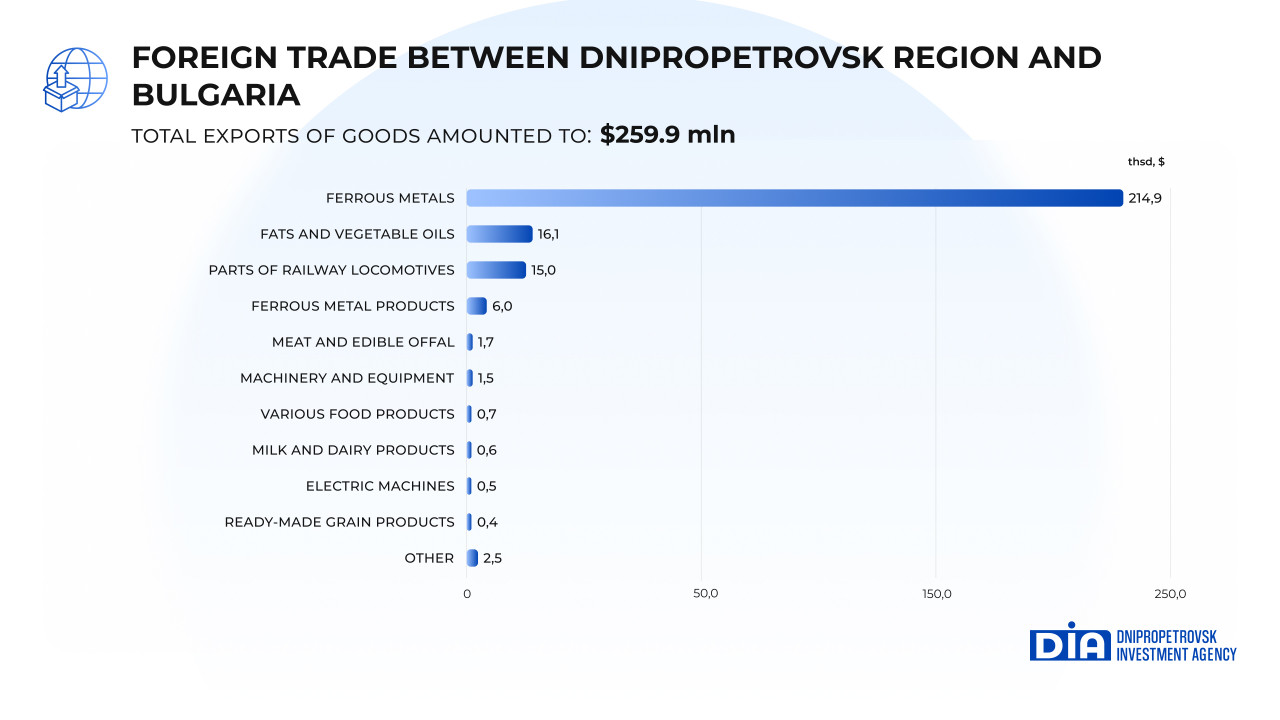
For the 9 months of 2025, exports of goods from Dnipropetrovsk region decreased by 20% compared to the corresponding period of 2024 and amounted to $259.9 million, accounting for 33.6% of the national total. Bulgarian enterprises are most interested in ferrous metals and articles thereof, fats and vegetable oils, parts of railway locomotives, meat and edible by-products, others.
More than 140 enterprises of Dnipropetrovsk region exported their products to the Bulgarian market, including enterprises of the mining and metallurgical complex, machine-building, processing industry and agro-industrial complex.
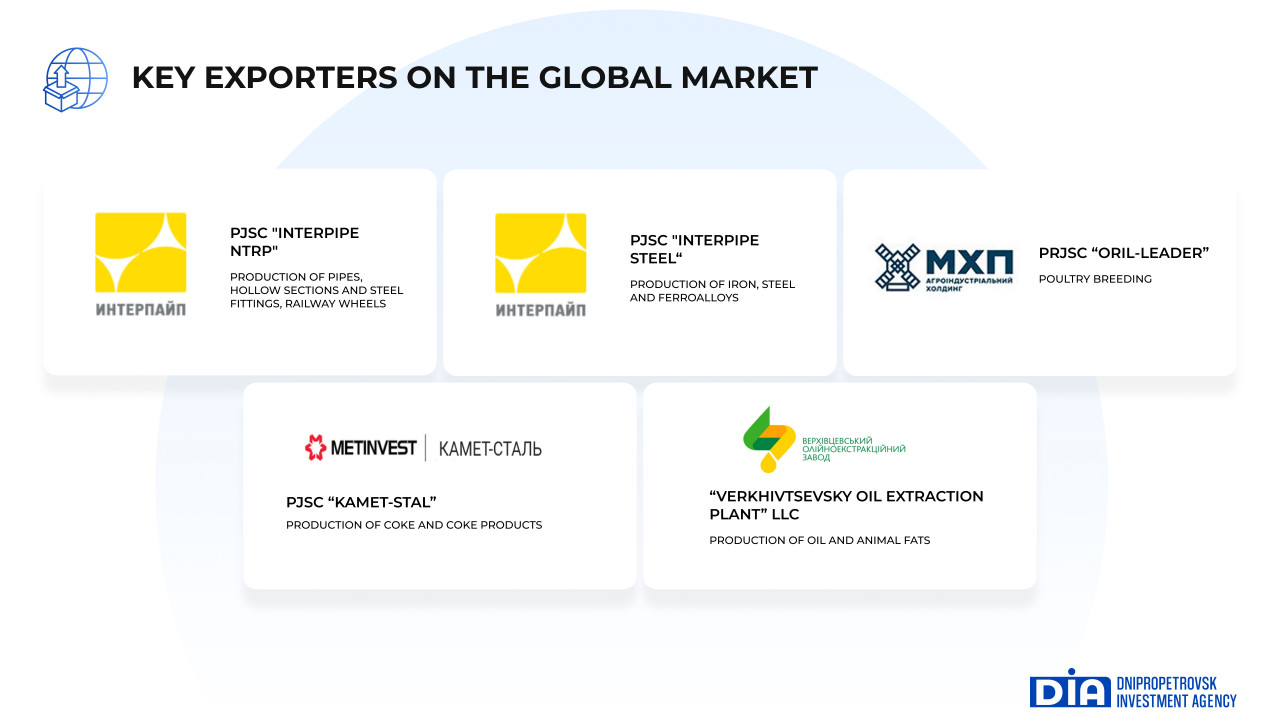
The TOP-5 exporting enterprises by volume of exported products are as follows:
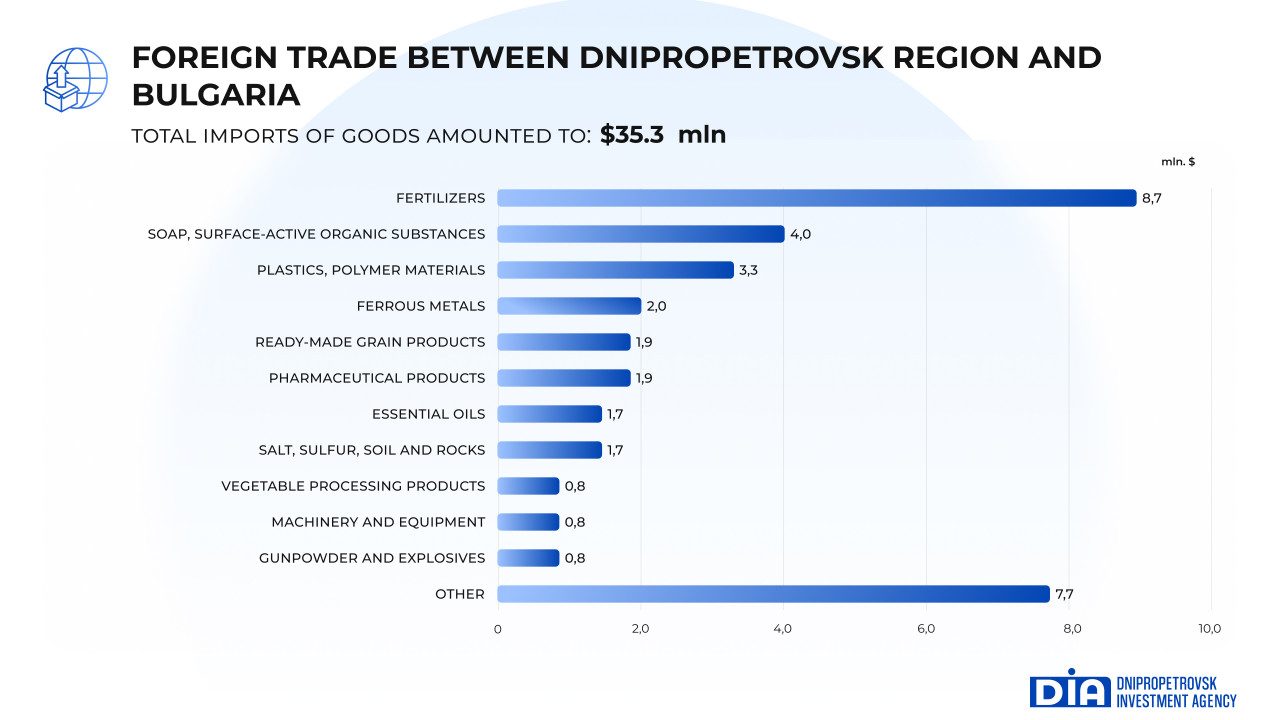
Imports of goods from Bulgaria to Dnipropetrovsk region increased by 47.6% compared to the corresponding period of 2024 and amounted to $35.3 million.
More than 120 importing enterprises of the region purchased mainly the following Bulgarian goods: fertilisers, soaps and detergents, plastics and polymer materials, ferrous metals, and others.
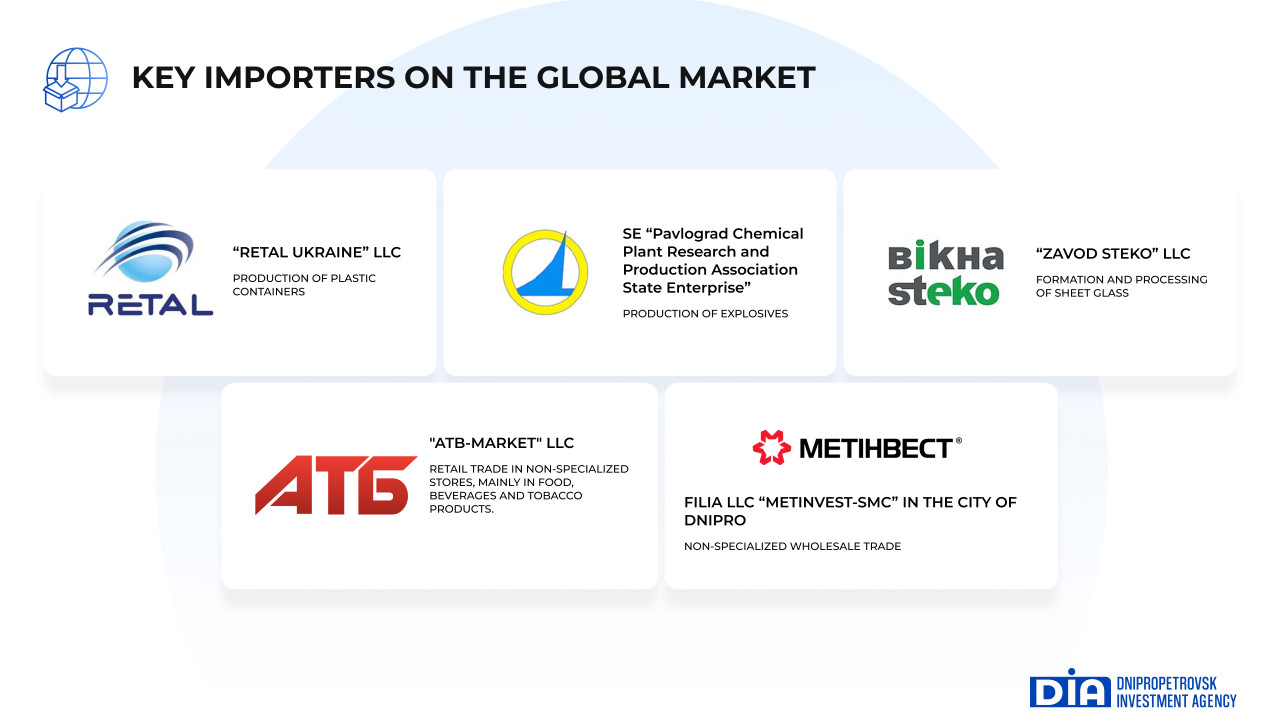
The TOP-5 importing enterprises by volume of imported products are as follows:
Import operations were carried out mainly by trading, food, processing and machine-building enterprises.
Source: information for the preparation of this article was taken from open online sources