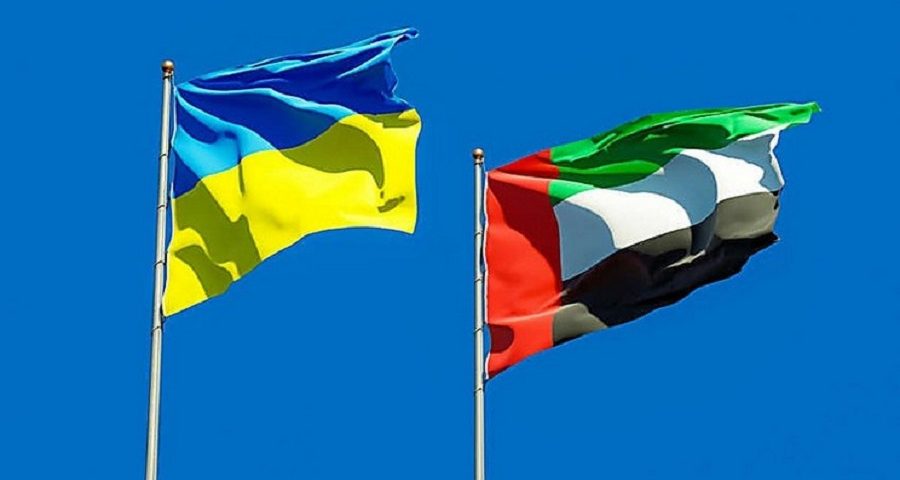
Dnipropetrovsk Investment Agency keeps introducing about the level of Ukraine and Dnipropetrovsk region cooperation with other countries amid the unprovoked military aggression by the russian federation. For now, we propose an overview of the assistance provided by the UAE and the foreign trade volume figures, which is derived from DIABASE data.
Since the start of the full-scale aggression of russia against Ukraine, the United Arab Emirates has chosen a model of measured but practical involvement, focusing primarily on humanitarian aid, diplomatic mediation and support for the civilian population. The UAE has not become a military ally of Ukraine and has not provided lethal weapons, but its role in ending of war has an important humanitarian and international political impact.
One of the key areas was humanitarian aid to Ukraine. Through state and semi-state structures, in particular the Emirates Red Crescent, the UAE financed and delivered humanitarian supplies, including food, medicine, medical equipment, essential items and materials for temporary housing. Special attention was paid to supporting children, women and internally displaced persons, in line with the traditional humanitarian profile of the UAE.
Another important element of participation was diplomatic and mediation activities. The United Arab Emirates played a key role in the humanitarian processes of returning prisoners of war and illegally deported Ukrainian citizens, including children. Through diplomatic channels in Abu Dhabi, exchanges and humanitarian agreements were repeatedly made, allowing Ukrainian military personnel and civilians to return home. In this context, the UAE acted as a neutral platform and guarantor of communication, which was critical in the absence of direct negotiations between the parties and the ongoing armed aggression of the russian federation.
On the international stage, the UAE has taken a careful but balanced position. The country did not join the full package of sanctions against Russia, while at the same time:
This position is explained by the desire of the UAE to keep diplomatic channels open with all parties, allowing it to act as a mediator rather than a participant in the conflict.
The energy and economic context deserves special mention. Although the UAE did not directly finance Ukrainian defense or large-scale reconstruction, its stabilizing role in global energy markets indirectly influenced the economic situation in Ukraine. In addition, the UAE maintained economic and financial channels that were used for humanitarian operations and international transactions in the difficult conditions of war.
On February 17, 2025, Ukraine and the United Arab Emirates officially signed a Comprehensive Economic Partnership Agreement (CEPA) in Abu Dhabi, marking an important event in trade and economic relations between the two countries. The document, which is the first of its kind in the history of Ukraine with a Persian Gulf country, provides for trade liberalization: customs duties will be cancelled for 99% of goods imported from the UAE and for 97% of Ukrainian exports to the UAE, which significantly expands the access of Ukrainian goods to the Middle Eastern market and creates favorable conditions for the growth of exports and investments. The agreement covers not only trade in goods, but also services, investment, the digital economy, and intellectual property protection, opening up new opportunities for Ukrainian businesses in the UAE and the region. This provision of CEPA will promote further growth in bilateral trade, expansion of investment flows and deepening of economic cooperation, while providing for the creation of new platforms for cooperation between enterprises of both countries. The signing took place with the participation of the Presidents of Ukraine and the UAE, First Deputy Prime Minister and Minister of Economy of Ukraine Yulia Svyrydenko and UAE Minister of State for Foreign Trade Tana bin Ahmed Al Zeyoudi, underscoring the strategic nature of the agreement and its importance for deepening mutual relationships.
In 2024, trade relations between Ukraine and the UAE continued to develop despite the challenges of war. The total trade volume amounted to over $415 million. This is significantly less than before the war (about $616 million in 2021), but it indicates a gradual recovery of economic cooperation (+10% compared to 2023). The main items exported to the UAE are agricultural products, especially grains, sunflower oil, and food products. The food sector remains important due to the priority of food security for the Middle East. Exports amounted to $266.8 million. Ukraine imported goods worth $148.3 million from the Emirates, almost half of which were energy resources. Ukrainian companies also purchased electrical machinery, plastics, and polymer materials.
The United Arab Emirates continue to be an important trading partner for Dnipropetrovsk region. The level of partnership is indicated by a bilateral analysis of external activities. Arab companies are most interested in ferrous metal products, meat and edible by-products, fats and vegetable oils, food industry residues, edible fruits and nuts. The volume of exports from Dnipropetrovsk region decreased by 3% compared to 2023 and amounted to $31.3 million (11.7% of the total Ukrainian figure).
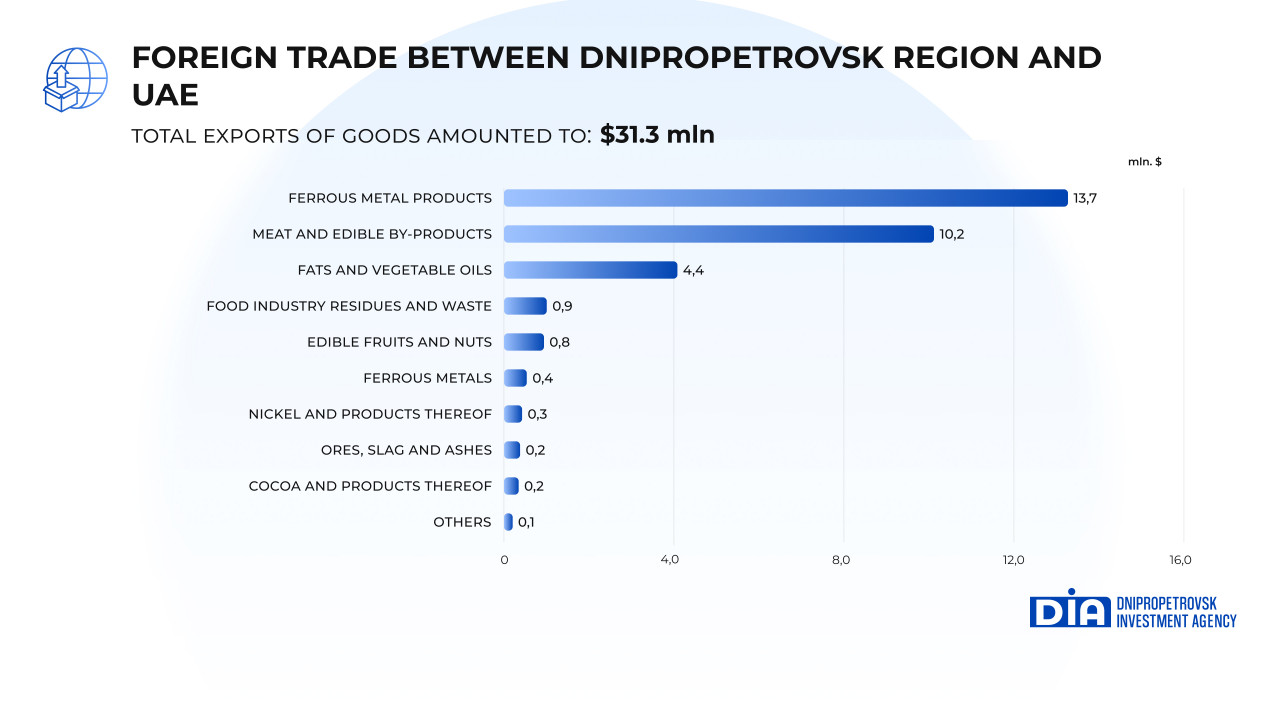
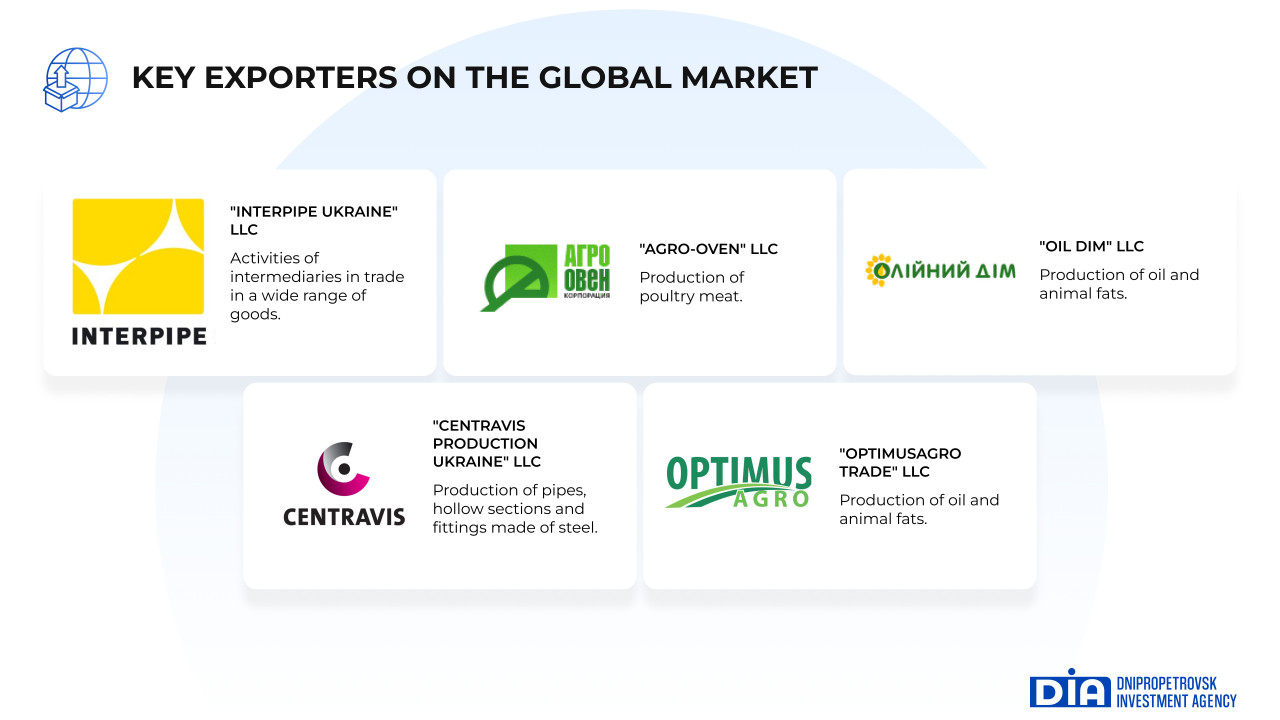
About 40 enterprises in Dnipropetrovsk region exported their products to the UAE market, including companies in the mining and metallurgical complex, food and processing industries.
According to the volume of exported products, the TOP-5 imported enterprises include the following:
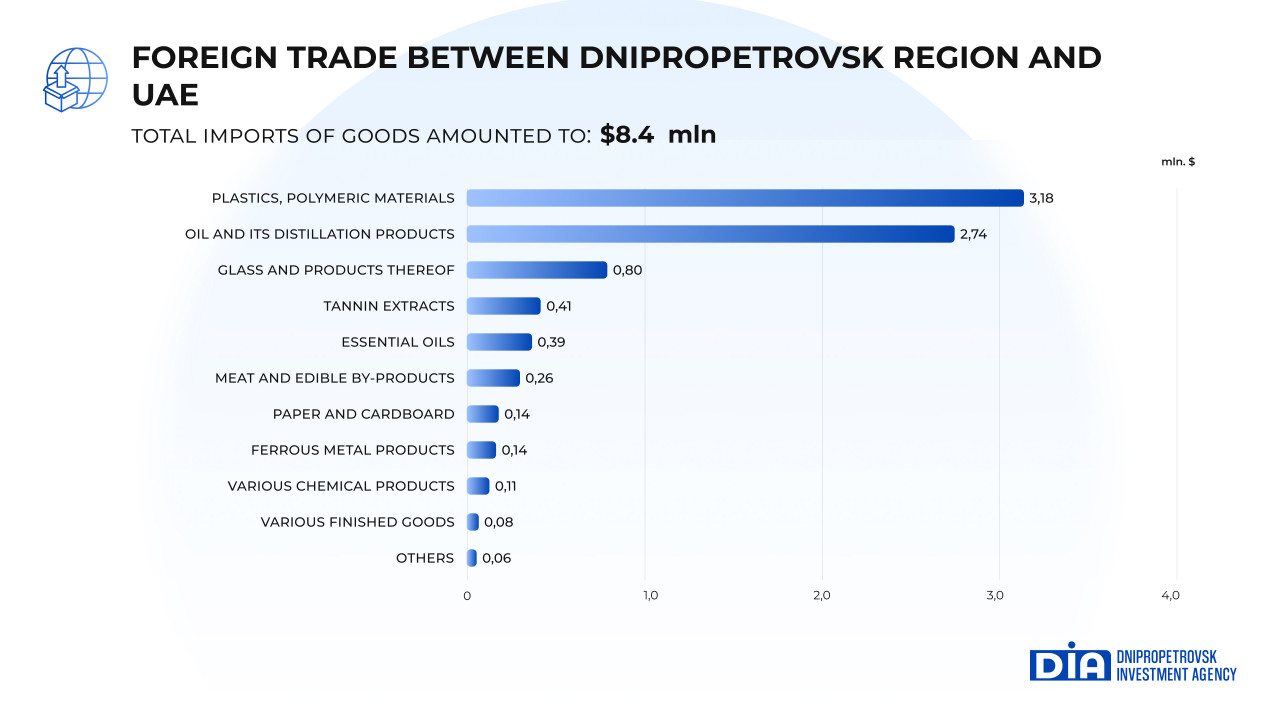
In turn, more than 20 importing companies in the region purchased Arabic goods, such as plastics and polymer materials, oil and its distillates, glass and its products, electrical machinery and others. Imports of goods from the UAE to Dnipropetrovsk region increased by 31% and amounted to $8.4 million.
According to the volume of imported products, the TOP-5 imported enterprises include the following:
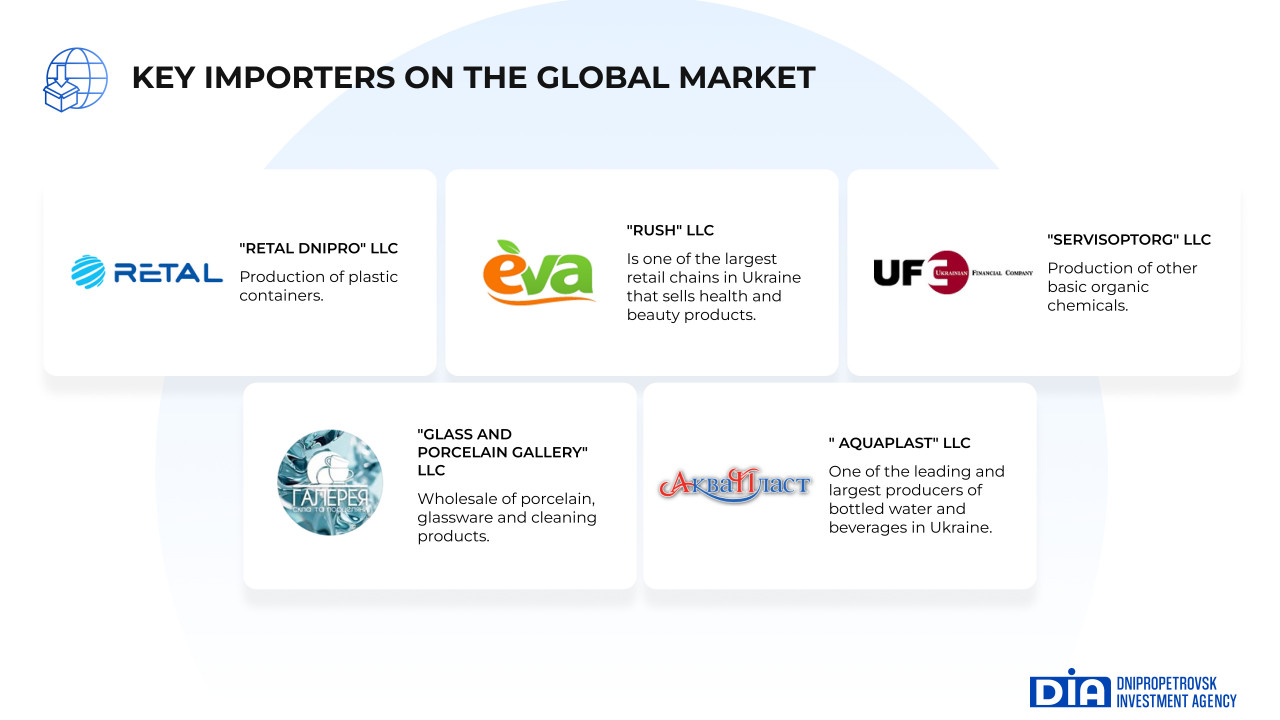
Import operations were mainly carried out by enterprises in the metallurgical, processing and trade industries.
Source: information for the preparation of the article was taken from open online sources.