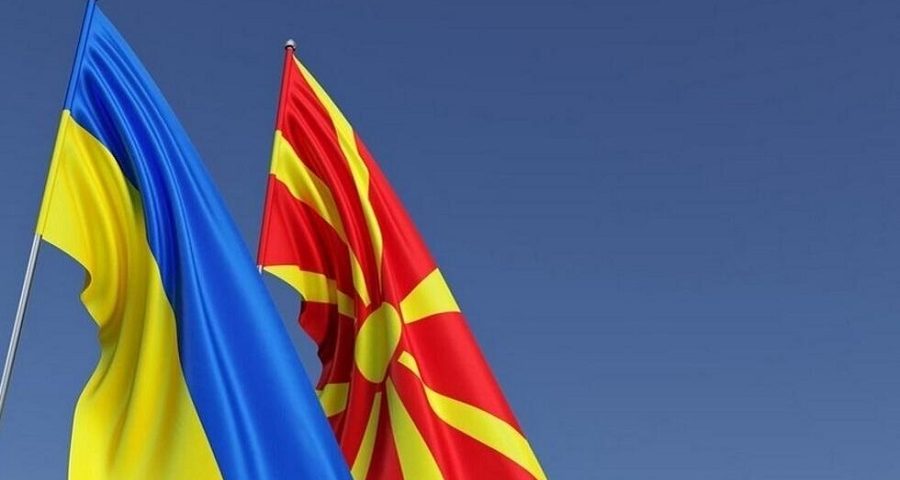
Dnipropetrovsk Investment Agency keeps introducing about the level of Ukraine and Dnipropetrovsk region cooperation with other countries amid the unprovoked military aggression by the russian federation. For now, we propose an overview of the assistance provided by North Macedonia and the foreign trade volume figures, which is derived from DIABASE data.
The russian war against Ukraine has tested the practical solidarity not only of larger countries but also of smaller allies in Europe. North Macedonia, a country that has itself passed through a difficult path of security transformation and joined NATO in 2020, has chosen a model of support for Ukraine that combines specific defense decisions, political support in international organizations, and a humanitarian component. Some of the steps were taken publicly, some were taken discreetly and without excessive media coverage, but the overall logic remained the same: assistance to Ukraine is seen as a contribution to the security of the wider European space.
Since the start of the full-scale Russian invasion, Skopje has actively supported Kyiv, transferring a significant amount of military equipment, including T-72 tanks and SU-25 attack aircraft. In terms of military aid compared to its own defense budget (about 16%), the country is one of the leaders among NATO members.
In addition to transferring equipment, training became an important area of focus. In 2023, it was reported that North Macedonia had completed training the first group of Ukrainian military personnel at its own army bases.
A notable achievement was the Joint Declaration of Ukraine and North Macedonia, signed on February 28, 2024, on the occasion of the summit in Tirana. In the document, the Balkan country confirms its support for the aspirations of Ukraine to join NATO and the idea of inviting Ukraine to the Alliance when the conditions are right, and the parties also confirm their mutual support on the path to EU accession. In addition, the declaration confirms the intention of North Macedonia to continue providing comprehensive assistance to Ukraine in its struggle for the full restoration of its territorial integrity.
Since the beginning of the war, institutions, municipalities, companies, chambers of commerce, and ordinary citizens of North Macedonia have carried out various campaigns to collect humanitarian aid for the people of Ukraine. In 2024–2025, aid to Ukrainians in the country was largely provided through humanitarian programs of the Red Cross and its partners as part of the response to the “Ukraine and impacted countries crisis”: This included psychosocial support (MHPSS), cash/voucher assistance (CVA), the creation of child-friendly spaces, and other forms of support for displaced Ukrainians.
In 2022–2023, Ukraine and North Macedonia updated their Free Trade Agreement: they expanded privileges for agriculture and food processing and switched to Pan-Euro-Med rules of origin, which simplifies the use of components from the wider European region and the receipt of preferences (in particular through the EUR.1 certificate). In August 2023, Ukraine further simplified the administration of tariff quotas—without licenses, on a first-come, first-served basis at customs.
At the same time, the countries moved towards a “transport visa-free regime”: in 2023, they agreed on the liberalization of road transport, and in 2025, they signed a protocol establishing a permit-free regime for bilateral and transit freight transport. This reduces bureaucracy and logistics costs and, according to Ukrainian estimates, has supported export growth to the Baltic country.
The Republic of Macedonia is a promising trading partner for Dnipropetrovsk region. The volume of exports from Dnipropetrovsk region amounted to $2.13 million. The share of the region in total Ukrainian exports to Macedonia is 4.3%. Macedonian companies are most interested in food products, glass and glass products, base metal products, plastics and polymer materials, electrical machinery and others.
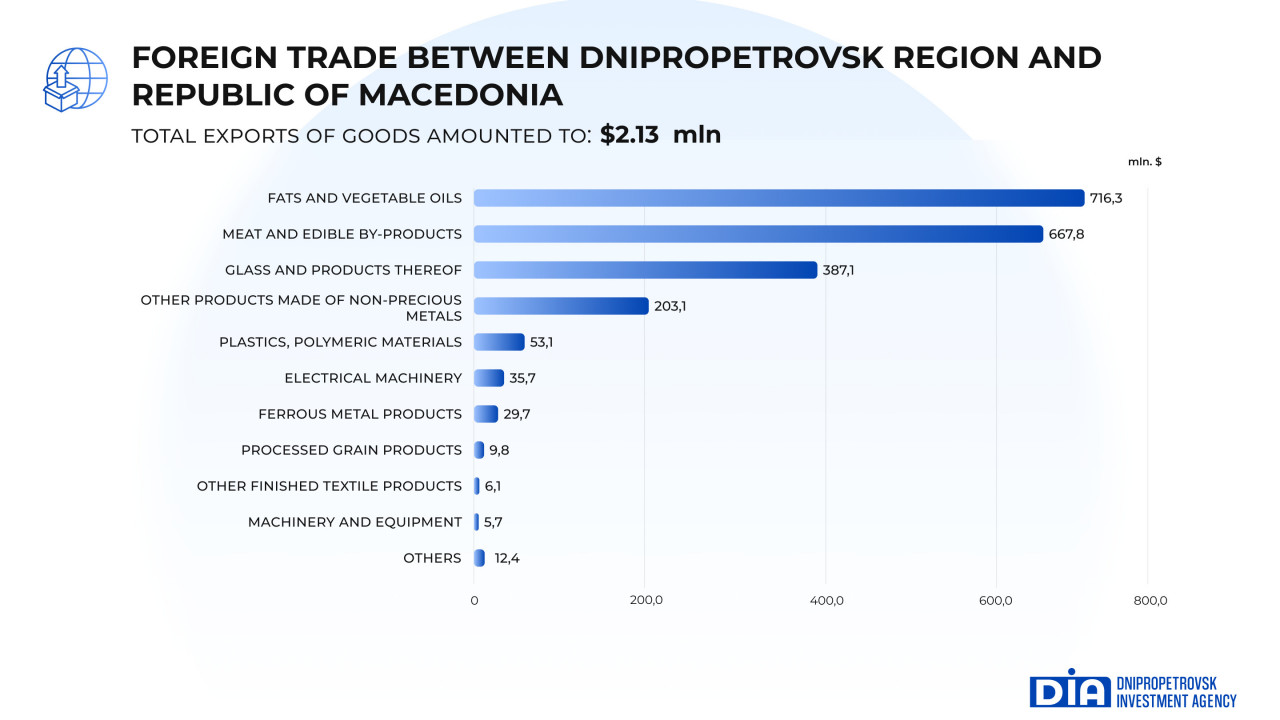
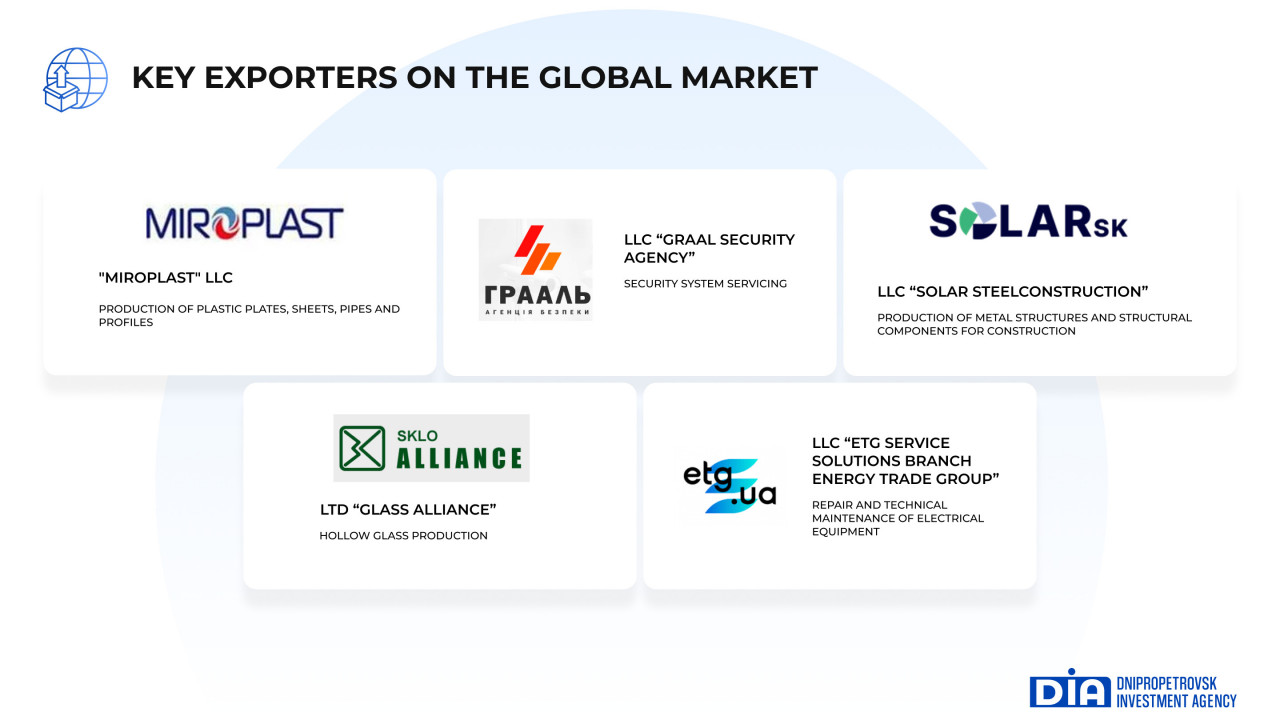
13 enterprises in Dnipropetrovsk region exported their products to the Macedonian market, including metallurgical, processing and mechanical engineering companies.
According to the volume of exported products, the TOP-5 exported enterprises include the following:
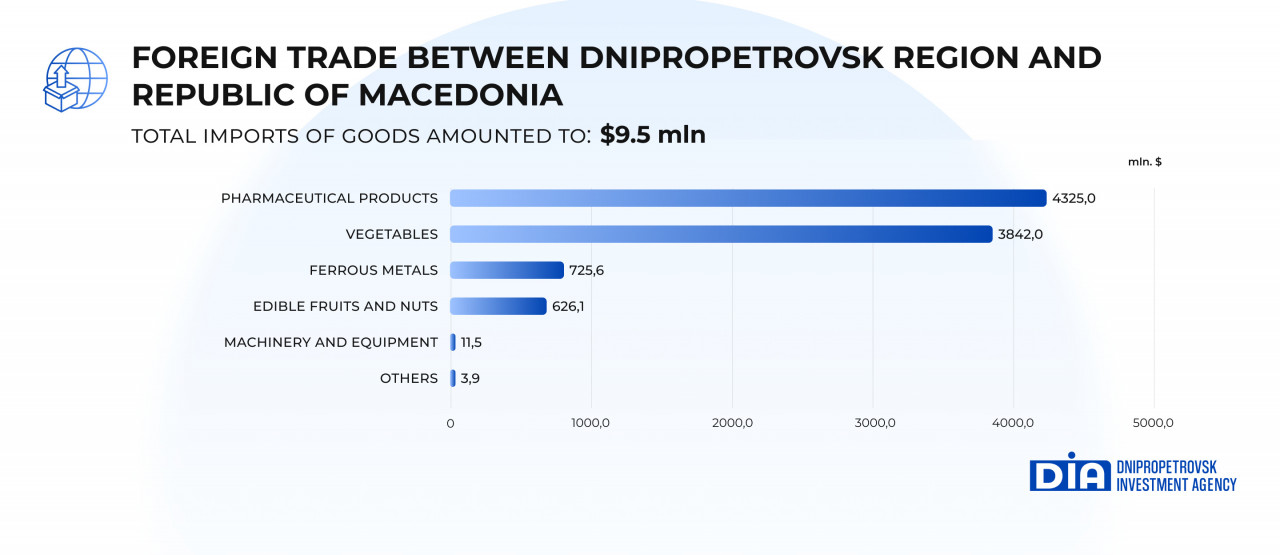
Imports of goods from the Republic of Macedonia to Dnipropetrovsk region increased 2.2 times compared to 2023 and amounted to $9.5 million.
More than 20 importing companies in the region purchased Macedonian goods, namely: medicines, vegetables, ferrous metals, edible fruits and nuts, machinery and equipment and others.
According to the volume of imported products, the TOP-5 imported enterprises include the following:
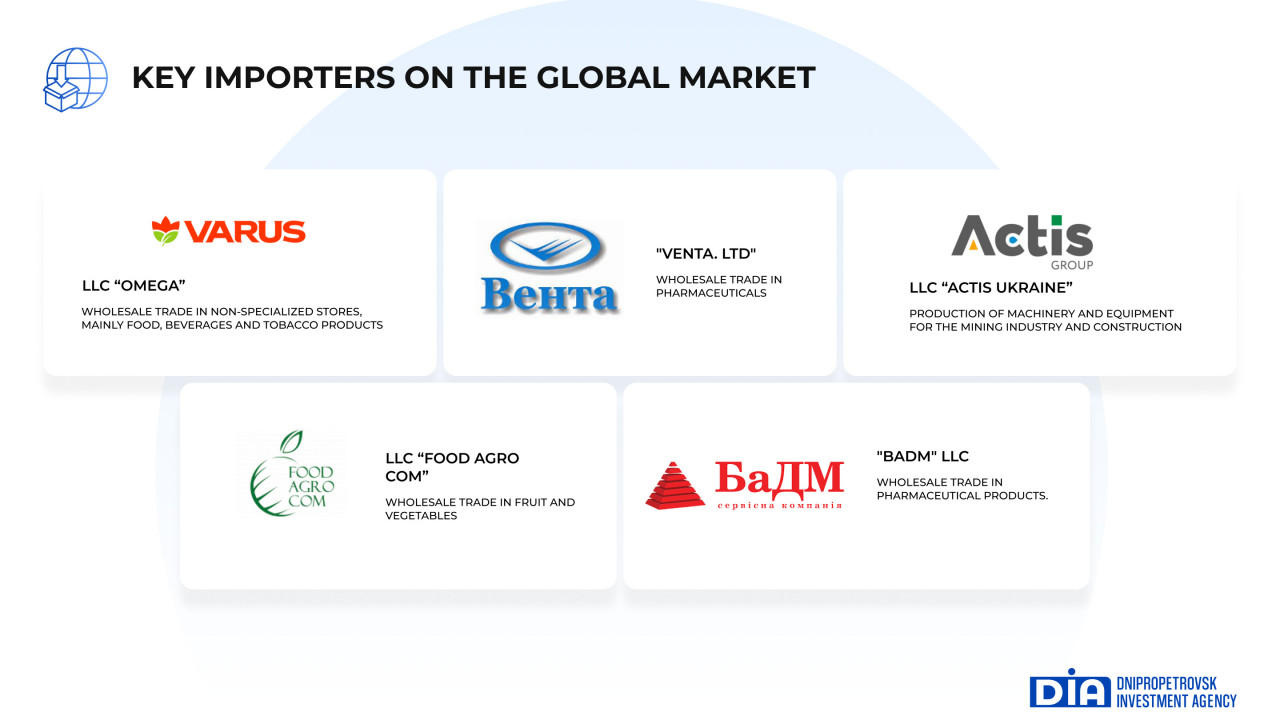
Import operations were mainly carried out by pharmaceutical, trading, food, and processing enterprises.
Source: information for the preparation of the article was taken from open online sources.