Dnipropetrovsk Investment Agency keeps introducing the level of cooperation between Ukraine, Dnipropetrovsk region and other countries amid the unprovoked military aggression of the russian federation against our state. In this publication, we offer an overview of the support provided by Netherlands and the volume of foreign trade, based on DIABASE data.
The Netherlands has become an incredibly important partner for Ukraine in countering Russian aggression. The Kingdom’s support goes beyond just symbolic actions; it includes humanitarian funding, the rebuilding of critical infrastructure, assistance to affected communities, the supply of medicines and essential goods, as well as support for international justice. A key component of this policy is the Netherlands’ participation in the investigation of Russian war crimes, human rights violations, and breaches of international humanitarian law.
On February 2, 2026, the total amount of military aid to Ukraine reached €11.7 billion. Of this amount, €2.5 bln came from direct transfers from NATO’s own reserves, €8.9 bln from commercial purchases of military equipment for Ukraine, and an additional €180 mln from contributions to NATO funds. Separately, training for Ukrainian military personnel continued: the Netherlands participated in training exercises for marines, and the European F-16 training center in Romania provided between 12 and 18 fighter jets for training.
In 2025, this support became even more extensive and, at the same time, more systematic. As early as January 16, the Netherlands allocated €20 million to strengthen Ukraine’s power system, which had suffered severe damage from Russian attacks, as well as an additional €7 million through NATO’s Comprehensive Assistance Package for Ukraine, which funds, among other things, fuel, medical supplies, winter equipment, and anti-drone measures.
Last year, the Netherlands government announced an accelerated €2 billion support package for 2025, of which €500 mln was allocated to a major drone project for Ukraine. As early as April 2025, an additional €150 mln was announced for I-HAWK medium-range systems to strengthen Ukraine’s air defense in cooperation with the United Kingdom.
In addition, the Kingdom of the Netherlands announced a new maritime aid package worth approximately €400 mln: it includes over 100 high-speed patrol boats and specialized military ships, dozens of maritime drones, as well as €20 mln for the Maritime Regional Training Centre, where Ukrainian marines are being trained. At the same time, the Netherland announced that the last promised F-16s had already been delivered to Ukraine, and support would continue through the training of pilots and technical personnel, as well as the supply of spare parts, infrastructure, and ammunition. And on June 24, the government of the Netherlands announced another package worth approximately €175 mln: 100 drone detection radars, 20 Ermine vehicles for evacuating the wounded, as well as an additional €80 mln for drones through the International Drone Coalition. It was during this period that contracts were signed with Ukrainian industry for the production of 600,000 drones as part of the previously announced €500 mln package.
At the same time, the Netherlands has consistently expanded its civilian support. On July 10, 2025, it announced €300 mln for Ukraine’s rebuilding and economic recovery in 2025–2026. Of this amount, €30 mln was allocated to the Ukraine Partnership Facility program for projects involving Dutch companies and organizations, €52 mln in 2025 for the restoration of energy infrastructure and water supply systems, and another €4 million for a new wing of the children’s hospital in Lviv in cooperation with the Princess Máxima Center in Utrecht. Separately, the Netherlands will allocate €10 mln per year in 2025 and 2026 for cyber support to Ukraine.
During the autumn of 2025, the Netherlands focused on helping Ukraine get through another winter of war. For 2026, they allocated €252 mln in civilian aid for the recovery of energy infrastructure, critical infrastructure, humanitarian demining, medical and psychosocial support, justice, democratic reforms, and cultural heritage, while also setting aside a reserve for the most urgent needs. In late October, the government allocated an additional €25 mln for energy support to Ukraine, specifically for urgent repairs, gas purchases, and backup equipment.
In January 2026, the government of the Netherlands announced an additional €23 mln in energy aid. These funds are intended for the purchase of gas from abroad, urgent repairs to power plants, and equipment from Netherlands companies, including generators and cables. Since the start of the full-scale war, the Kingdom’s total aid to Ukraine’s energy sector has reached €463 mln. Amid constant Russian attacks on the energy sector, this aid is crucial for maintaining heat, electricity, and the operation of hospitals, transportation, and water treatment systems.
On March 30–31, 2026, the second intergovernmental conference between Ukraine and the Netherlands took place in Breda. It demonstrated that cooperation is increasingly moving beyond emergency aid and is being combined with support for Ukrainian reforms and preparations for EU accession. The parties agreed to continue working on the rule of law, judicial independence, anti-corruption standards, restoring agricultural potential, strengthening energy resilience, and social policy. Separately, they reaffirmed further cooperation regarding Russia’s responsibility for the aggression, support for Ukrainian investigations into international crimes, and assistance in the return of deported children.
The current level of economic relations between Dnipropetrovsk region and the Netherlands indicates significant potential for further growth. There are 32 companies with Netherlands capital operating in the region, and the total volume of investment has exceeded $2.1 bln – accounting for 37.5% of all foreign investment in the region.
The Netherlands is an important trading partner for Dnipropetrovsk region. The high level of foreign trade activity demonstrates the strong partnership between the two countries. Netherlands companies are most interested in fats and vegetable oils, ferrous metals and products made from them, meat and edible by-products, and other goods. According to data for the first nine months of 2025, the volume of goods exported from the Dnipropetrovsk region amounted to $57.9 mln, a decrease of 3.9% compared to the same period in 2024.
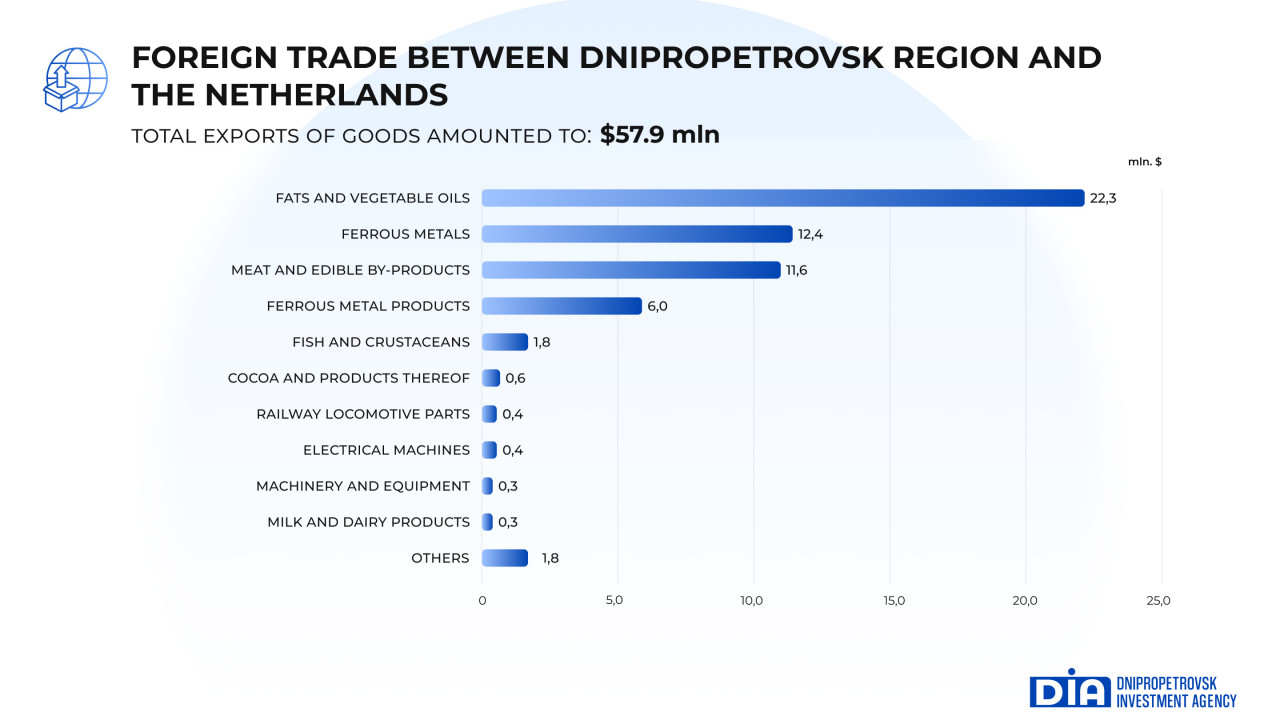
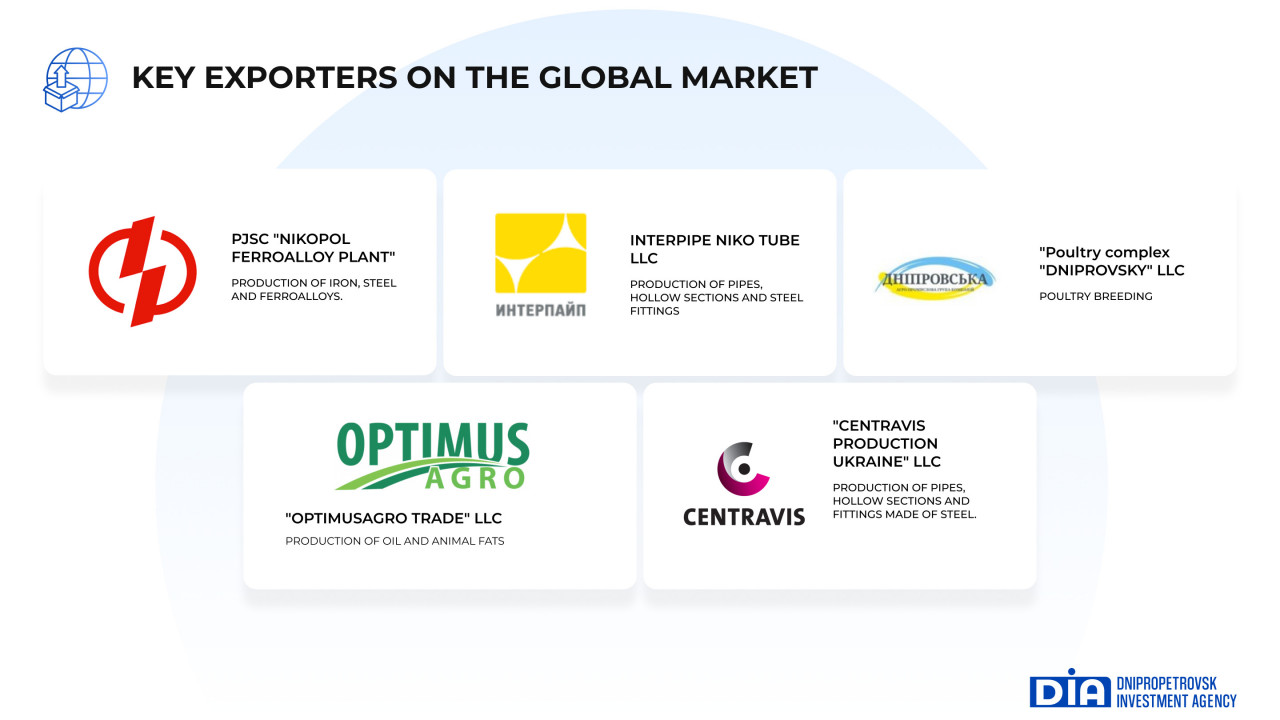
More than 60 companies in Dnipropetrovsk region exported their products to the Netherlands, including metallurgical, mechanical engineering, processing and agricultural companies.
Imports of goods from the Netherlands to Dnipropetrovsk region increased by 23.4% compared to the same period in 2024, totaling $80.8 mln.
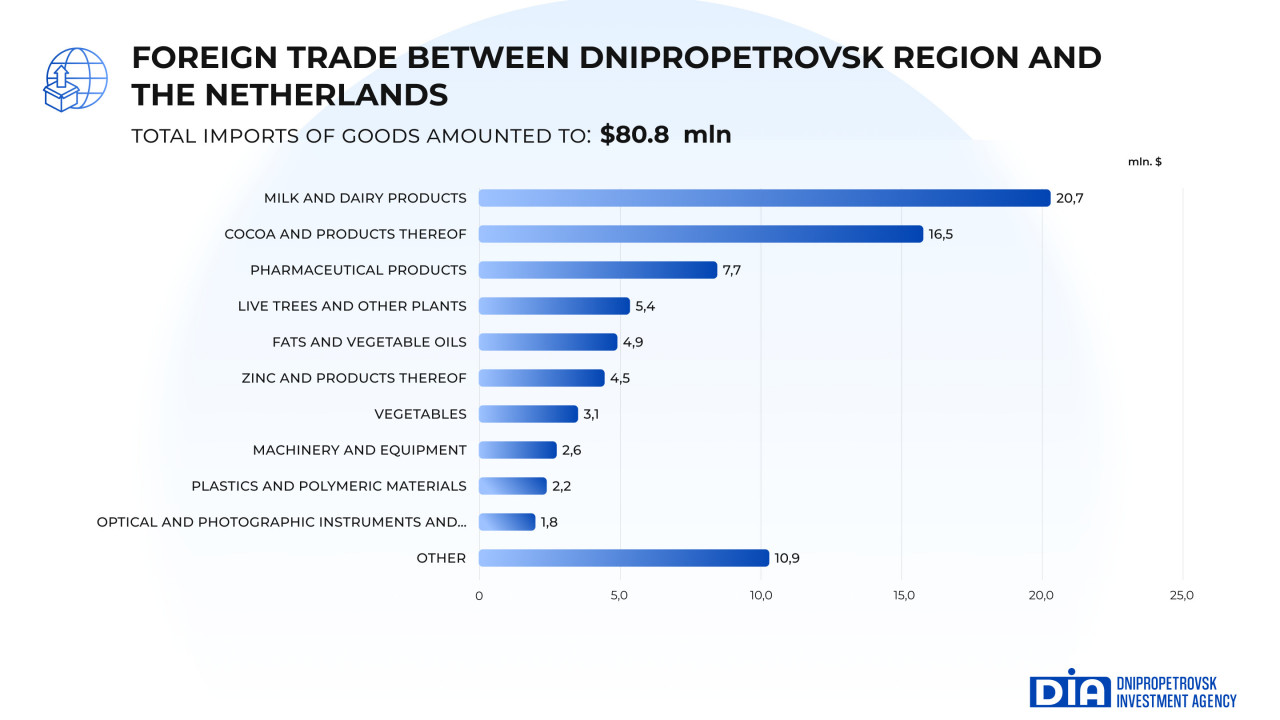
More than 200 import companies in the region purchased dairy products, cocoa and products thereof, pharmaceuticals, live trees and other plants, fats and vegetable oils, and more.
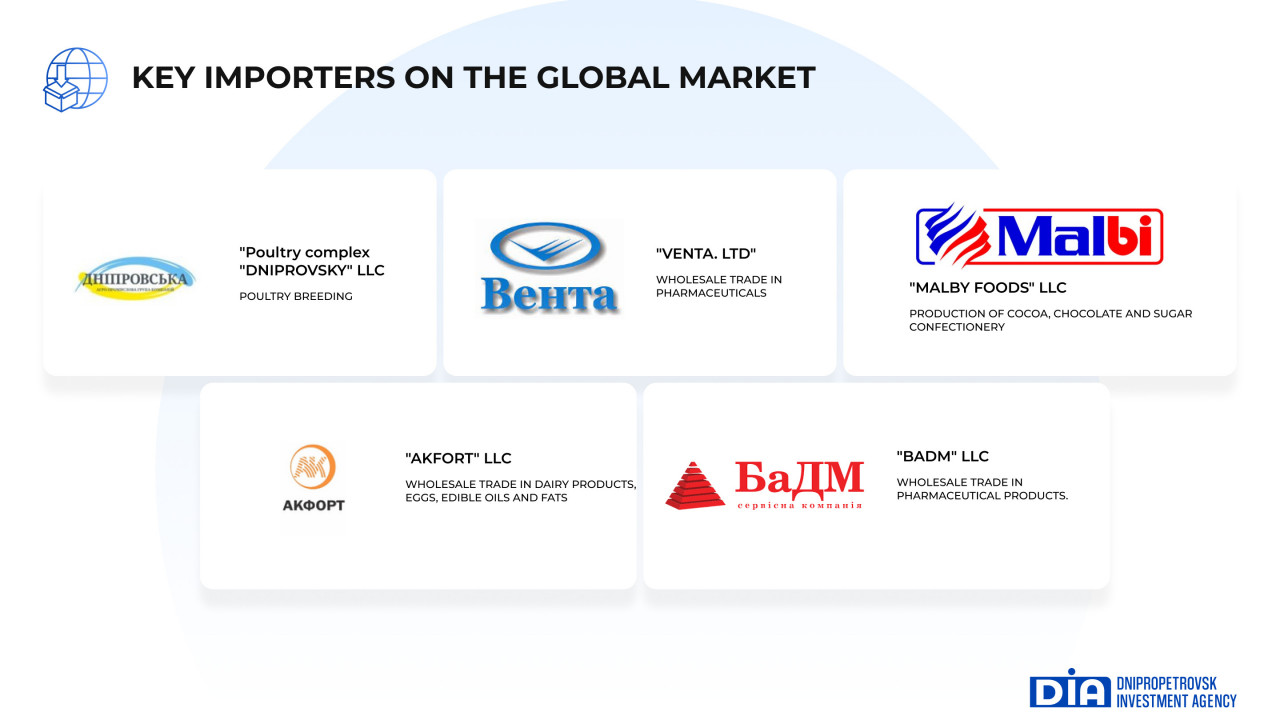
Import operations were primarily carried out by companies in the food and manufacturing industries, as well as by trading and pharmaceutical companies.
Source: the information for this article was taken from open online sources.