Dnipropetrovsk Investment Agency (DIA) has prepared an overview of the international cooperation of Ukraine and Dnipropetrovsk region amid the aggression of the russian federation. The material focuses on the support of Belgium and foreign trade indicators based on DIABASE data.
Belgium is one of Ukraine’s most consistent partners among the European Union member states, combining military, financial, humanitarian, and political support. Due to the location of key institutions of the European Union and NATO in Brussels, the country plays an important role in coordinating international assistance to Ukraine. As of 2026, the total volume of Belgian aid announced since the start of the full-scale invasion has exceeded €4.48 billion, not including Belgium’s contributions to European Union programs and international financial mechanisms.
In 2025, support for Ukraine became one of the priorities of the new Belgian federal government. During a visit to Kyiv in April 2025, Prime Minister Bart De Wever announced a new military aid package worth €1 billion, and also confirmed his intention to allocate at least this amount annually throughout the term of the current government. The package included weapons systems, ammunition, armored vehicles, air defense systems, unmanned systems, and support for international defense coalitions. Belgium paid special attention to the training of Ukrainian servicemen, the training of pilots and technical personnel within the international F-16 coalition, as well as the development of cooperation between the defense enterprises of the two countries.
In 2026, Belgium confirmed the continuity of its policy of supporting Ukraine by approving another military aid package worth €1 billion. It provides for financing international coalitions for the development of air defense, artillery, unmanned technologies, humanitarian demining, continued participation in the F-16 coalition, as well as a contribution of €100 million to the international PURL initiative, which ensures the procurement of American weapons for Ukraine. At the same time, the Belgian government announced the expansion of cooperation between the defense-industrial complexes of Ukraine and Belgium, which is expected to contribute to the localization of production of certain types of weapons and the development of joint technological projects.
Belgium confirmed its intention to transfer 7 F-16 aircraft to Ukraine. Of these, 3 are fully ready to carry out combat missions, and 4 are designated as sources of spare parts and for training purposes. The possibility of transferring additional aircraft in the future is also being considered.
Alongside military support, Belgium remains one of Ukraine’s largest humanitarian donors. The total volume of civilian aid has exceeded €430 million, of which more than €128 million has been directed to humanitarian response through international organizations, including UNICEF, the Office of the United Nations High Commissioner for Refugees, the World Food Programme, the International Organization for Migration, and other humanitarian structures. The assistance covers providing the population with food, medicine, and temporary housing, supporting energy infrastructure, and eliminating the consequences of russian attacks. Separate funding has been allocated for the protection of human rights, documentation of war crimes, and the return of deported Ukrainian children.
An important component of Belgian policy has been support for Ukraine’s post-war recovery. In 2025, the implementation of the four-year BE-Relieve program with a total budget of €150 million began, implemented by the Belgian development agency Enabel. The program is aimed at restoring energy, medical, and educational infrastructure, developing vocational education, rehabilitating medical facilities, ensuring emergency power supply, and preparing Ukraine for integration with European Union standards. The main regions for project implementation are Kyiv and Chernihiv oblasts.
The Kingdom of Belgium pays significant attention to supporting the Ukrainian economy. Through the Belgian Investment Company for Developing Countries (BIO), €18 million has been allocated to increase the resilience of the Ukrainian private sector, and the state agency Credendo provides export credit guarantees worth €100 million, which allows Belgian companies to participate more actively in the implementation of Ukraine’s reconstruction projects.
Belgium also plays a special role in financially supporting Ukraine through the mechanism of using proceeds from frozen russian assets held at the Belgian financial institution Euroclear. In accordance with European Union decisions, proceeds from these assets are directed toward repaying G7 loans for Ukraine, and the tax revenues received by Belgium from these profits are used to finance assistance programs for the Ukrainian state and its citizens.
The development of mutually beneficial trade and economic cooperation also remains an important priority for both countries. An analysis of export and import operations between the Dnipropetrovsk region and the Kingdom of Belgium demonstrates a high level of partnership relations, as this state is an important trading partner of the oblast.
Belgian enterprises are most interested in mineral products, ferrous metal products, fats and vegetable oil, finished textile products and ohers. Based on the results of 9 months of 2025, the volume of exports of goods from Dnipropetrovsk region amounted to $18.1 million and decreased by 14.2% compared to the corresponding period of 2024.
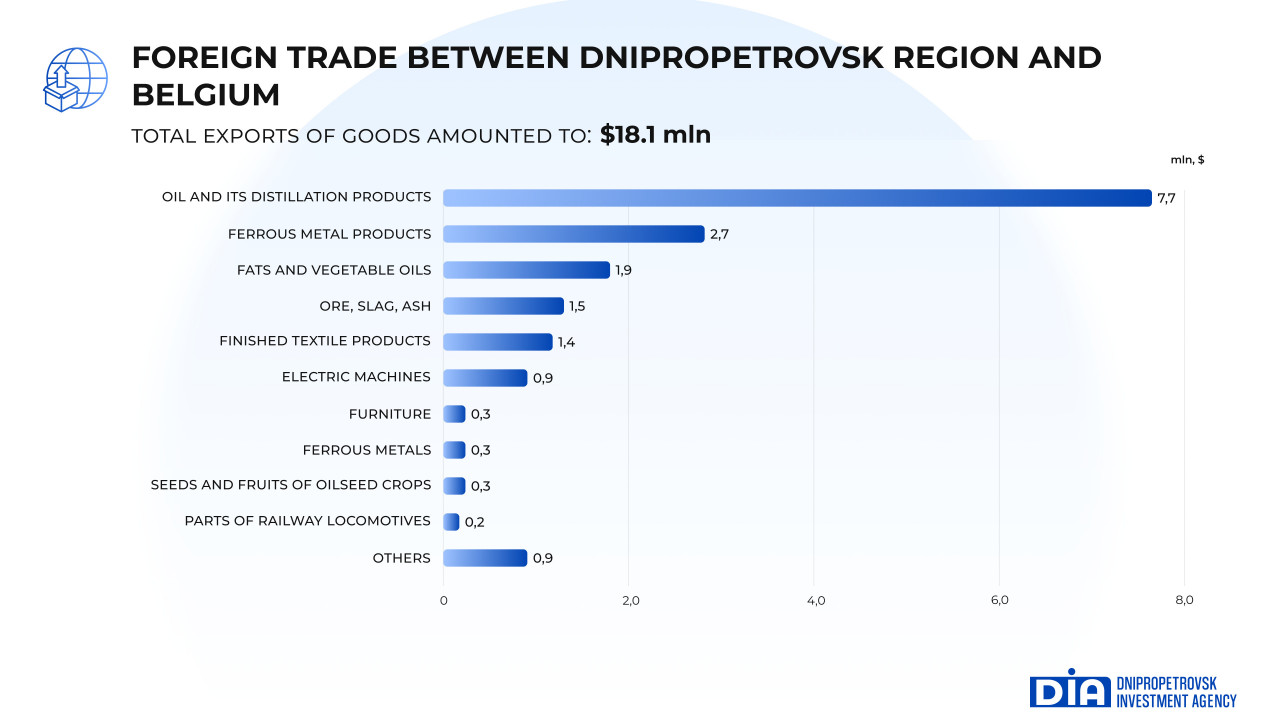
About 40 enterprises of Dnipropetrovsk region exported their products to the Belgian market; these are enterprises of the mining and metallurgical complex, the processing industry, and the agro-industrial complex.
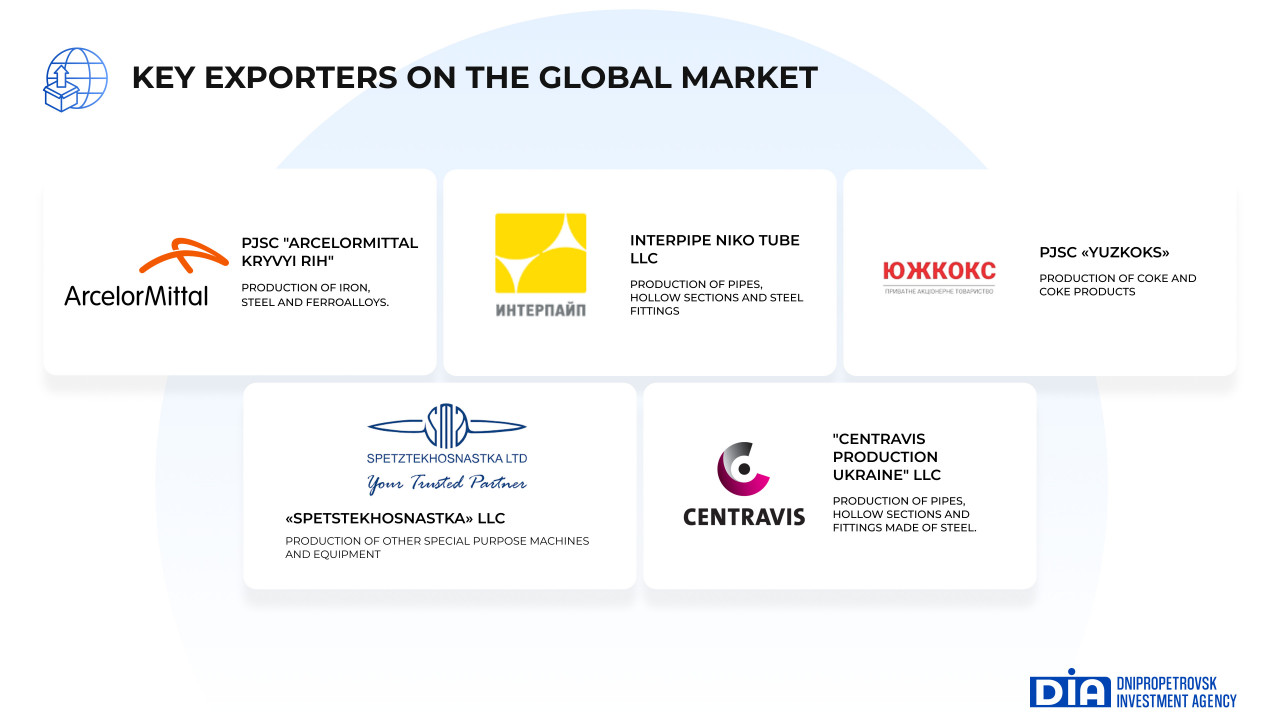
By volume of exported products, the following enterprises are among the TOP 5 exporters:
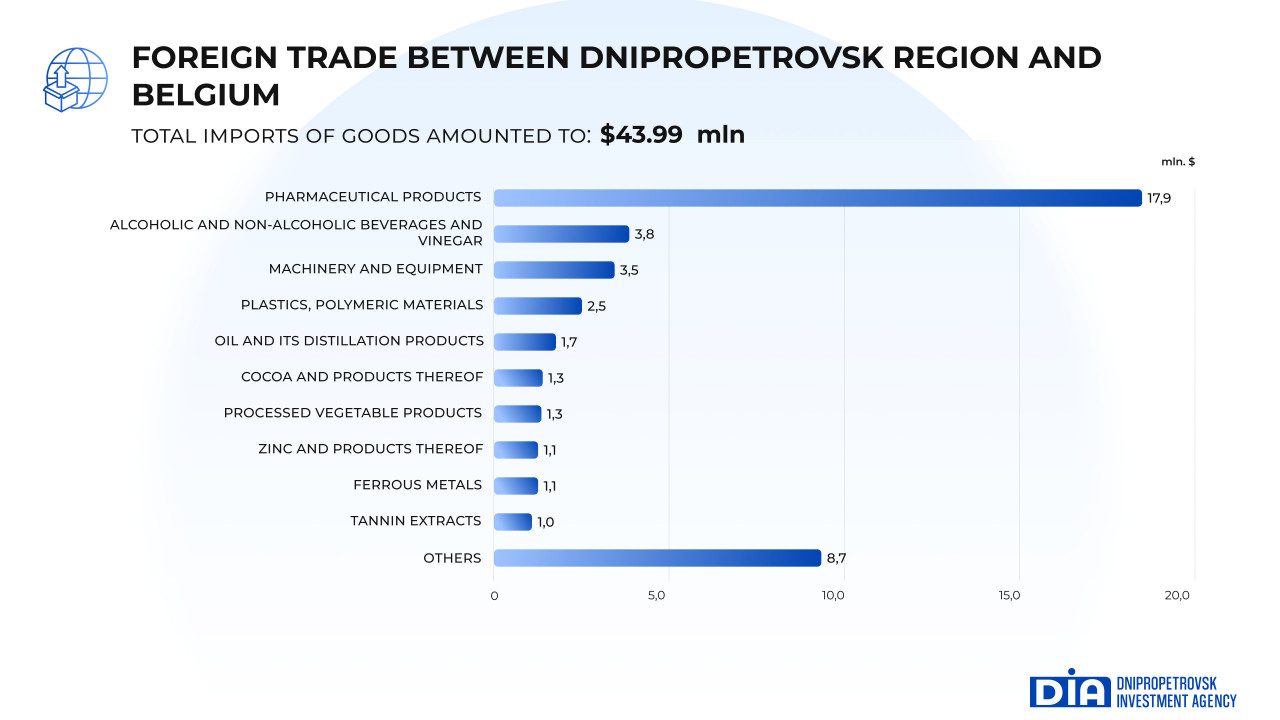
Imports of goods from Belgium to Dnipropetrovsk region increased by 12.1% compared to 9 months of 2024 and amounted to $46.5 million.
More than 130 importing enterprises of the region purchased Belgian goods the most, namely: medicines, alcoholic and non-alcoholic beverages, machinery and equipment, plastics, polymer materials, and others.
By volume of imported products, the following importing enterprises are among the TOP 5:
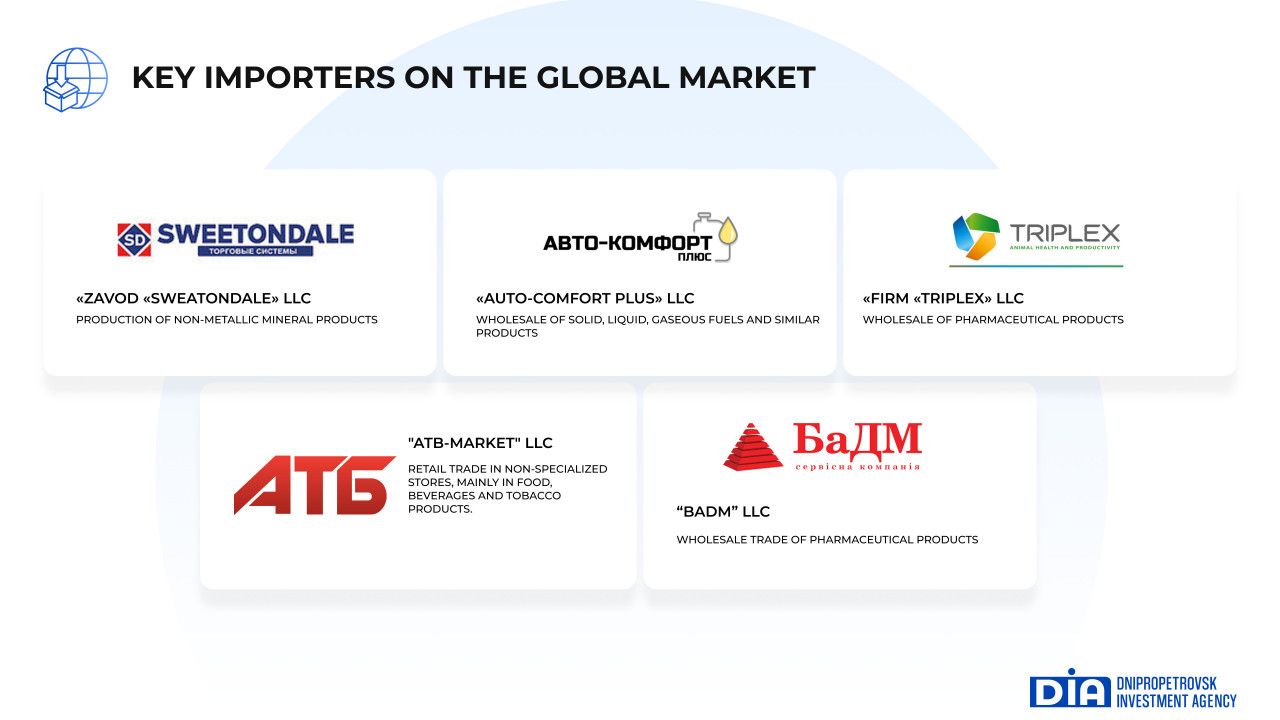
Import operations were mainly carried out by pharmaceutical, trade, food, and machine-building enterprises.
Source: information for preparing the article was taken from open online sources