Dnipropetrovsk Investment Agency (DIA) has prepared an overview of the international cooperation of Ukraine and Dnipropetrovsk region amid the aggression of the russian federation. The material focuses on the support of Spain and foreign trade indicators based on DIABASE data.
Throughout 2025–2026, the Kingdom of Spain remained one of Ukraine’s important European partners, combining military, humanitarian, financial, and political support. Madrid’s assistance gradually extended beyond the supply of military equipment and encompassed the training of Ukrainian service members, the restoration of energy and transport infrastructure, support for the population affected by the war, and the creation of conditions for the participation of Spanish business in the reconstruction of Ukraine.
The basis of bilateral cooperation remained the security agreement signed by Ukraine and Spain in May 2024. In accordance with the commitments undertaken, in 2025 the Spanish government allocated about €1 billion in military assistance. In November 2025, during the visit of the President of Ukraine, Volodymyr Zelenskyy, to Madrid, Prime Minister Pedro Sánchez announced the mobilization of a new support package totaling €817 million. Of this amount, €615 million was directed specifically to Ukraine’s defense needs.
The military package provided for the transfer of equipment for air defense, counter-drone operations, and the protection of critical infrastructure. About €300 million was planned for new defense equipment. A further €100 million was directed by Spain to NATO’s PURL program for the accelerated procurement of air defense systems and other critically needed weaponry. An additional €215 million was envisaged through the European SAFE instrument for the production of anti-drone systems, air surveillance radars, and other equipment, including with the participation of Spanish enterprises.
An important component of military assistance was the training of Ukrainian service members. Spain takes an active part in the European Union Military Assistance Mission in support of Ukraine (EUMAM Ukraine). The training covers basic military preparation, tactical medicine, unit command, work with artillery and anti-aircraft systems, as well as specialized courses for individual branches of the armed forces. As of April 2026, more than 9,000 Ukrainian troops had completed training in Spain. According to the Spanish government, in 2025 the country was the fourth-largest participant in the training of Ukrainian service members among partner states.
In March 2026, Spain confirmed the continuation of large-scale military support, announcing another €1 billion in bilateral military assistance for 2026. The priorities identified were air defense, artillery ammunition, unmanned systems, and technological cooperation between the defense enterprises of the two states. The total volume of Spain’s military support since the beginning of the full-scale invasion had, by that point, approached €4 billion.
A particular emphasis in 2026 was placed on the development of joint defense production. Ukraine and Spain agreed to promote cooperation between enterprises, the joint manufacture of weapons, and the use of European financial instruments to expand production capacities. This approach reflects a gradual transition from one-off deliveries to a long-term industrial partnership intended to strengthen Ukraine’s defense capability and European defense autonomy.
Alongside military assistance, Spain strengthened its support for Ukraine’s recovery. From the package announced in November 2025, €200 million was directed to a new reconstruction financing mechanism. Its coordination was entrusted to the Spanish Office for the Reconstruction of Ukraine. The mechanism is intended to ensure the participation of Spanish companies in the modernization of energy, transport, water supply, and other infrastructure facilities.
One of the practical areas of cooperation was the restoration of railway infrastructure. In March 2026, the parties signed an agreement on financial and technical cooperation, which provides for the implementation of a railway project using Spanish double-track technology. For Ukraine, this is significant not only from the standpoint of repairing the transport network but also in the context of gradual alignment with the European railway system and the development of logistics corridors to the EU.
Spain also supported the restoration of municipal infrastructure. At the end of 2025, a joint project was announced between the Spanish Agency for International Development Cooperation (AECID) and the United Nations, worth about €2 million, for the reconstruction of a district heating system in one of Ukraine’s populated localities. It was expected that the implementation of the project would make it possible to restore heat supply for more than 28,000 people.
A significant portion of humanitarian support over the past year was directed at overcoming the consequences of russian strikes on Ukraine’s energy system. In October 2025, Spain handed over 70 generators to Ukraine in preparation for the winter period. In February 2026, an additional six high- and medium-capacity generators with a total capacity of about 6.3 MW were provided through AECID. The equipment was intended to supply electricity to critical facilities and to help more than 14,000 people.
Political support for Ukraine over the past year remained consistent. Spain supported the European Union’s sanctions against russia, the use of proceeds from frozen russian assets for the benefit of Ukraine, and Ukraine’s European integration. Madrid repeatedly emphasized that a peaceful settlement must be based on the sovereignty, territorial integrity of Ukraine, and international law. In January 2026, Pedro Sánchez separately confirmed his support for Ukraine’s accession to the European Union.
An important part of the cooperation was also countering russian disinformation. In November 2025, Ukraine and Spain signed a memorandum on cooperation in the information sphere. The document provides for the exchange of experience and the coordination of measures against propaganda and external information interference. A separate memorandum was concluded to develop cooperation in the tourism sector, which is regarded as one of the areas of Ukraine’s future economic recovery.
The country remains an important trading partner of the Dnipropetrovsk region. The high level of partnership relations is evidenced by a bilateral analysis of foreign activity. Spanish enterprises are most interested in fats and vegetable oil, ferrous metals and articles thereof, meat and edible offal, and the like. Based on the results of the nine months of 2025, the volume of goods exports from the Dnipropetrovsk region amounted to $101.2 million and decreased by 13.9% compared to the corresponding period of 2024.
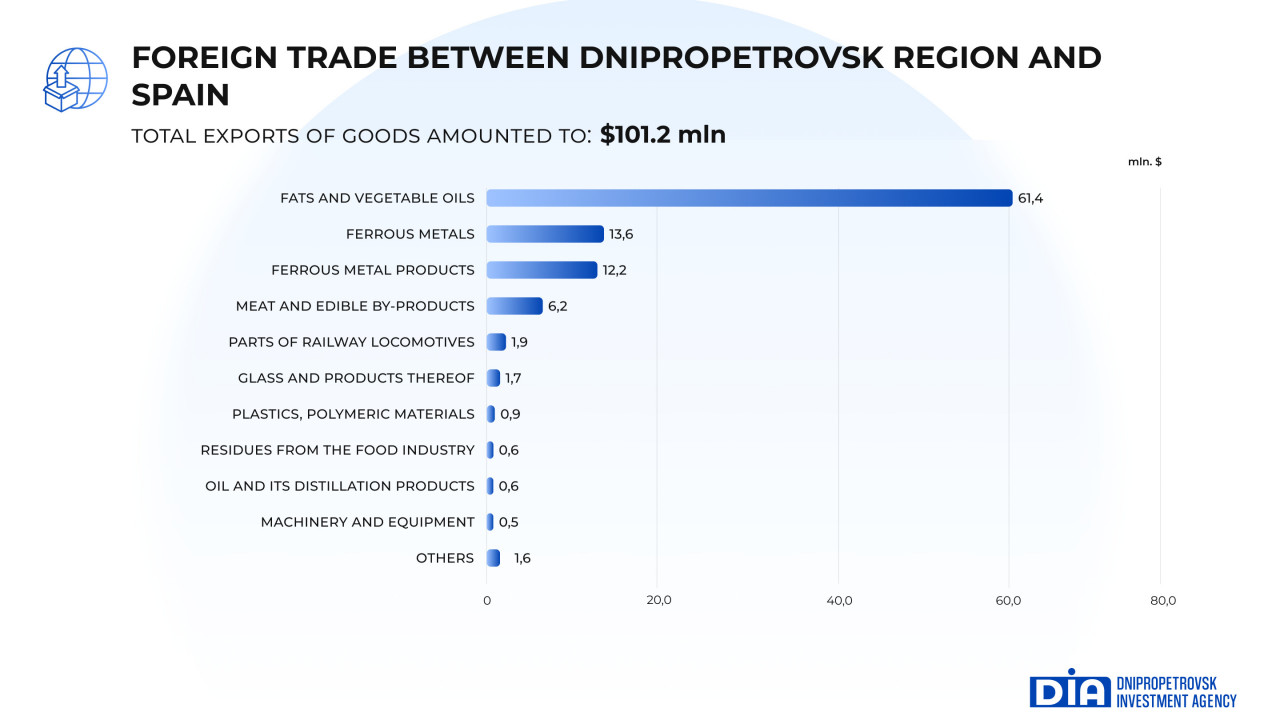
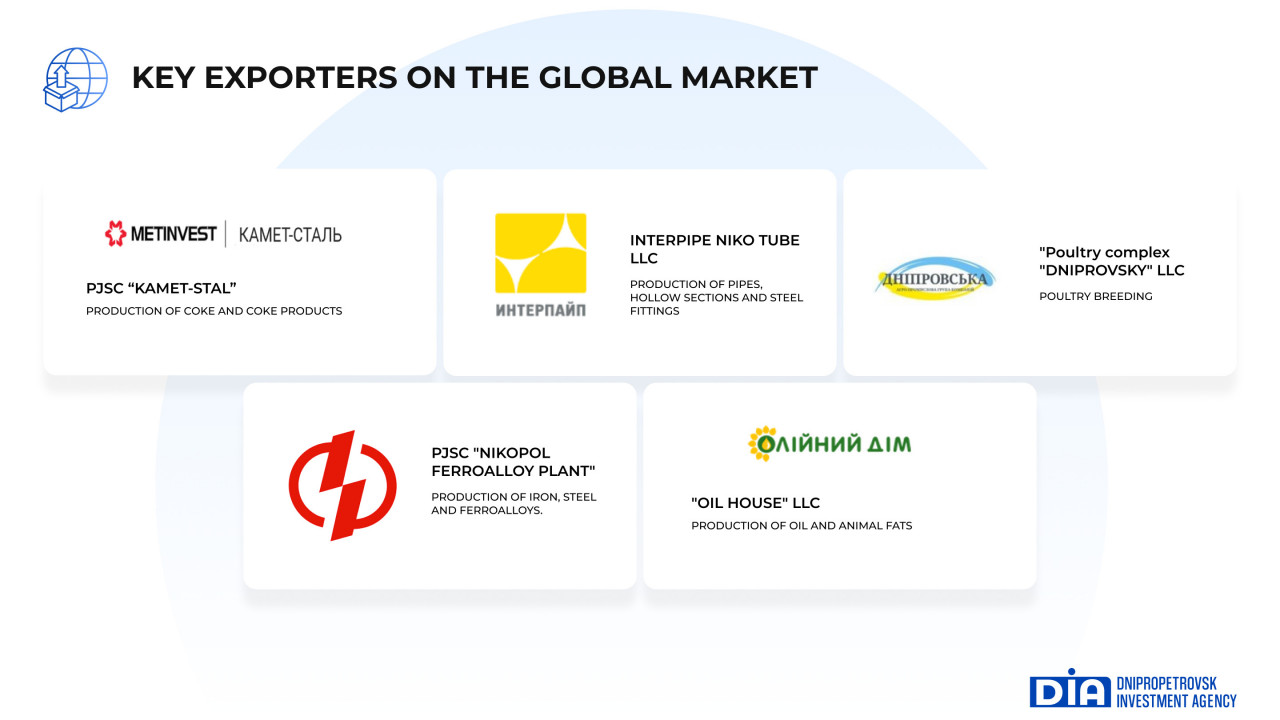
About 100 enterprises of the Dnipropetrovsk region exported their products to the Spanish market; these are enterprises of the mining and metallurgical complex and the agro-industrial complex, as well as machine-building, food, and processing companies.
Imports of goods from Spain to the Dnipropetrovsk region increased by 12.8% compared to the corresponding period of 2024 and amounted to $59.5 million.
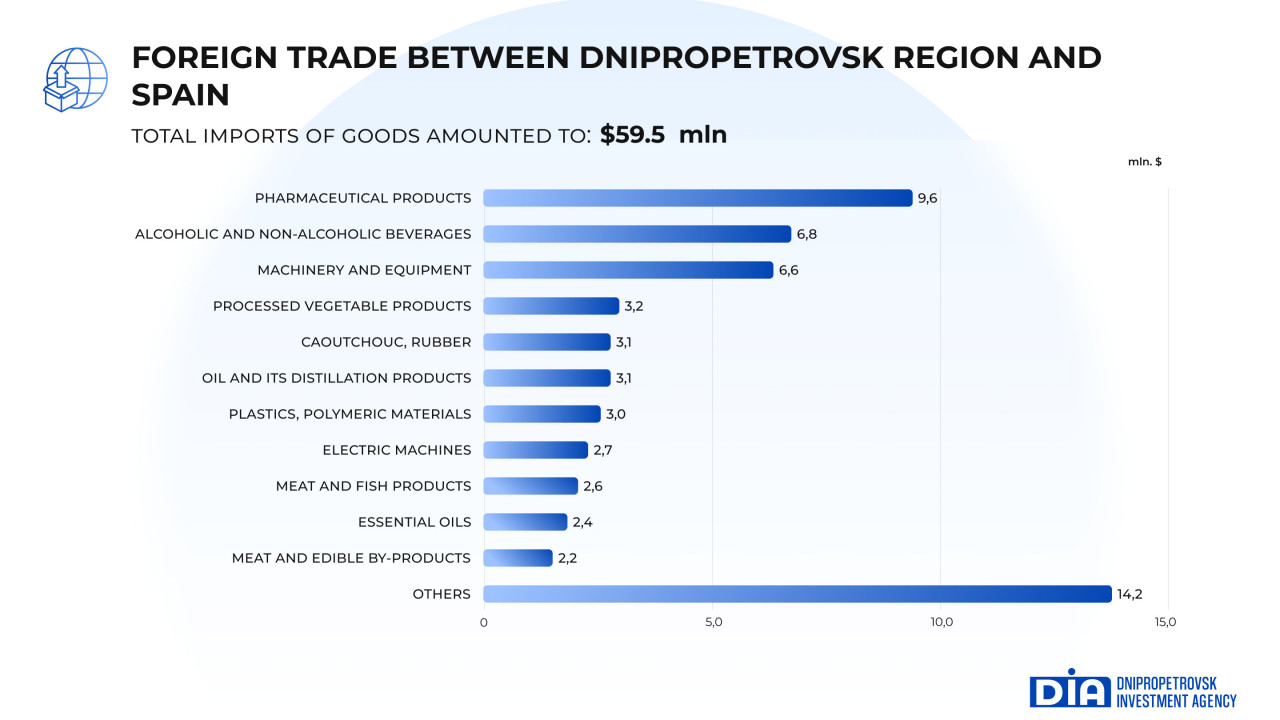
240 importing enterprises of the region purchased pharmaceutical products, alcoholic and non-alcoholic beverages, machinery and equipment, processed vegetable products, and the like.
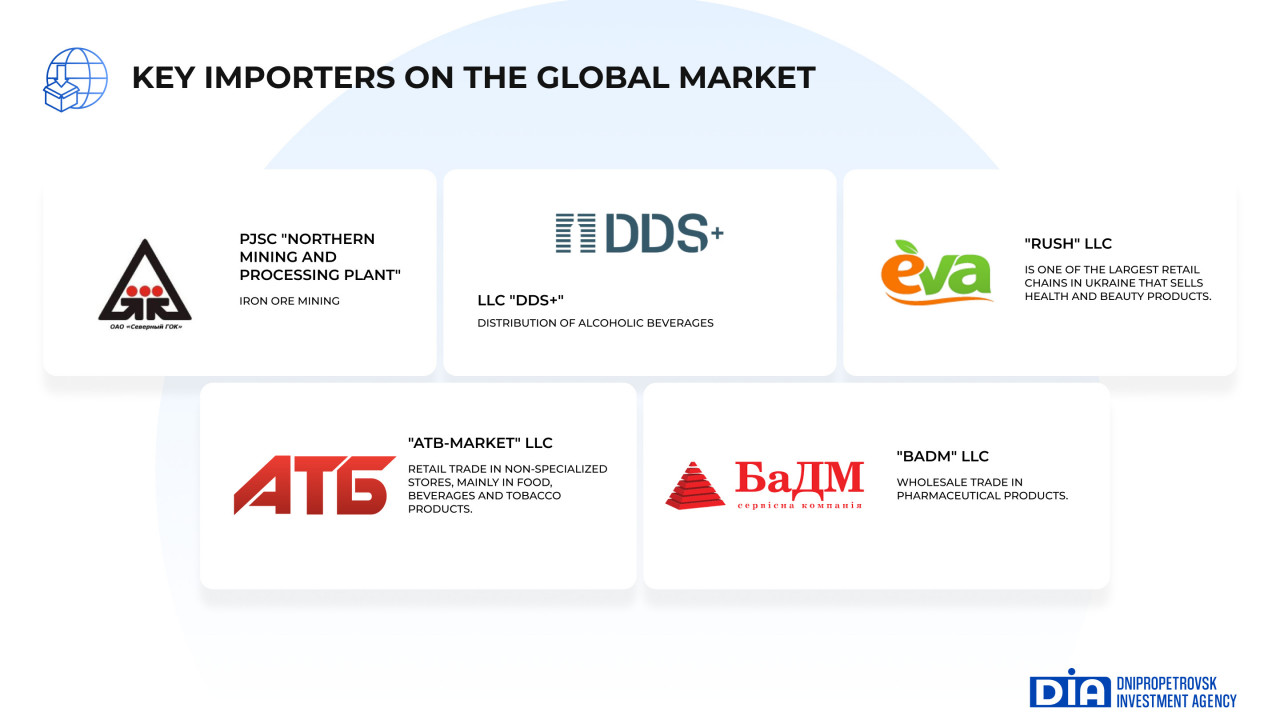
Import operations were carried out mainly by enterprises of the food and processing industries, as well as trading and pharmaceutical companies.
Source: information for preparing the article was taken from open online sources