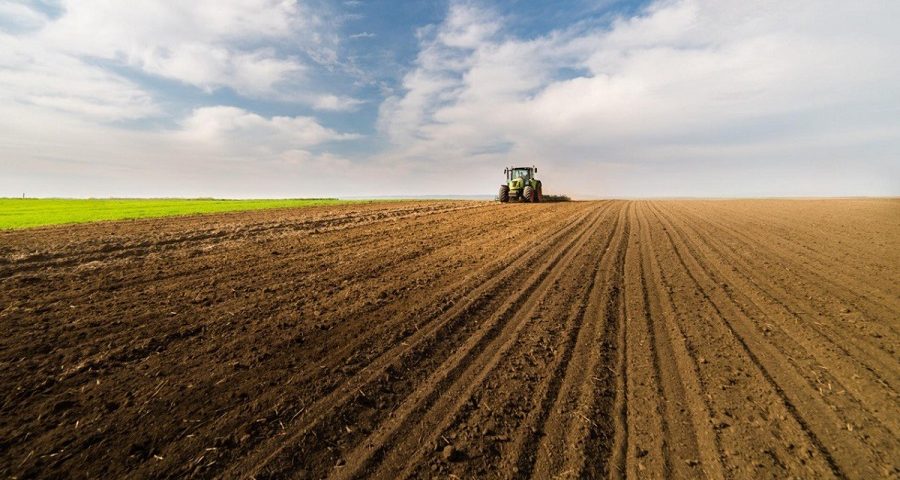
The agricultural sector of Dnipropetrovsk region maintained stable production during the 2024–2025 marketing year, despite the challenges posed by the war: shelling, destruction of facilities, a reduction in cultivated land, the need for demining, changes in logistics, and rising costs of energy and credit. An additional risk factor remains the region’s challenging agroclimatic conditions, which have worsened following the destruction of the Kakhovka Hydroelectric Power Plant and disruptions to irrigation in the southern part of the region. Under these conditions, agricultural producers are forced to adapt their crop rotation and partially relocate their operations to safer areas.
The region’s development strategy until 2027 focuses on the processing of agricultural raw materials, the development of logistics, livestock farming, agriculture, organic production, as well as fruit, berry, and vegetable production. The agro-industrial complex of the region employs approximately 150,000 workers, or 12% of the economically active population. Production is carried out by 3,544 enterprises, 87% of which are micro-enterprises. In addition, over 9,200 agricultural individual entrepreneurs are registered in the region—the highest figure in Ukraine, making the sector more flexible and resilient to crises. At the same time, a severe shortage of personnel, particularly machine operators and agronomists, remains a critical problem.
Dnipropetrovsk region is one of the key agricultural regions of Ukraine. The value of agricultural output amounts to approximately $4 billion, or 8% of Ukraine’s total agricultural output, and has exceeded pre-war levels since 2024. Of this amount, $989 million comes from crop production, $97.4 million from livestock production, and $2.9 billion from food production. This confirms that processing is the main driver of added value in the region.
Despite losses in certain sectors, particularly in fruit growing and the production of soybeans and legumes due to shelling and drought, the region has maintained stability in grain and oilseed crops. Production of wheat, corn, melons, and raspberries has increased. At the same time, the region has significant potential for improving efficiency, as fertilizer use remains lower than in EU countries. The region holds a particularly strong position in sunflower production, with a gross harvest exceeding that of many European countries.
In the livestock sector, the region is showing positive growth, particularly in poultry and pig farming. Dnipropetrovsk region remains one of Ukraine’s leaders in terms of poultry stock and egg production, with this growth driven by investments from large poultry farms in expanding their operations. This strengthens the region’s position as a major producer of livestock products not only in Ukraine but also in the European context.
The food industry plays the most significant role in the resilience of the agro-industrial complex. It has served as a financial buffer for the region amid the risks associated with agriculture. Even when yields of certain crops decline, processing enterprises ensure stable revenue. Following a downturn in 2022, the food sector has shown growth for three consecutive years. The best performance has been seen in bread, oil, and fat production, vegetable processing, and feed production. This indicates the formation of closed production cycles and increased demand specifically for investments in processing, rather than just raw material production.
The Dnipropetrovsk region also holds a strong position in the domestic food market, particularly in chocolate production, vegetable processing, and meat production. In terms of food sales volume, the region effectively serves as Ukraine’s Agri-Food Hub, laying the groundwork for the integration of the local agro-industrial complex into the EU economy.
The development of the agricultural sector in Ukraine during 2024–2026 is taking place within the framework of the Ukraine Facility and is coordinated with the new EU Common Agricultural Policy. In 2024, the Strategy of Agricultural and Rural Development until 2030 was adopted, which provides for support for small and medium-sized producers, the development of rural areas, and the greening and digitalization of the agricultural sector. In 2025, the Law on State Support for Agriculture in Ukraine was adopted, opening access to European funds for candidate countries.
Key support tools included the State Agricultural Register, which provides digital access to grants, subsidies, and preferential loans, as well as European and international support programs: LEADER, IPRSA, GRAIN, UIF, the Partial Credit Guarantee Fund, and programs run by the FAO and the World Bank. These programs create opportunities for the development of processing, logistics, storage, small farms, and rural areas.
Thus, in the 2024–2025 marketing year, the agricultural sector of Dnipropetrovsk region demonstrates not only resilience to the challenges of war but also a gradual transformation from a raw materials-based model to an agro-industrial one. The region’s main strengths are the scale of production, a developed food processing sector, a large number of small producers, and the potential for integration into European development programs.