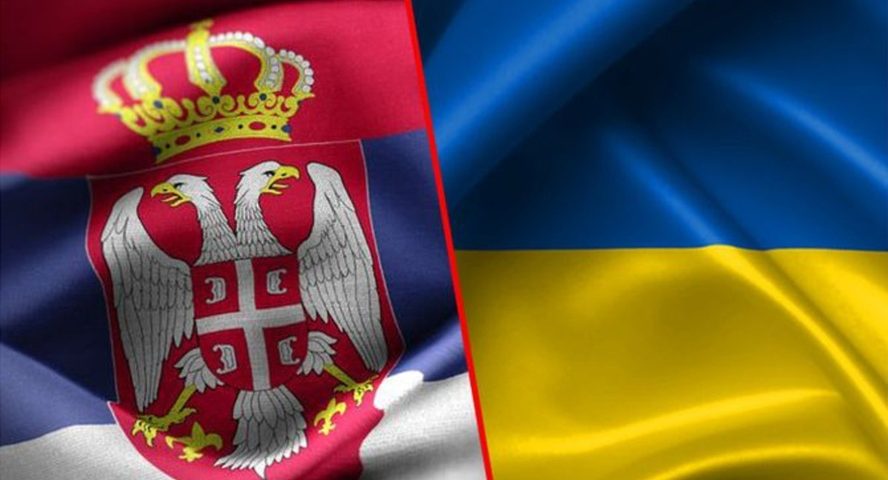
Dnipropetrovsk Investment Agency keeps introducing about the level of Ukraine and Dnipropetrovsk region cooperation with other countries amid the unprovoked military aggression by the russian federation. For now, we propose an overview of the assistance provided by Serbia and the foreign trade volume figures, which is derived from DIABASE data.
The Republic of Serbia has supported Ukraine during the war against Russia unevenly and across different dimensions. On the one hand, this has included humanitarian decisions, the reception of Ukrainians, and voting in support of Ukraine at the United Nations. On the other hand, Serbia has refused to join EU sanctions against Russia and has consistently pursued a policy of balancing. Separately, there is a third, highly sensitive dimension — Serbian ammunition which, according to reports by Western media and government sources, has reached Ukraine indirectly through third countries.
Since the start of the full-scale war, Belgrade has directed humanitarian assistance to Ukraine, primarily focused on supporting civilians and restoring basic services. Public statements by the Serbian side refer to the delivery of food products, medicines, and energy equipment intended to help communities cope with electricity shortages and ensure the functioning of critical facilities. Part of this energy equipment was delivered through the European Union Civil Protection Mechanism, which simplified logistics and delivery under wartime conditions. Serbia also adopted decisions on humanitarian cargoes in response to specific humanitarian crises caused by russia’s actions, including after the destruction of the Kakhovka Hydroelectric Power Plant and the resulting disaster in southern Ukraine.
As of September 2025, the volume of direct investment from the Republic of Serbia in Ukraine amounted to $23.7 million. A total of 118 Serbian companies operate in Ukraine, and their presence is largely practical and operational in nature. These companies are mainly active in trade and distribution, import-export operations and logistics support, the supply of industrial and construction materials, selected areas of agribusiness and food processing, services (including IT outsourcing, engineering, and maintenance), as well as pharmaceuticals, equipment, and consumer goods. Overall, this creates a targeted yet noticeable economic presence focused on sales markets, partnership networks, and supply chains.
Growth in foreign trade between Ukraine and Serbia was observed in 2024, indicating a gradual recovery and further development of economic ties between the two countries. Bilateral trade in goods reached $345.7 million, up by 8.4% compared to 2023. Of this amount, exports of Ukrainian goods to Serbia totaled $130.1 million, primarily consisting of mineral products, ferrous metals, and articles thereof. Imports of Serbian goods to Ukraine amounted to $215.6 million and mainly included fertilizers, plastics and polymer materials, paper and cardboard, as well as rubber and products thereof.
For Dnipropetrovsk region, Serbia also remains a promising trade partner. Foreign trade turnover between the region and Serbia increased by 27% compared to the previous year.
Serbian businesses showed the greatest interest in mineral products, ferrous metals and products thereof, fish and crustaceans, and other goods. Exports of goods from Dnipropetrovsk region amounted to $64.6 million, which is 33.1% higher than in 2023. The region accounted for 49.6% of Ukraine’s total exports to Serbia.
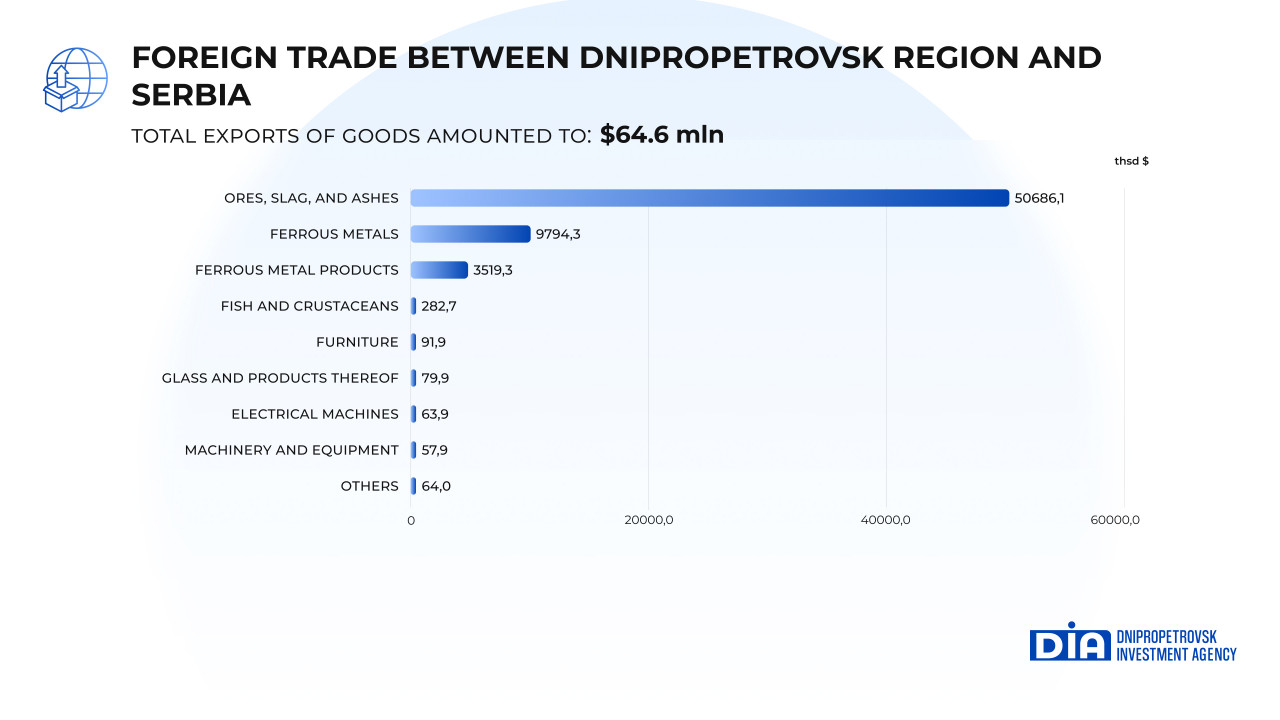
More than 20 enterprises from Dnipropetrovsk region exported their products to the Serbian market, including companies from the mining and metallurgical sector, manufacturing industry, and machine-building industry.
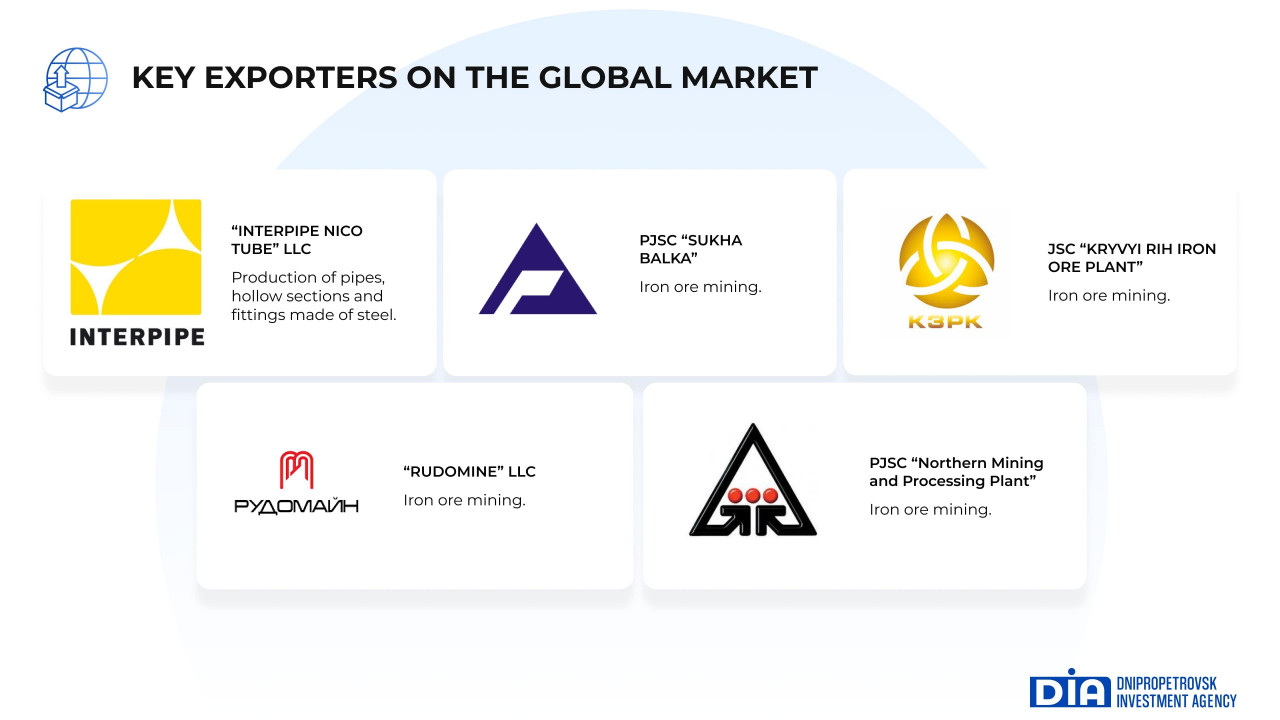
In terms of export volume, the TOP-5 exporting enterprises are the following:
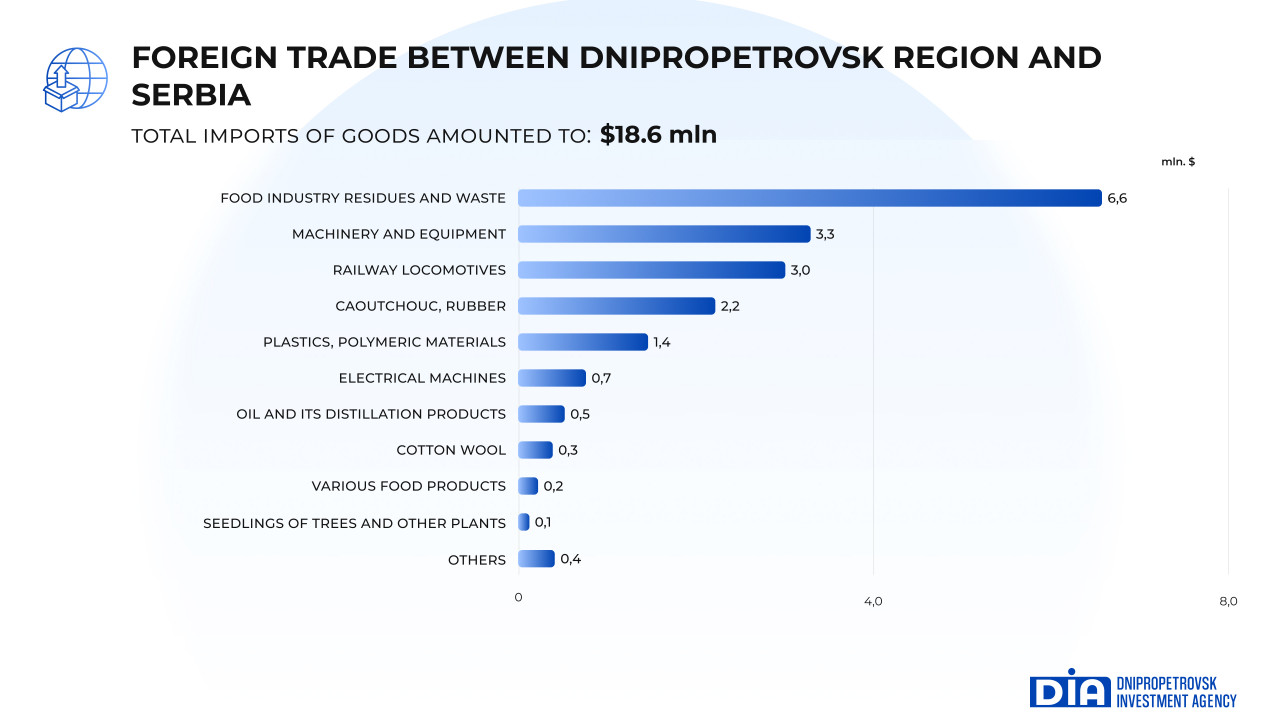
At the same time, 40 importing enterprises in the region purchased Serbian goods, primarily residues from the food industry, machinery and equipment, parts for railway locomotives, rubber, and other goods. Imports of Serbian goods to Dnipropetrovsk region increased by 10.4% and amounted to $18.6 million. The region accounted for 8.6% of Ukraine’s total imports from Serbia.
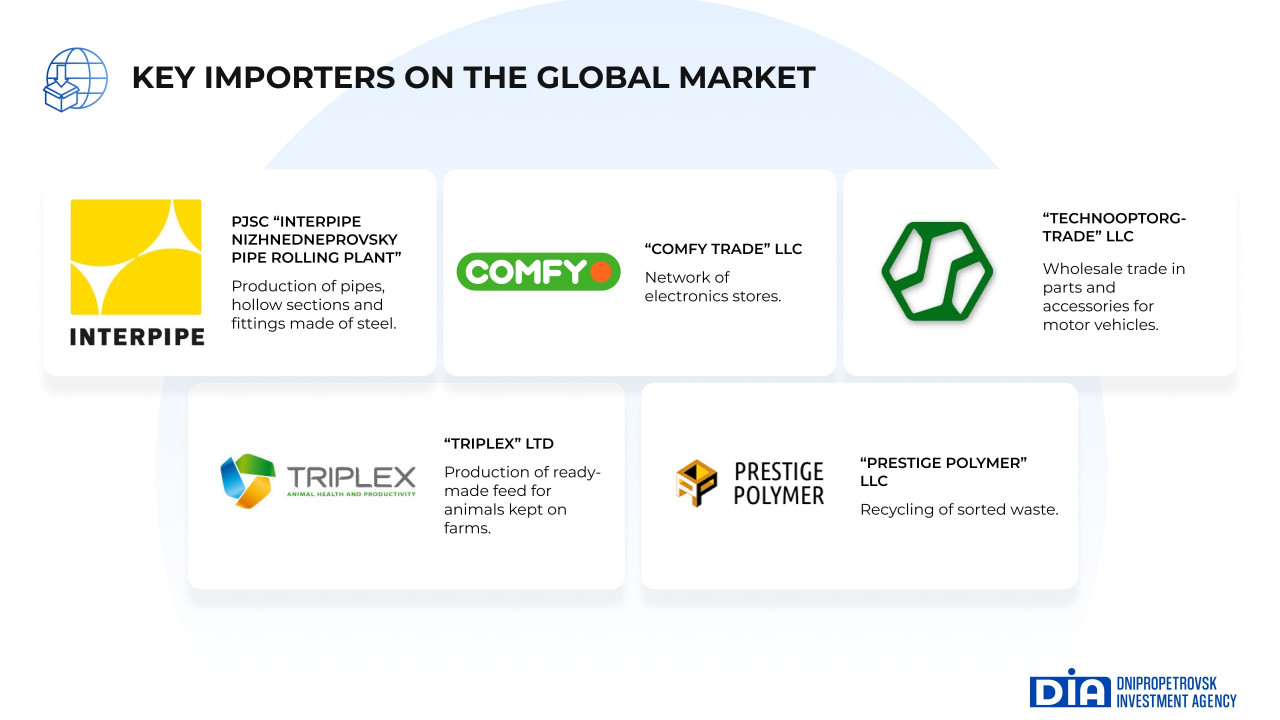
In terms of import volume, the TOP-5 importing enterprises are the following:
Import operations were mainly carried out by enterprises in the mechanical-engineering, food-processing, manufacturing, and trade sectors.
Source: the information for this article was taken from open online sources.