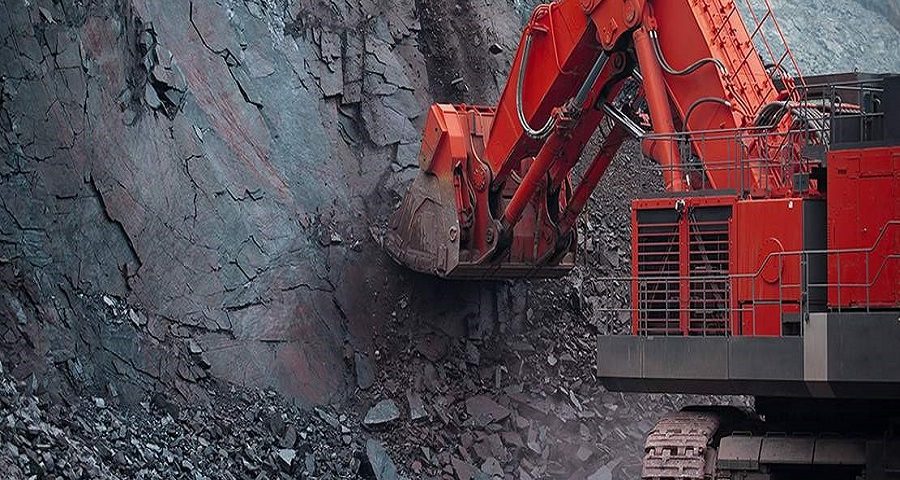
The mining and metallurgical complex (MMC) has traditionally been the foundation of both the economy of Dnipropetrovsk region and the economy of Ukraine, providing a significant share of export revenues and jobs. In 2025, the MMC accounted for approximately 5.5% of Ukraine’s GDP, and exports of its products reached $6.2 billion, which constitutes 15.2% of the total volume of Ukraine’s merchandise exports. The Dnipropetrovsk region concentrates 60% of the MMC’s realized output and 45% of the sector’s employed population.
The MMC continues to operate under the heightened risks of wartime, including infrastructure damage, energy shortages and high energy costs (owing to the use of imported energy), labor constraints, and logistical disruptions. Difficult market conditions, high electricity tariffs, and logistical constraints have led to the temporary suspension of operations at the Ingulets Mining and Processing Plant (in prolonged idle status since the summer of 2024) and the Kryvyi Rih Iron Ore Plant (almost entirely halted due to electricity debts and the lack of deferment from military mobilization for its workers). These conditions create constant pressure on the MMC, despite the substantial iron ore resource base of the Kryvyi Rih basin and its strategically important significance for Ukraine and European steel supply chains.
Despite the significant difficulties of recent years, the MMC shows signs of resilience to current realities. Ukraine, and Dnipropetrovsk region in particular, retains significant long-term competitive advantages, including estimated iron ore reserves of 6.5 billion tonnes, an established mining and metallurgical infrastructure, a skilled industrial workforce, and strategic proximity to EU markets.
At URC 2026, two projects in the extraction sector were presented:
Current investment activity in the MMC remains focused primarily on ensuring the continuity of operations, selective modernization, reducing specific energy consumption, and expansion projects. Despite wartime conditions, MMC companies invested approximately $705 million and paid approximately $870 million in taxes in 2025.
In particular, the Dnipro Metallurgical Plant (DMZ), in addition to expanding its range of rolled products, is developing a machine-building line for manufacturing components for mining enterprises. The Kametstal integrated works completed the reconstruction of a continuous steel casting machine.
In addition to the challenges noted above for the MMC, environmental requirements are being added – the EU’s Carbon Border Adjustment Mechanism (CBAM) has become the most significant regulatory challenge for steel exports to the EU. For Ukraine, CBAM is of particular importance, given the MMC’s high dependence on the EU market. In 2025, the EU accounted for 79% of steel exports, including 93% of long rolled products and 86% of flat rolled products.
Investments associated with the transition to the production of low-carbon steel and integration into European green industrial value chains will become a competitive advantage for the domestic MMC. First and foremost, these are coke-free metallurgy technologies, which envisage:
Confirmation of the above is provided by the investment projects presented by MMC enterprises during URC 2026:
To attract billions in investment into the “green” modernization of the MMC under wartime conditions, state policy must transform from a fiscal (tax-based) approach to a stimulating and protective one: