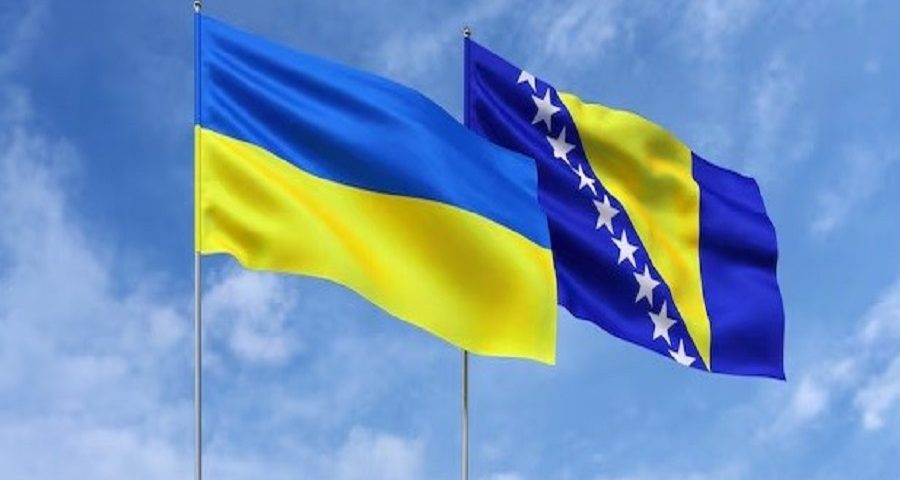
Dnipropetrovsk Investment Agency keeps introducing about the level of Ukraine and Dnipropetrovsk region cooperation with other countries amid the unprovoked military aggression by the russian federation. For now, we propose an overview of the assistance provided by Bosnia and Herzegovina and the foreign trade volume figures, which is derived from DIABASE data.
Since the start of the full-scale invasion of Ukraine by the russian federation, Bosnia and Herzegovina has taken a generally pro-Ukrainian position, although the nature of its assistance has been limited by the internal political structure of the state and its complex decision-making system. The country has not become a major donor or military supplier, but it has made a significant political, humanitarian, and diplomatic contribution, especially given its own experience of war in the 1990s.
First and foremost, assistance from Bosnia and Herzegovina to Ukraine took place at the international political level. Official state authorities repeatedly supported UN General Assembly resolutions condemning Russian aggression, violations of the sovereignty and territorial integrity of Ukraine, and demanding the withdrawal of Russian troops from Ukrainian territory. This support was important for Ukraine, as it demonstrated solidarity on the part of the Western Balkan states and strengthened the international isolation of russia.
At the same time, the position of Bosnia and Herzegovina was not unified. Due to its complex constitutional model and the existence of different political centers of power, the country was unable to fully synchronize with all EU sanctions regimes against Russia, which partially limited its practical participation in putting pressure on the aggressor. Despite this, at the level of official diplomacy, Bosnia and Herzegovina consistently recognized Ukraine as a victim of armed aggression and supported its right to self-defense.
In humanitarian dimensions, the assistance provided by Bosnia and Herzegovina was targeted but symbolically important. The country accepted Ukrainian citizens escaping the war, provided temporary shelter, access to medical and social services, and supported volunteer and charitable initiatives. Civil society organizations and municipalities played a special role in organizing the collection of humanitarian aid – medicines, clothing, and basic necessities – for delivery to Ukraine.
At the bilateral level, cooperation between Ukraine and Bosnia and Herzegovina stayed moderate but stable. The parties maintained diplomatic dialogue, discussed matters of European integration, regional security, and coordination of positions on international platforms. It was important for Ukraine that Bosnia and Herzegovina, itself a candidate for EU membership, viewed war against Ukraine as a danger to European security as a whole.
Foreign trade between Bosnia and Herzegovina and Ukraine is relatively limited, but has potential for growth. In 2024, foreign trade turnover between the countries amounted to $50.9 million, which is 36.8% more than in the pre-war period. Trade relations are based on exports from Ukraine of agricultural products (edible fruits and nuts, oilseeds, milk and dairy products), plastics and polymer materials, as well as ferrous metals and products thereof. Imported products of interest to Ukrainian companies include pharmaceuticals, machinery and equipment, electrical machinery, non-organic chemicals, and others.
Deepening economic cooperation between Ukraine and Bosnia and Herzegovina may be achieved through the free trade area with the EU, which includes both countries. The expansion of trade agreements and joint economic initiatives will contribute to the growth of bilateral trade. It should be noted that in 2024, Bosnia and Herzegovina opened its market to imports of Ukrainian poultry meat, which indicates the development of trade relations between the countries.
Bosnia and Herzegovina also remains a promising trading partner for Dnipropetrovsk region. The enterprises of the country are most interested in ferrous metal products, glass and products thereof, plastics and polymer materials, etc. The volume of exports of goods from Dnipropetrovsk region amounted to $0.59 million. The region’s share is 2.8% of the total Ukrainian indicator to Bosnia and Herzegovina.

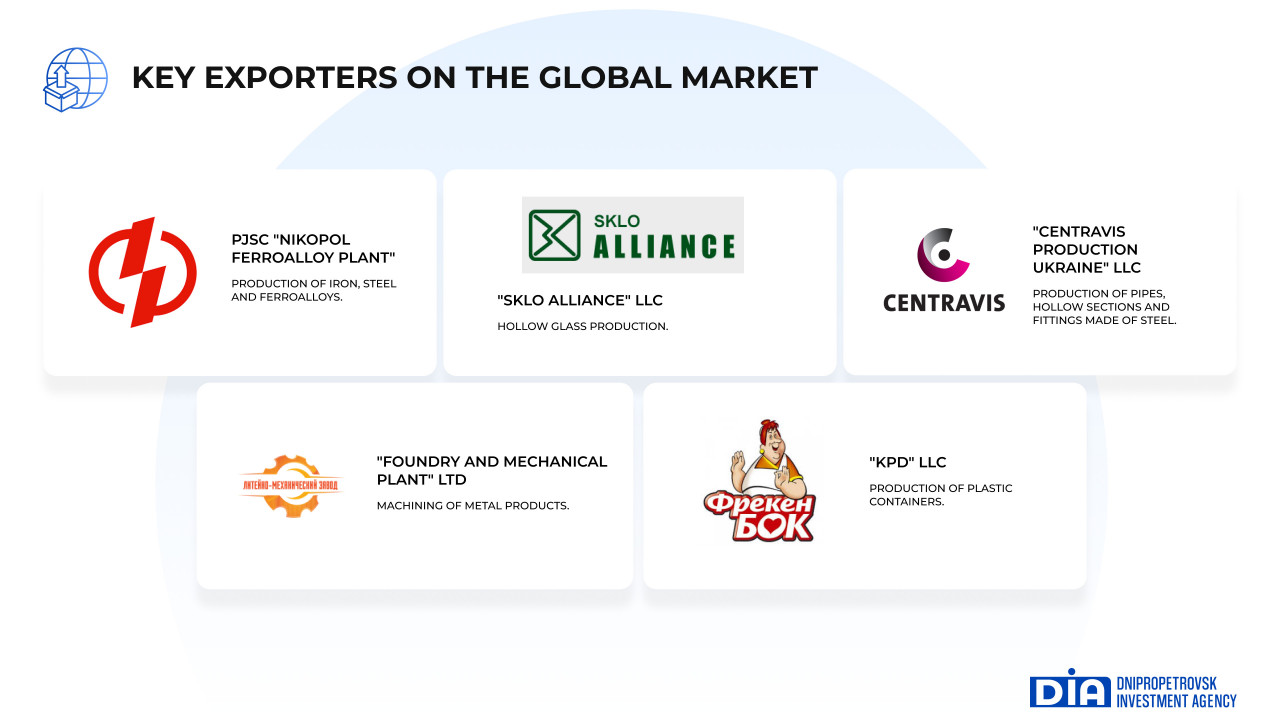
10 enterprises in Dnipropetrovsk region exported their products to the Bosnian market, including metallurgical, processing, and mechanical engineering companies.
According to the volume of exported products, the TOP-5 exported enterprises include the following:
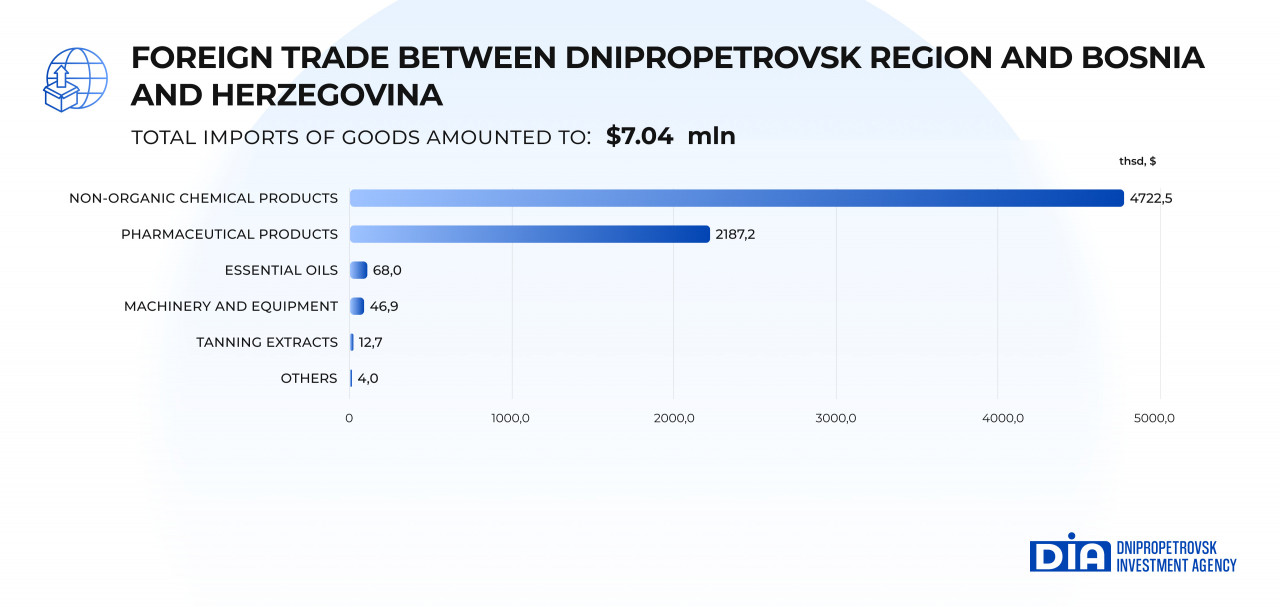
In turn, about 30 importing companies in the region purchased Bosnian goods the most, namely: non-organic chemicals, pharmaceutical products, essential oils, and others. Imports of goods from Bosnia and Herzegovina to Dnipropetrovsk region decreased by 21.8% and amounted to $7.04 million. The share of the region is 23.8% of the Ukrainian indicator from Bosnia and Herzegovina.
According to the volume of imported products, the TOP-5 imported enterprises include the following:
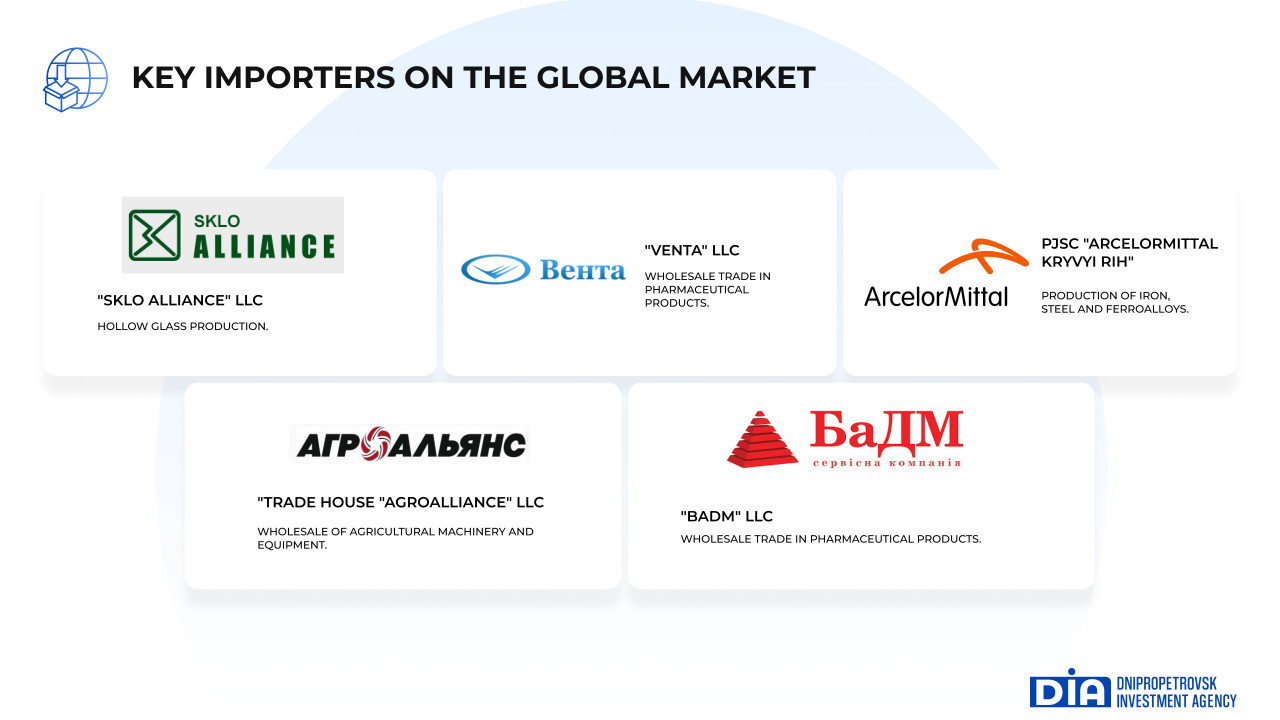
Import operations were mainly carried out by chemical, processing and trading enterprises.
Source: information for the preparation of the article was taken from open online sources.