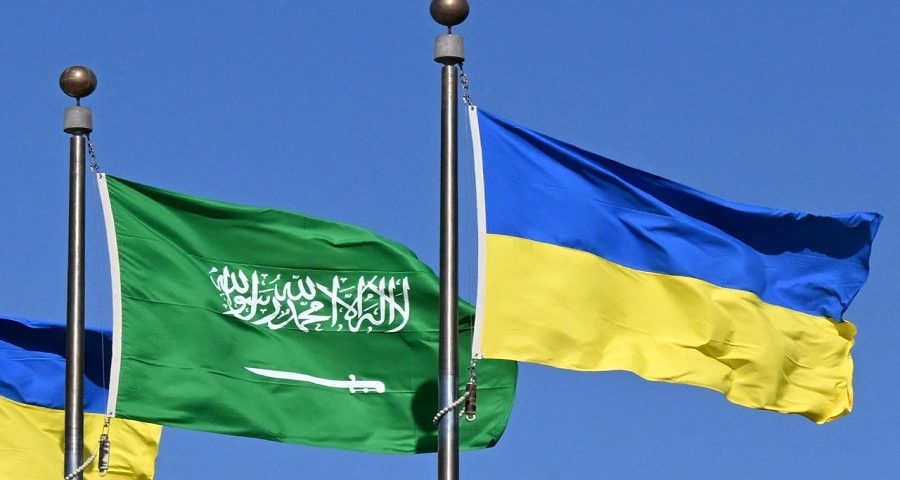
Dnipropetrovsk Investment Agency keeps introducing about the level of Ukraine and Dnipropetrovsk region cooperation with other countries amid the unprovoked military aggression by the russian federation. For now, we propose an overview of the assistance provided by Saudi Arabia and the foreign trade volume figures, which is derived from DIABASE data.
Since the start of the full-scale aggression of the russian federation against Ukraine, Saudi Arabia has chosen a model of active diplomatic and humanitarian assistance, avoiding direct military involvement, but at the same time playing a significant role in international processes related to the war. The Kingdom is not a military ally of Ukraine and does not supply lethal weapons, but its contribution has a notable humanitarian and political-diplomatic impact.
One of the key areas was humanitarian aid to Ukraine. Saudi Arabia allocated significant funds to support civilians affected by the war. Humanitarian programs included funding for food, medicine, medical equipment and essential supplies, as well as assistance to internally displaced persons. Some of this support was delivered through international humanitarian organizations, which allowed for the efficient delivery of aid to the most affected regions of Ukraine.
In July 2025, Saudi Arabia launched the fifth package of a humanitarian project for the prosthetics of Ukrainians in Poland worth about $3.5 million, which was implemented by the King Salman Humanitarian Aid and Relief Center. By the end of July 2025, dozens of prostheses had been fitted and rehabilitation provided as part of this program. The project involves the installation of more than 130 prostheses for people with amputations, mostly due to the effects of war.
Saudi Arabia, through the King Salman Humanitarian Aid and Relief Center (KSrelief), has also provided $5.1 million in funding to support efforts to counter gender-based violence in Ukraine through a partnership with the United Nations Population Fund, which includes psychosocial and medical support for victims.
The diplomatic and mediating role of Saudi Arabia should be noted separately. The Kingdom has become one of the key platforms for complex humanitarian agreements between Ukraine and russia. Under the mediation of Riyadh, large-scale exchanges of prisoners of war took place, particularly in 2022, when dozens of Ukrainian defenders, including the commanders of the Mariupol defense, returned home. The personal diplomatic resources of the KSA leadership, in particular Mohammed bin Salman, played a central role in this process, underlining the high level of involvement of Saudi Arabia as a neutral negotiator.
Another important element was the platform role played by Saudi Arabia in international diplomacy. In 2023–2024, the Kingdom hosted meetings of national security advisors and diplomatic representatives from dozens of countries to discuss ways to achieve a lasting peace in Ukraine. These meetings were not peaceful negotiations in the classical sense, but they provided a unique platform for dialogue between Western countries, the Global South and states that usually avoid direct involvement in the Ukrainian issue. This was of strategic importance for Ukraine, as it allowed it to convey its position to a wide range of international partners outside the Euro-Atlantic space.
In 2025, Ukraine and Saudi Arabia held a series of important talks at the highest political and business levels with the aim of deepening economic and investment cooperation. On March 11, during the official visit of Ukrainian President Volodymyr Zelenskyy to Riyadh, a meeting was held with Crown Prince Mohammed bin Salman Al Saud of Saudi Arabia, during which they discussed the possibilities of Saudi investment in projects for the reconstruction of Ukraine, expanding mutual trade and cooperation in energy and other sectors of the economy. The Saudi prince confirmed his interest in supporting long-term investments and the possibility of the Saudi Arabian participation in the modernization of the Ukrainian economy. The parties also agreed to resume the activities of the Joint Business Cooperation Council as a platform for launching new initiatives.
In November 2025, Riyadh held the first meeting in 10 years of the renewed Joint Council for Business Cooperation between Ukraine and Saudi Arabia, where representatives of the chambers of commerce and industry and business communities of the two countries discussed specific investment projects, particularly in agriculture, medicine, logistics, engineering and industrial parks, with a total value of over $1 billion.
In addition, during the meetings, the parties agreed to establish a Joint Investment Fund of approximately $500 million to support the implementation of joint projects in strategic sectors and promote private investment and partnerships in 2026.
At the international level, Saudi Arabia maintains a cautiously balanced position. The kingdom has not joined sanctions against russia and maintains working relations with Moscow, particularly in the energy sector. At the same time, Riyadh consistently emphasizes the need to respect the sovereignty of countries, protect civilians and follow international humanitarian law. This position allows Saudi Arabia to keep communication channels open with all sides, which is key to its role as a mediator.
In 2024, there was a gradual increase in economic interaction between Ukraine and Saudi Arabia, although bilateral trade volumes still did not reach pre-war levels. At the same time, both sides focused on strengthening economic dialogue, expanding contacts between business circles and searching for new formats and areas of cooperation. The most promising areas of Ukrainian-Saudi partnership include energy (oil and gas sector and development of renewable energy sources), construction (infrastructure projects), transport (air, sea and urban transport), water management and urban infrastructure, as well as mechanical engineering.
Saudi Arabia also remains an important trading partner for Dnipropetrovsk region. The growing level of partnership is demonstrated by a bilateral analysis of external activities.
Saudi companies are most interested in fats and vegetable oils, ferrous metal products, railway locomotive parts, edible fruits and nuts and others. The volume of exports of goods from Dnipropetrovsk region amounted to $17.97 million and increased by 32.1% compared to the previous period. The share of the region is 4.9% of the total Ukrainian indicator in Saudi Arabia.
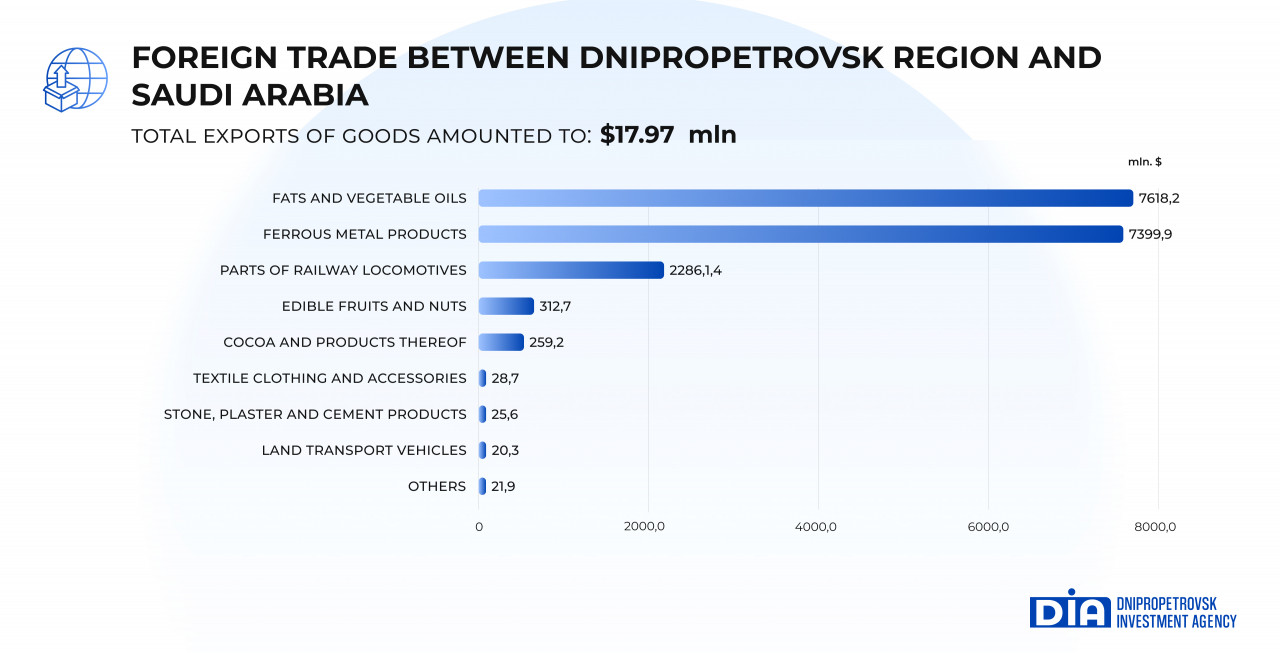
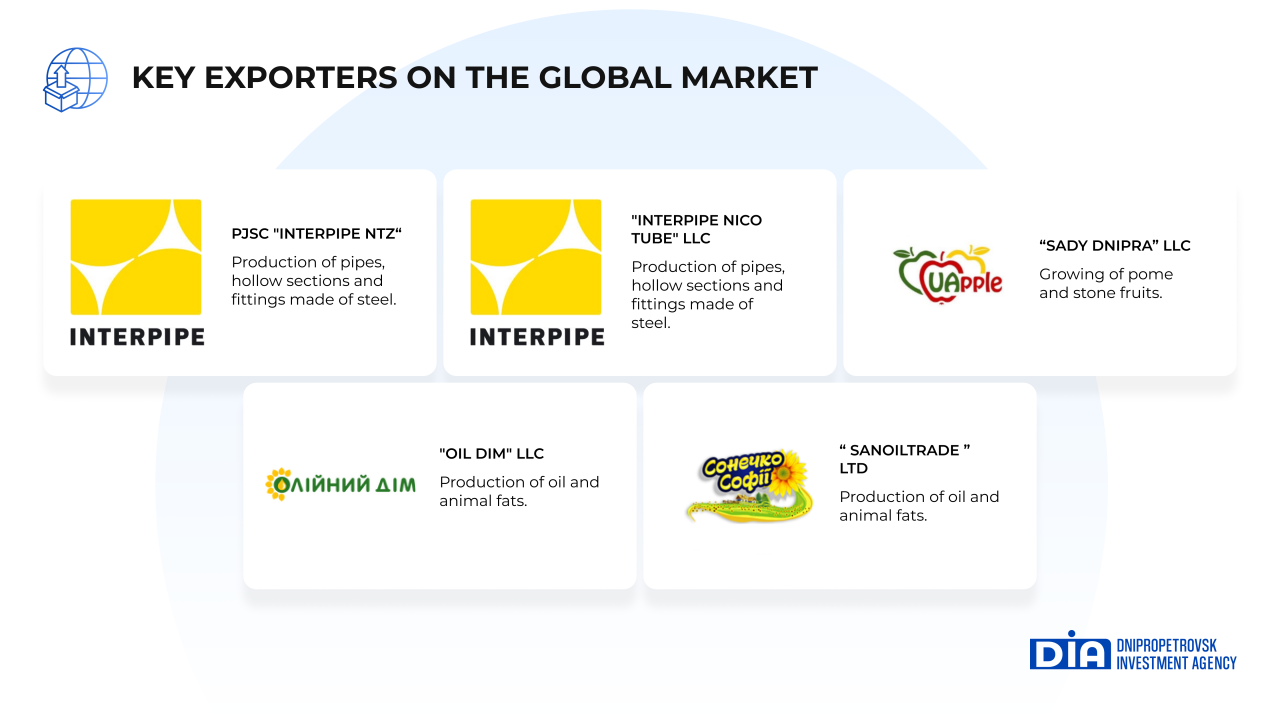
More than 20 enterprises in Dnipropetrovsk region exported their products to the Saudi market, including metallurgical, food, agricultural, and mechanical engineering companies.
According to the volume of exported products, the TOP-5 imported enterprises include the following:
In turn, more than 30 importing companies in the region purchased mostly Saudi goods, such as plastics and polymer materials, oil and its distillates, tanning extracts, organic chemical compounds and others. Imports of goods from the KSA to Dnipropetrovsk region increased by 7.8% and amounted to $18.6 million. The share of the region is 5.9% of the Ukrainian indicator from Saudi Arabia.
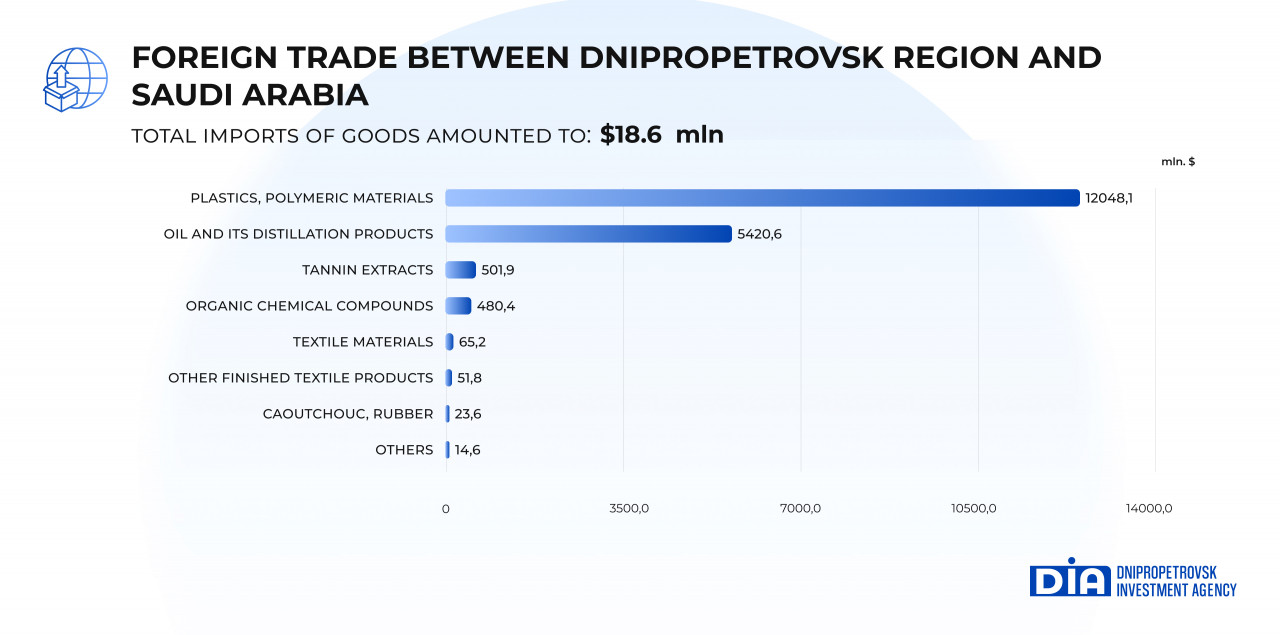
According to the volume of imported products, the TOP-5 imported enterprises include the following:
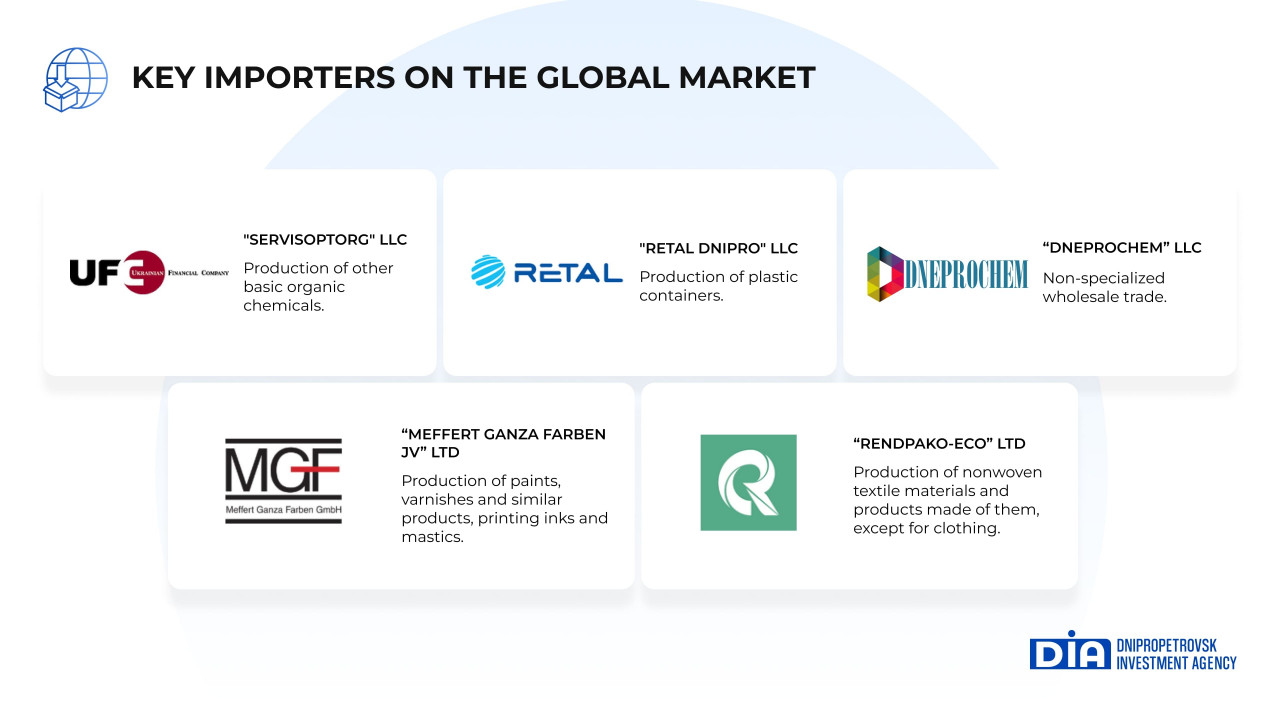
Import operations were mainly carried out by chemical, processing and trading enterprises.
Source: information for the preparation of the article was taken from open online sources.