The Dnipropetrovsk Investment Agency DIA offers an overview of the level of interaction between Ukraine and Dnipropetrovsk region with other countries amid the unprovoked military aggression of the russian federation against our state. In this publication, we offer informational material on the support provided by Turkey and the level of foreign trade, formed on the basis of DIABASE data.
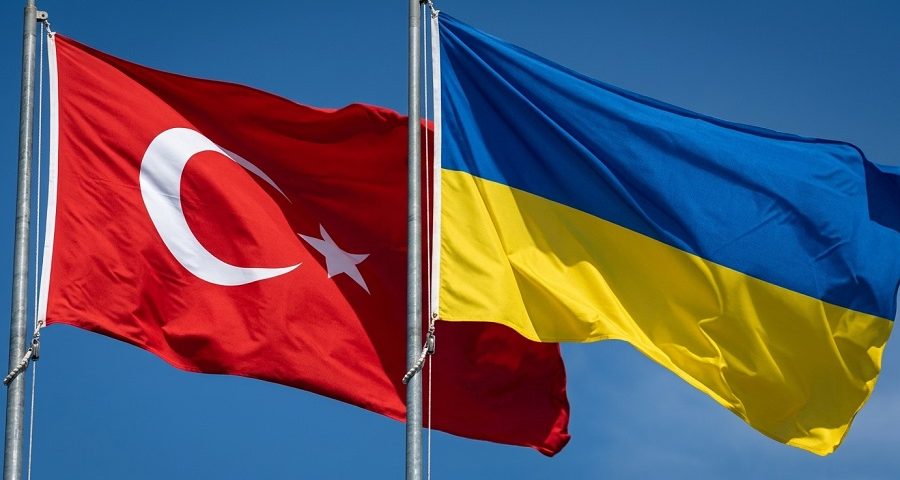
Throughout 2025-2026, Turkey retained a special place among Ukraine’s partners. Its support combined political and diplomatic engagement, military-technical cooperation, humanitarian assistance, facilitation of the return of prisoners of war and civilians, economic partnership, and increasingly active participation of Turkish business in the recovery of Ukraine. At the same time, Ankara continued to maintain contacts with russia as well, using this channel for mediation and negotiations. Turkey’s unchanged official position remained support for the sovereignty and territorial integrity of Ukraine.
Political dialogue over the past year has been intensive. Presidents Volodymyr Zelenskyy and Recep Tayyip Erdoğan met and held telephone negotiations on multiple occasions. In August 2025, Recep Erdoğan again confirmed support for the territorial integrity and sovereignty of Ukraine, and Turkey stated its readiness to continue serving as a platform for negotiations. In November of that year, Volodymyr Zelenskyy visited Turkey, where the parties discussed the peace process, security guarantees, the situation in the Black Sea, the return of prisoners, and the further development of bilateral relations.
This mediating function became one of Turkey’s most notable contributions during 2025. Istanbul remained a platform for direct contacts between the Ukrainian and russian sides. A practical result of the negotiation process was agreements on large-scale prisoner-of-war exchanges. In November 2025, the President of Ukraine noted that, thanks to agreements reached with Turkey’s facilitation, approximately 2,500 Ukrainian prisoners of war had already returned or were due to return. The Turkish side also facilitated work on the return of civilians, political prisoners, including Crimean Tatars, and abducted Ukrainian children.
In 2026, Ankara’s diplomatic role continued. On April 4, the presidents of Ukraine and Turkey met in Istanbul, and in July, Foreign Minister Hakan Fidan visited Ukraine. The Turkish side confirmed its readiness to again host negotiations and to participate in shaping future security guarantees for Ukraine. Turkey is prepared to play a particular role in the maritime component of security guarantees and in ensuring stability in the Black Sea. In July 2026, Hakan Fidan stated that Ankara had agreed to lead the maritime component of the relevant mechanism, and planning was already being carried out by the naval forces of partner states.
A separate area of focus is the security of civilian shipping. For Ukraine, the Black Sea is a critically important export corridor, which is why Turkey’s position as the state controlling the Bosphorus and Dardanelles straits under the Montreux Convention is of strategic importance. Ankara continued diplomatic work on navigation security and preventing further spread of the war into the Black Sea. In parallel, Turkey, together with Bulgaria and Romania, continues mine countermeasure activities in the Black Sea.
Turkey’s military support has its own specifics. Ankara does not disclose the total value of military assistance to Ukraine or a detailed list of supplies. At the same time, the Turkish Ministry of Foreign Affairs in July 2026 directly confirmed that the country continues to provide Ukraine with political and military support. Turkey also announced further participation in the NATO PURL mechanism, through which allies finance the procurement of priority weapons and military equipment for Ukraine.
Significantly more important than the classic model of transferring individual aid packages has become Ukrainian-Turkish defense-industrial cooperation. It is developing as a long-term partnership between state and private companies of the two countries. In September 2025, the Minister of Defense of Ukraine, during talks with the Ambassador of Turkey, specifically noted the construction of two Ada-class corvettes for the Ukrainian Naval Forces and cooperation in the field of unmanned systems. At that time, training of the first ship’s crew was underway.
Turkey’s humanitarian assistance continued through both state institutions and the Turkish Cooperation and Coordination Agency (TİKA), international mechanisms, and civil society organizations. Turkey remains a participant in the EU Civil Protection Mechanism, through which Ukraine receives medical supplies, equipment for temporary housing of the population, transport, energy equipment, and other assistance.
An important feature of Turkish-Ukrainian relations is that Turkish business continued to operate in Ukraine even during the war. More than 1,000 companies with Turkish capital operate in Ukraine, and Turkish construction companies have many years of experience implementing large infrastructure projects. This is precisely why reconstruction has become one of the central areas of bilateral economic dialogue.
In February 2025, during the Ukrainian-Turkish business forum in Ankara, the parties agreed on the more active involvement of Turkish companies in infrastructure recovery and the expansion of their access to reconstruction financial instruments. Ukraine and Turkey also set a strategic goal of increasing mutual trade to $10 billion. Separately, the Ukrainian side noted Turkey’s decision to provide Ukrainian vessels with the maximum possible access to Turkish ports, which is of significant importance for export logistics.
Economic relations also received new momentum over the past year. Turkey remains one of Ukraine’s largest trading partners. By the end of 2025, bilateral trade turnover reached $7.9 billion, with Turkey ranking second among markets for Ukrainian exports and third in total foreign trade of Ukraine. Ukrainian exports to Turkey amounted to approximately $2.7 billion.
A key event was the completion of the ratification process for the Free Trade Agreement between Ukraine and Turkey. On July 14, 2026, the Verkhovna Rada ratified the document. The agreement provides for full liberalization of access to the Turkish market for 84% of Ukrainian goods, while tariff quotas and transitional mechanisms are provided for a portion of sensitive items. It is expected to expand opportunities for Ukrainian exports, investment attraction, and production cooperation between enterprises of the two states.
Turkey is one of the region’s main foreign trade partners, ranking 4th among exporters and 2nd among importers in the world. Based on the results of the first 9 months of 2025, the volume of goods exports from Dnipropetrovsk region amounted to $194.8 million, a decrease of 38.6% compared to the corresponding period of 2024. Turkish enterprises mostly purchase ferrous metals and products thereof, fats and vegetable oils, ores, slag, electrical machinery, etc.
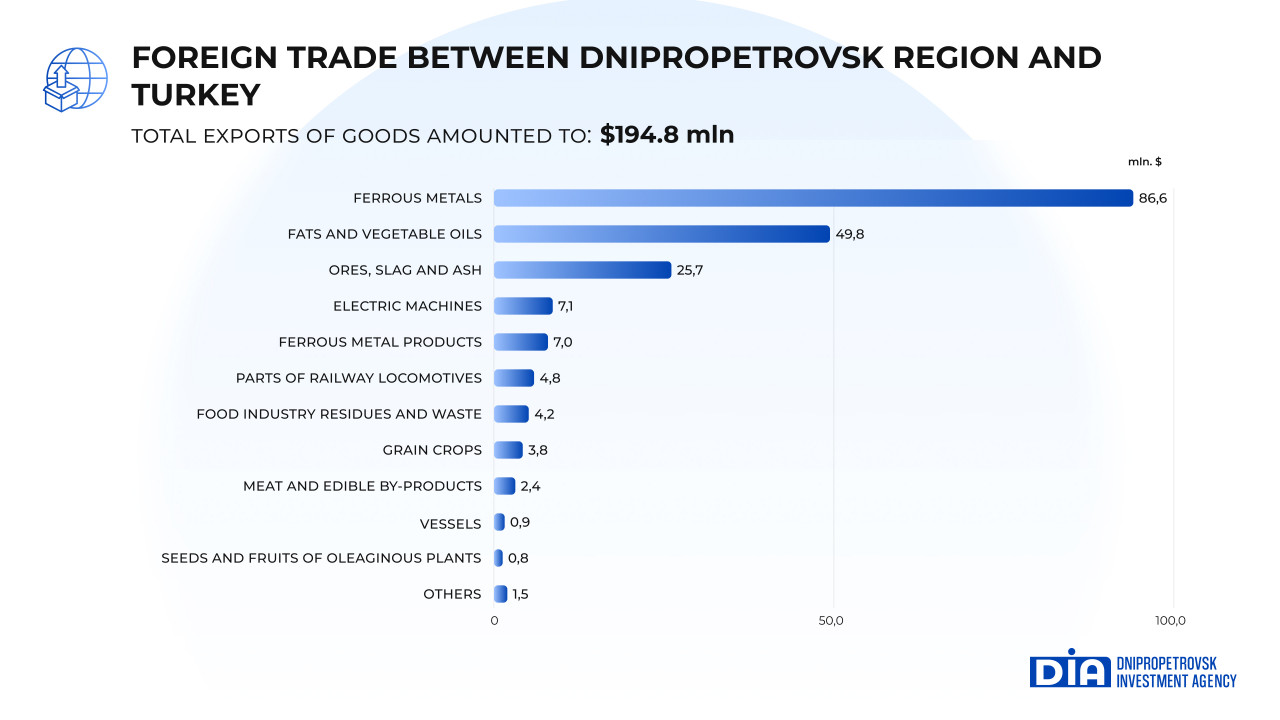
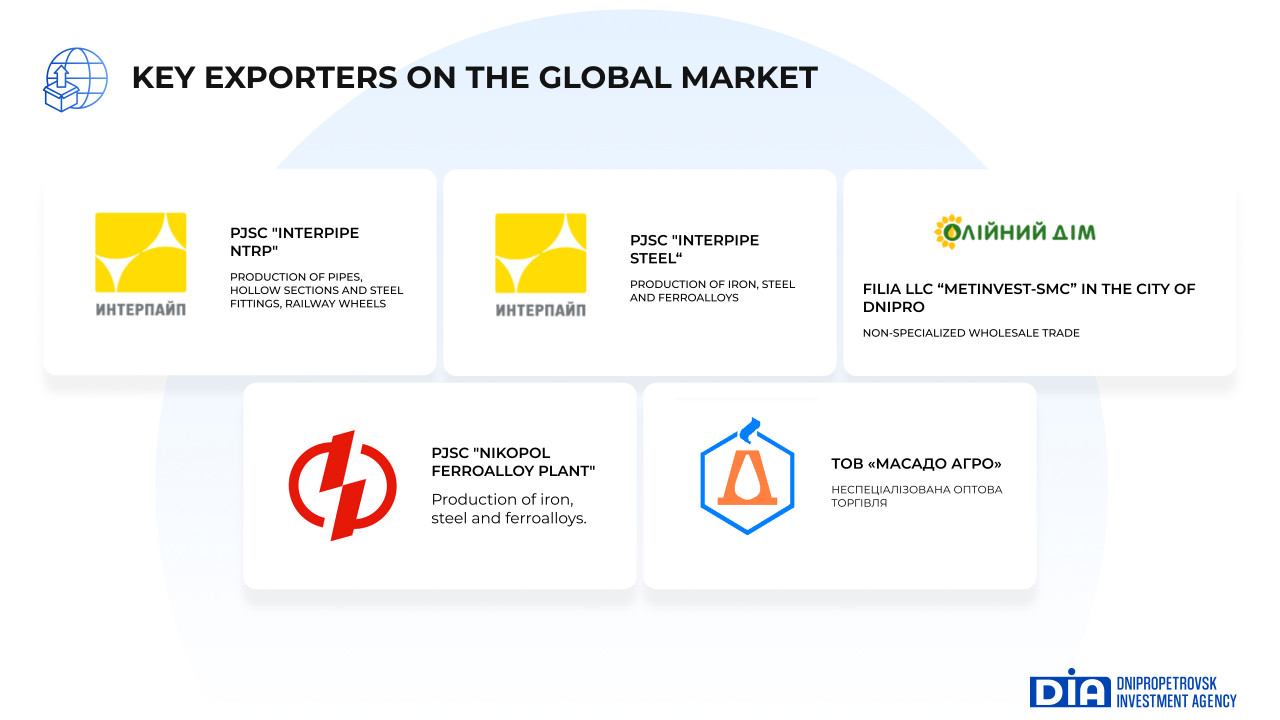
More than 100 enterprises of Dnipropetrovsk region exported their products to the Turkish market; these are enterprises of the metallurgical complex, food, machine-building, and processing companies.
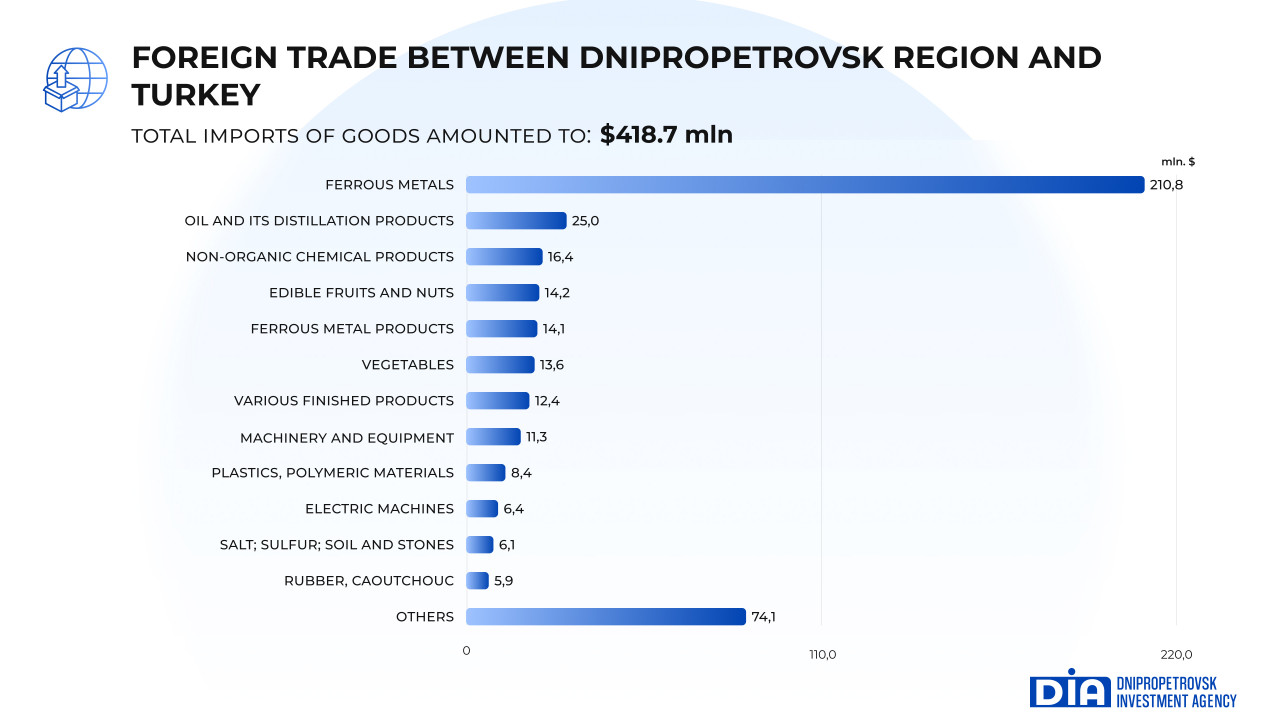
Imports of goods from Turkey into Dnipropetrovsk region increased by 2.6% compared to the first 9 months of 2024, amounting to $418.7 million.
More than 600 importing enterprises of the region purchased ferrous metals and products thereof, oil and petroleum products, inorganic chemical products, edible fruits and nuts, etc.
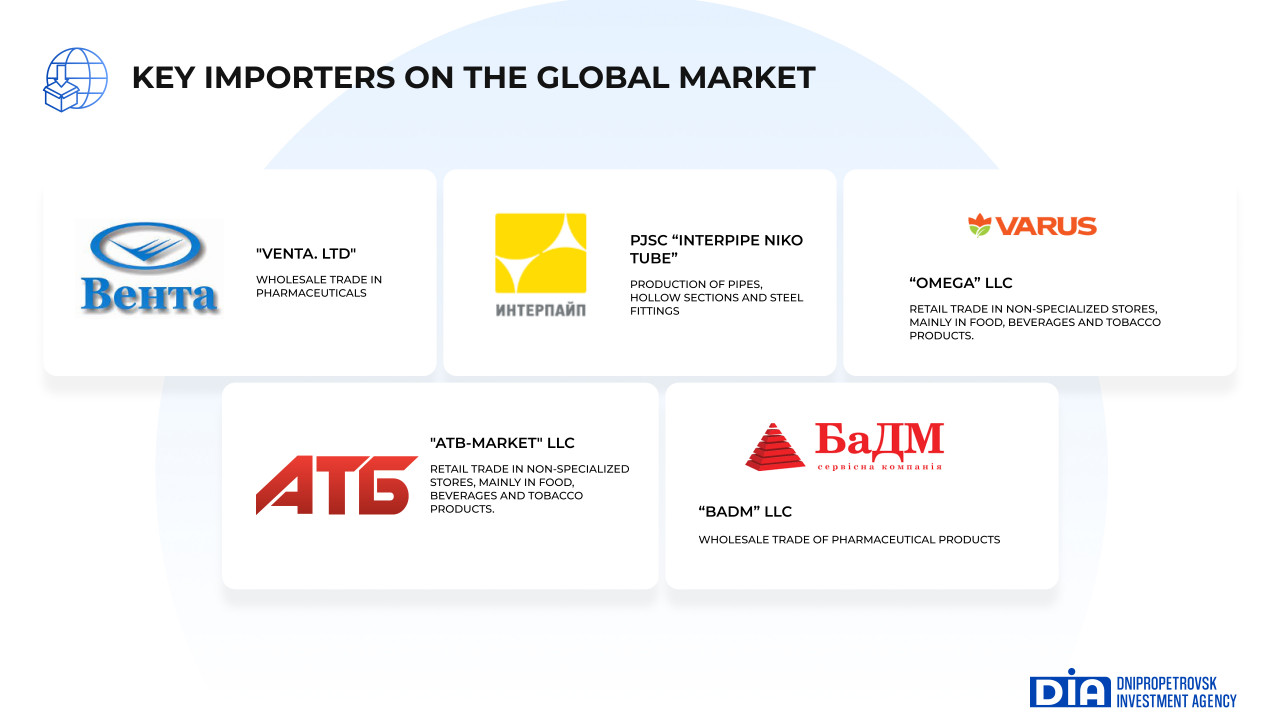
Import operations were predominantly carried out by enterprises of the metallurgical, food, and processing industries, as well as trading companies.
Source: information for the preparation of this article was taken from open online sources