While russia’s aggression seeks to destroy our country’s infrastructure, the strategic partnership between Ukraine and the United Kingdom demonstrates unprecedented resilience. Dnipropetrovsk region, as one of the country’s key industrial and logistics hubs, plays an important role in this cooperation.
The Dnipropetrovsk Investment Agency DIA, drawing on analytical data from the DIABASE platform, presents an up-to-date overview of the United Kingdom’s military and humanitarian support, as well as its foreign trade partnership with our region.
The United Kingdom remained one of Ukraine’s key strategic partners, with its assistance covering military, financial, humanitarian, sanctions-related, diplomatic and security support. London consistently maintained one of the firmest positions on russia among Western countries and effectively became one of the main European centres for coordinating support for Ukraine.
In the military sphere, the United Kingdom continued large-scale supplies of weapons, air defence systems, drones, ammunition and equipment. In 2025, the government of Prime Minister Keir Starmer announced a record €5.1 billion in military assistance for Ukraine, the largest annual support package since the beginning of the full-scale war.
Air defence became one of the key areas of support. The United Kingdom provided financing for the procurement of more than 5,000 missiles for Ukraine’s air defence systems through the UK export finance mechanism, amounting to approximately €1.94 billion. Part of this production was launched in Northern Ireland.
The United Kingdom also significantly increased its support in the field of unmanned technologies. In 2025, during the first six months alone, Ukraine received more than 85,000 military drones of various types, including reconnaissance, FPV and strike drones.
The United Kingdom continued Operation Interflex, a training programme for Ukrainian service personnel, under which Ukrainian soldiers received training at UK training facilities in line with NATO standards. Other partner countries were also involved in the programme. The training covered infantry skills, engineering, tactical medicine, the use of modern weapons systems, and junior commander training.
In the maritime domain, official London, together with Norway, coordinated the Maritime Capability Coalition, aimed at strengthening Ukraine’s maritime capabilities. It included the provision of equipment, support for the security of maritime corridors, personnel training, and assistance in the development of maritime unmanned systems.
he United Kingdom paid significant attention to sanctions pressure on russia. In 2025–2026, the UK Government expanded sanctions against russian banks, defence enterprises, military suppliers, shipping companies and individuals linked to the Kremlin. London actively promoted a policy aimed at restricting russia’s access to dual-use technologies, financial markets and international maritime insurance.
A separate area of focus was support for the use of frozen russian assets to assist Ukraine. The United Kingdom supported international mechanisms for channelling proceeds from russian assets towards financing Ukraine’s defence and recovery.
At the diplomatic level, the United Kingdom effectively became one of the centres for shaping a European coalition in support of Ukraine. In March 2025, London hosted a summit with the participation of European leaders, the EU and NATO on long-term security guarantees for Ukraine. Following the summit, the participants reaffirmed the need to continue military assistance, strengthen sanctions and establish a “coalition of the willing” to guarantee Ukraine’s future security.
In the humanitarian area, the United Kingdom continued to finance programmes focused on medical assistance, rehabilitation of Ukrainian service personnel, support for energy infrastructure and demining. British organisations and government institutions were involved in the supply of generators, medical equipment, mobile energy systems, and support for Ukraine’s healthcare system.
Assistance was also directed towards strengthening the resilience of frontline regions, including Dnipropetrovsk region. This included humanitarian support for communities regularly affected by Russian attacks, energy resilience measures, and the protection and repair of critical infrastructure. In September 2025, the United Kingdom announced €161 million in winter support for Ukraine, including €113 million for humanitarian assistance to frontline communities and €48 million for the repair and protection of critical energy infrastructure.
In February 2026, the United Kingdom provided a new package of military, humanitarian and recovery support for Ukraine, which included €23 million for emergency energy support, €6.5 million in humanitarian assistance for communities on the frontline, and €34 million to support the resilience of Ukrainian society and justice for those affected by war crimes.
In addition, the UK Government supported programmes aimed at Ukraine’s recovery and investment promotion. London advanced mechanisms for war risk insurance for businesses, export credit guarantees, and the involvement of British companies in Ukraine’s future reconstruction.
As of September 2025, USD 15.6 million in investment from the United Kingdom had been attracted into the region’s economy. The region hosts 20 companies with British investment, forming a stable presence in the regional business environment. Their activities cover industrial production, real estate, trade and construction, supporting the development of the regional economy and the integration of local businesses into international markets.
The United Kingdom remains an important trade partner of Dnipropetrovsk region. The high level of partnership is confirmed by a bilateral analysis of foreign economic activity. British enterprises are most interested in meat and edible meat offal, ferrous metals and articles thereof, electrical machinery, food products and other goods. According to the results of the first nine months of 2025, exports of goods from Dnipropetrovsk Region amounted to USD 33.1 million, doubling compared with the corresponding period of 2024.
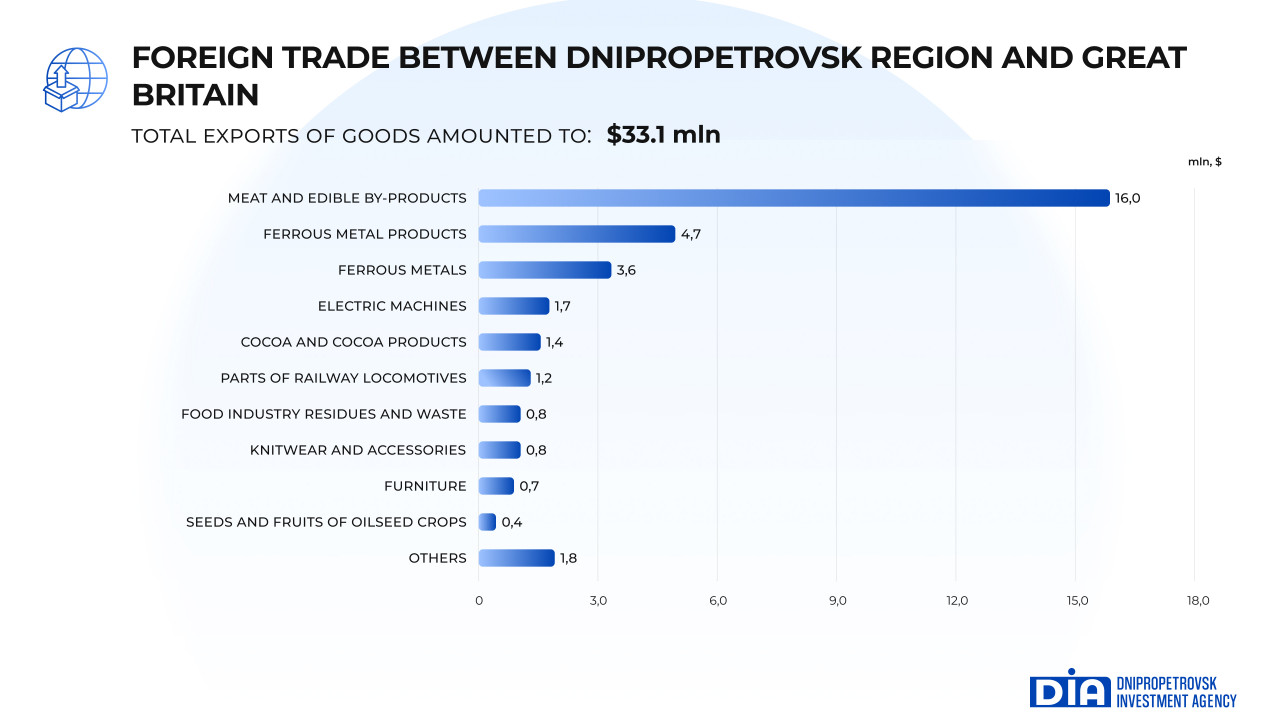
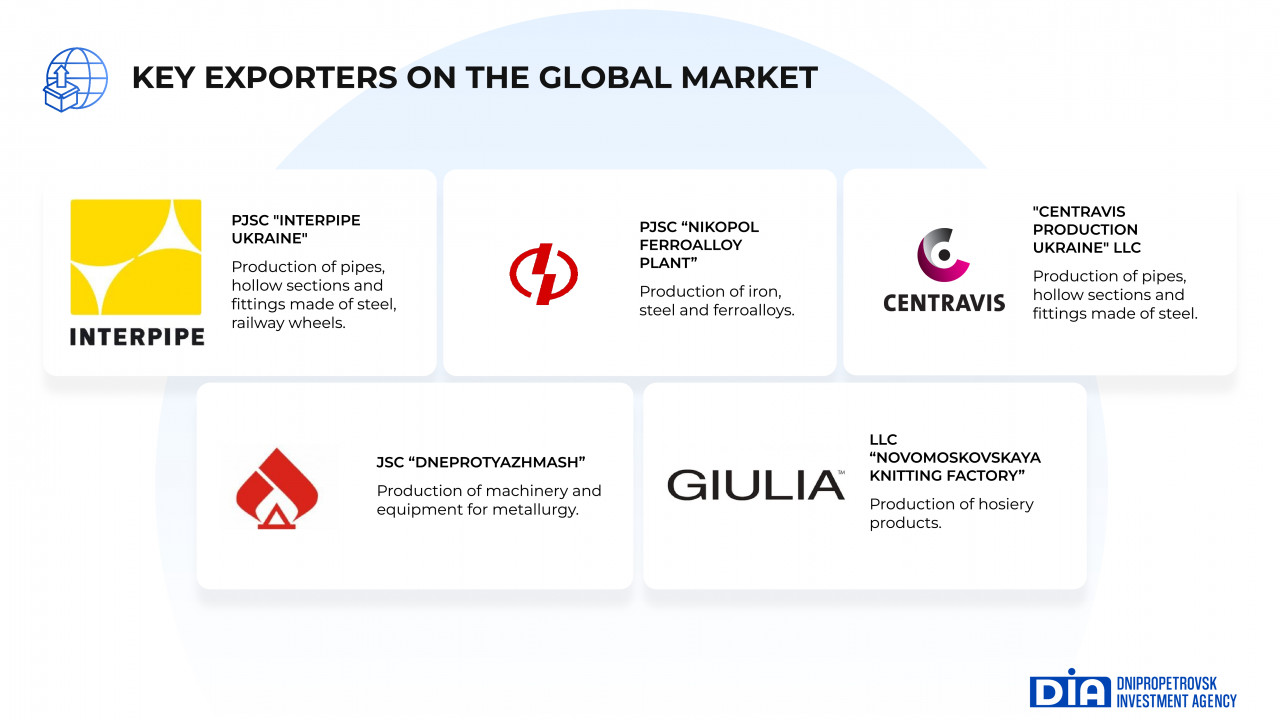
More than 50 enterprises from Dnipropetrovsk region exported their products to the UK market, including metallurgical, machine-building, processing and agricultural companies.
Imports of goods from the United Kingdom to Dnipropetrovsk region increased by 90%, amounting to USD 86.7 million.
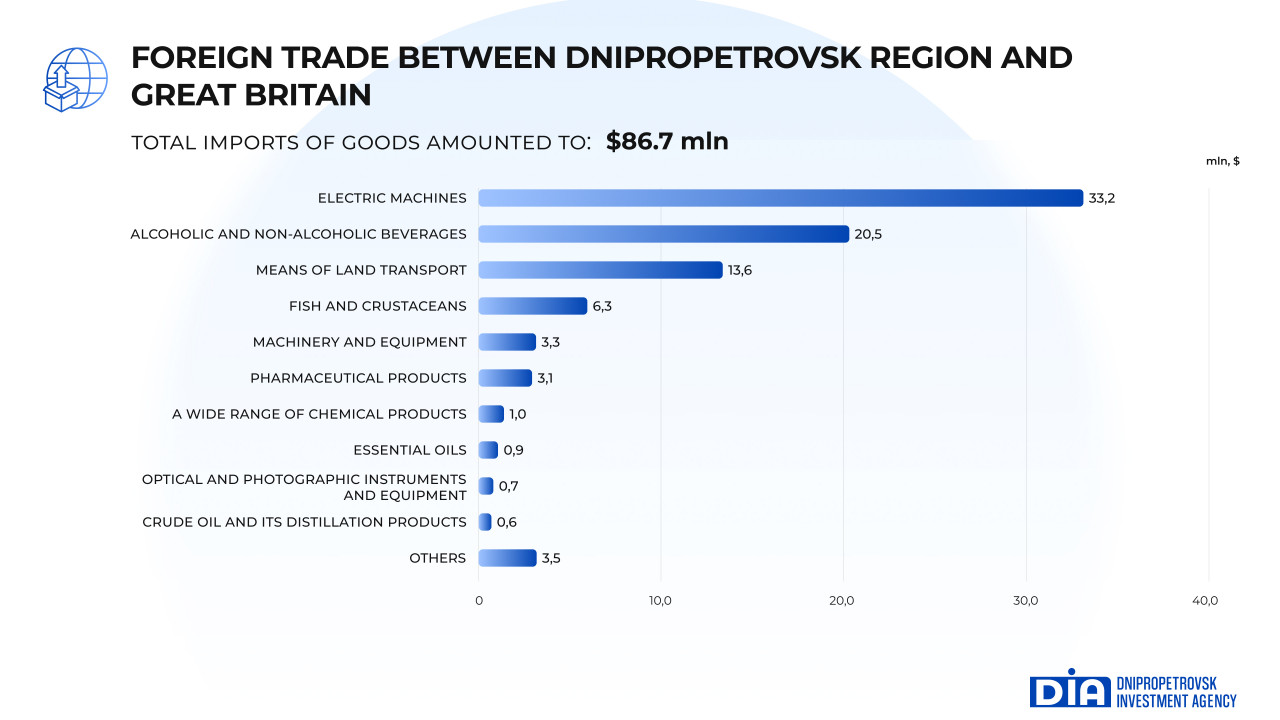
In turn, more than 240 importing enterprises in the region purchased British goods, including electrical machinery, alcoholic and non-alcoholic beverages, land vehicles, fish and crustaceans, machinery and equipment, pharmaceutical products and other goods.
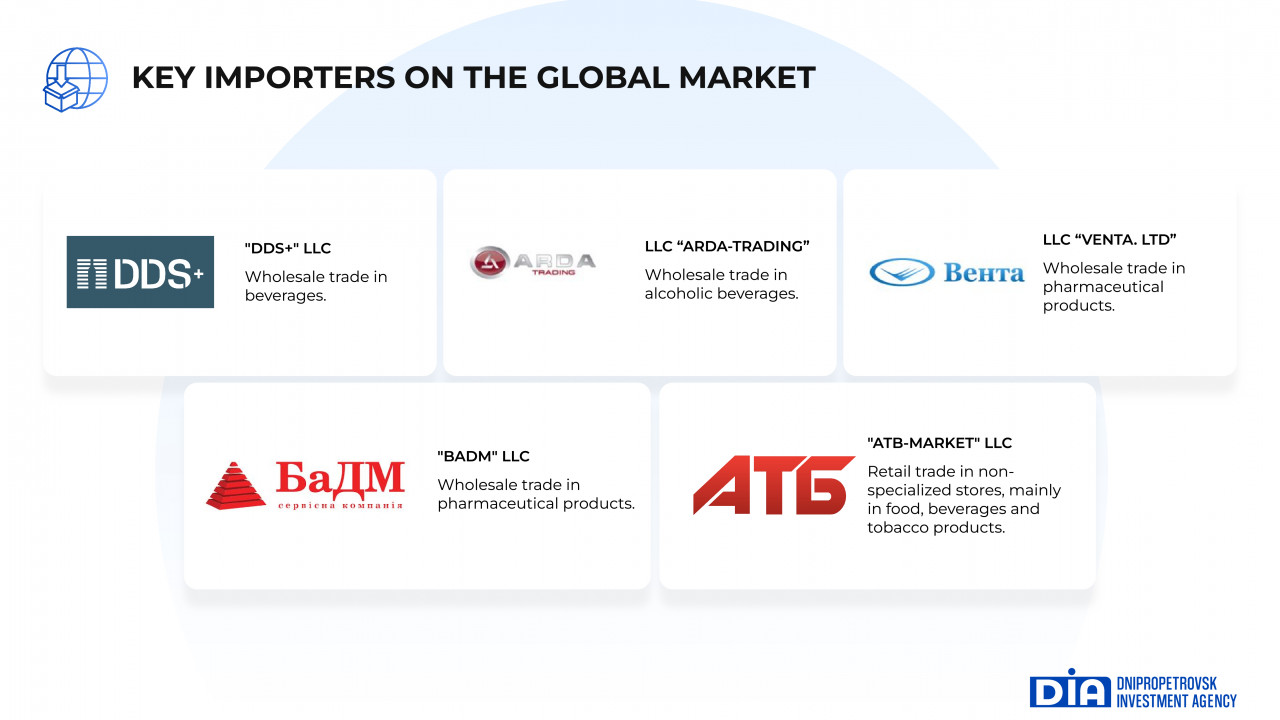
Import operations were mainly carried out by manufacturing enterprises, pharmaceutical companies and trading companies.
Source: Information for this article was compiled from publicly available sources.