Dnipropetrovsk Investment Agency (DIA) has prepared an overview of the international cooperation of Ukraine and Dnipropetrovsk region amid the aggression of the russian federation. The material focuses on Japan’s support and foreign trade indicators based on DIABASE data.
Japan remains one of Ukraine’s key partners in providing financial, humanitarian, and reconstruction assistance. At the same time, Tokyo follows its own model of assistance: the focus is not on the direct supply of lethal weapons, but on supporting Ukraine’s economic stability, critical infrastructure, humanitarian demining, energy, healthcare, and post-war reconstruction.
One of the key instruments of support has been the Japan International Cooperation Agency (JICA). It was through JICA that Japan implemented large-scale emergency recovery programs in Ukraine. In April 2025, Ukraine and Japan signed a $58 million grant agreement as part of the fourth phase of the Emergency Recovery Program. The funds were allocated to the energy sector, transportation, water supply, the healthcare sector, humanitarian demining, and recovery operations following destruction caused by the war.
Throughout 2025, Japan also actively supplied technical equipment to Ukrainian communities, particularly those in frontline regions. Ukraine received excavators, heavy machinery, debris removal equipment, generators, municipal services vehicles and equipment for restoring critical infrastructure. Some of these shipments were sent to Dnipro, Kharkiv, Kherson, Mykolaiv, and other cities that were regularly affected by russian attacks.
Humanitarian demining has become a key area of Japanese support. In October 2025, Ukraine and Japan signed a memorandum of cooperation in the field of mine action. The document formalized a long-term partnership between Ukrainian agencies and JICA regarding the clearance of mines and unexploded explosive ordnance, as well as the transfer of modern Japanese technologies in this area.
At the beginning of 2026, this cooperation was strengthened by a new grant agreement between the Ministry of Internal Affairs of Ukraine and JICA. Japan allocated approximately 4 billion Japanese yen (over $25 million) for humanitarian demining, cleaning territories of explosive objects, and rehabilitation programs. Part of the funds was directed toward supporting State Emergency Service of Ukraine, purchasing specialized equipment, and providing medical assistance to victims.
At the beginning of 2026, this cooperation was strengthened by a new grant agreement between the Ministry of Internal Affairs of Ukraine and JICA. Japan allocated approximately 4 billion Japanese yen (over $25 million) for humanitarian demining, cleaning territories of explosive objects, and rehabilitation programs. Part of the funds was directed toward supporting State Emergency Service, purchasing specialized equipment, and providing medical assistance to affected people.
Simultaneously, Japan continued to provide financial support to the Ukrainian economy. In late 2025, the Japanese government approved new phases of funding for recovery programs and allocated tens of millions of dollars in additional grant aid for infrastructure projects.
Another key area is support for Ukraine’s energy sector. After massive russian attacks on the energy system, Japan provided generators, transformers, heating equipment, and supplies for emergency repairs to energy infrastructure. This Japanese aid helped keep hospitals, water supply facilities, and critical services operational during the winter.
On the political side, Japan consistently supported sanctions against russia in 2025–2026, participated in coordinating aid within the G7, and upheld Ukraine’s Peace Formula. Tokyo also actively promoted the involvement of Japanese businesses in Ukraine’s future recovery. In particular, the JUPITeR platform was launched to engage Japanese companies in infrastructure and technology projects in Ukraine.
The development of mutually beneficial trade and economic cooperation remains a key priority for Dnipropetrovsk region as well. An analysis of the region’s export and import transactions with Japan demonstrates a growing level of partnership, as Japan is a promising trade partner for the region.
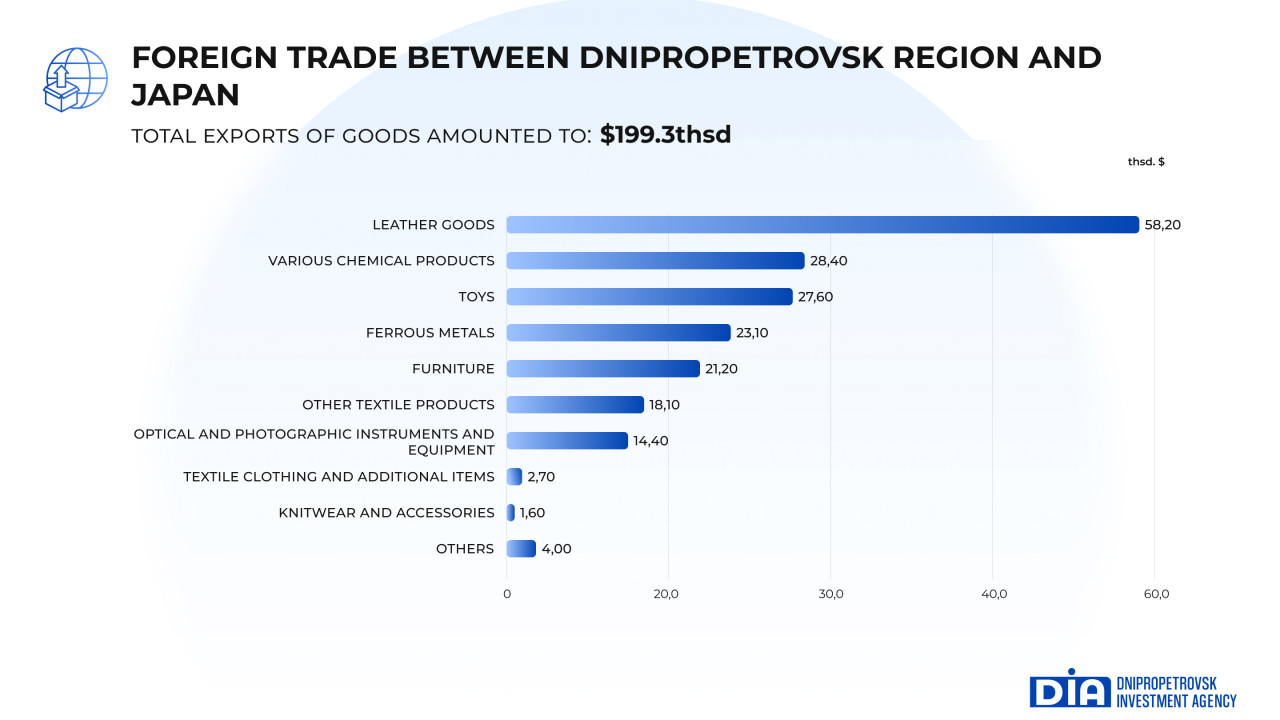
According to the results for the nine months of 2025, the volume of goods exported from Dnipropetrovsk region amounted to $199,300, a decrease of nearly 40% compared to the same period in 2024. The products most in demand among Japanese consumers include leather goods, various chemical products, toys, ferrous metals, furniture, finished textile products and more.
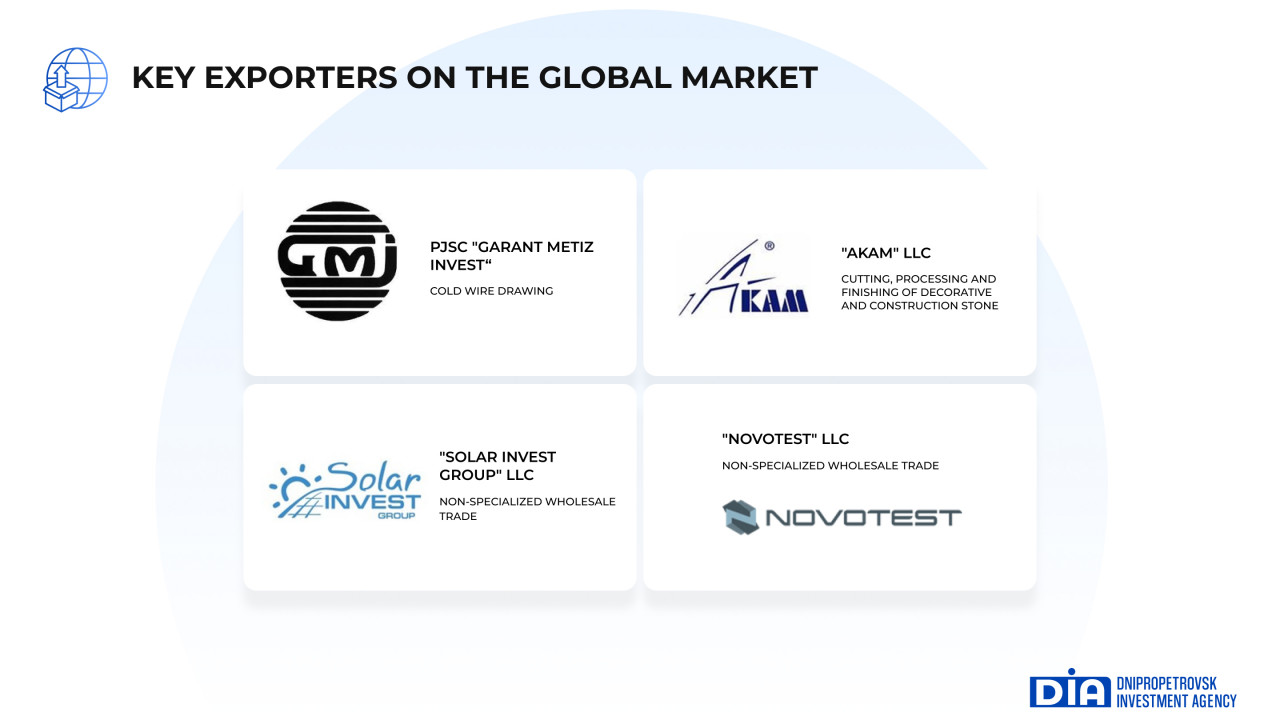
Export operations were carried out by 4 companies from Dnipropetrovsk region, including metallurgical complex and trading companies
Imports of goods from Japan to Dnipropetrovsk region amounted to $24.3 million, an increase of 25.8% compared to the same period in 2024. Dnipropetrovsk region traditionally imported: rubber, machinery and equipment, land transport vehicles, optical instruments and apparatus, various chemical products, and other goods.
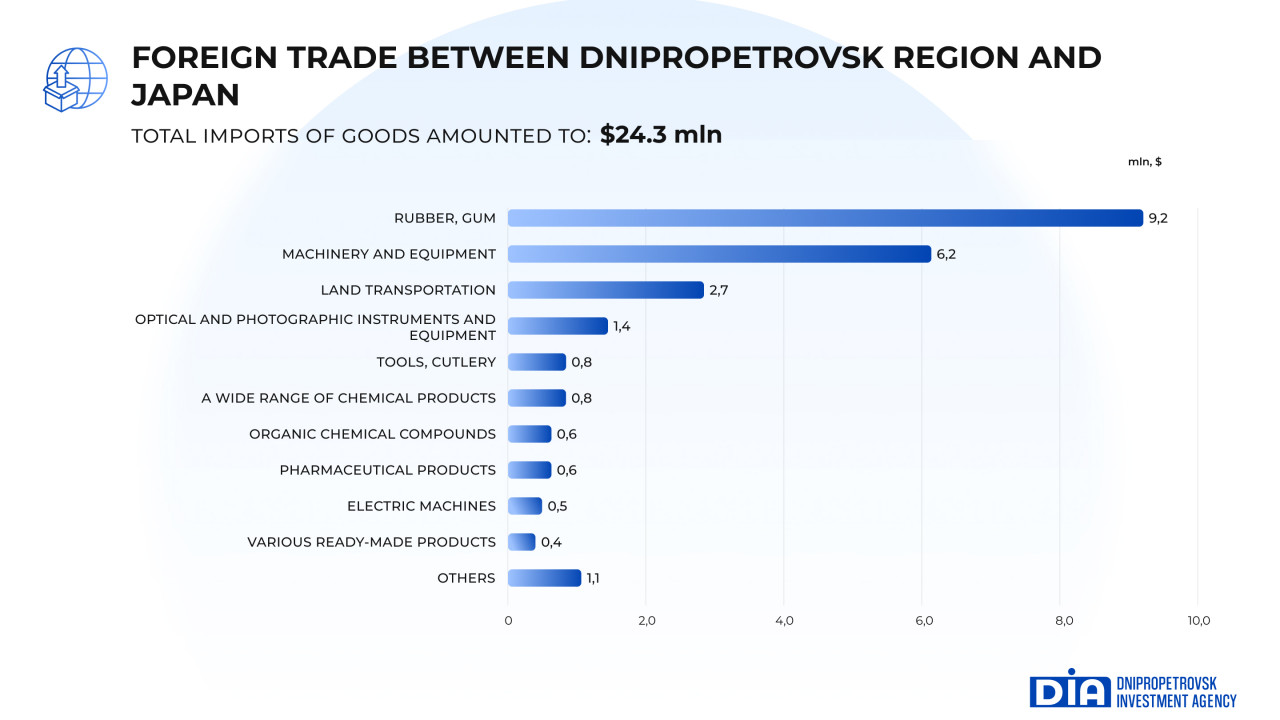
Import operations were carried out by more than 180 importing companies.
TOP 5 importing companies (ranked by volume of imported products):
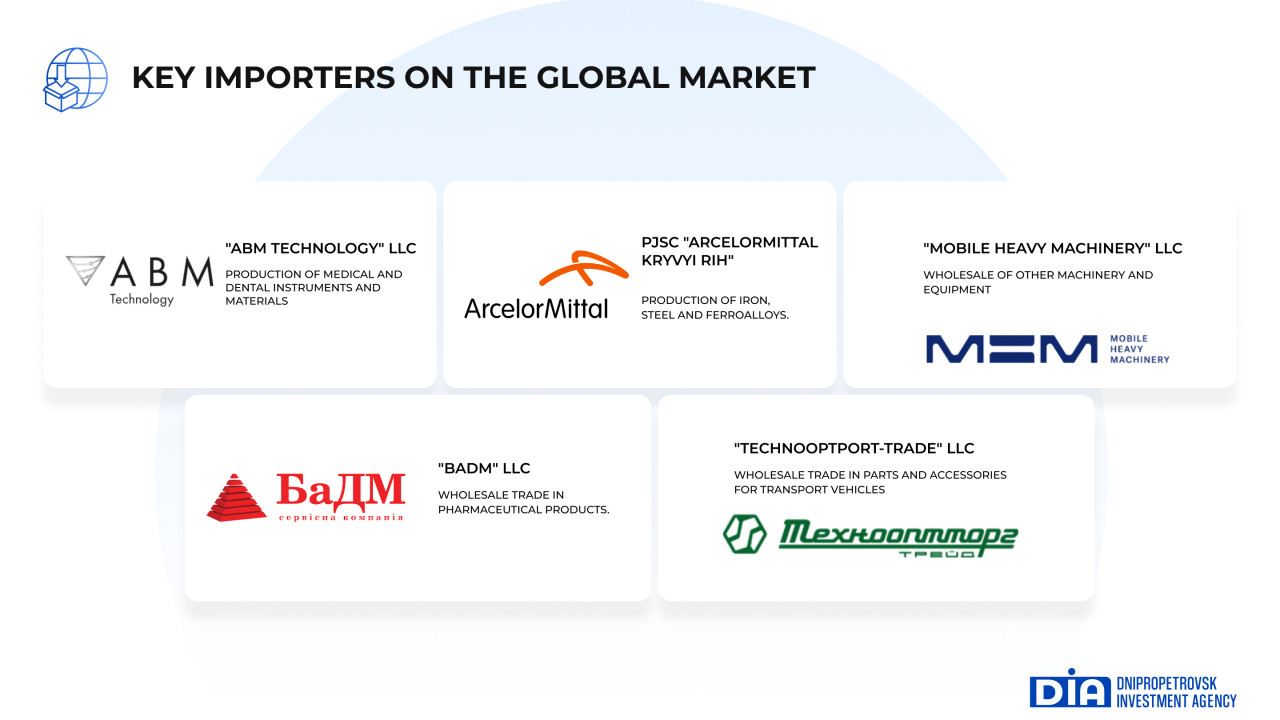
Import operations were primarily carried out by trading, metallurgical, processing and mechanical engineering companies.
Source: Information for this article was compiled from publicly available sources.